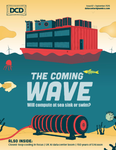
DCD Magazine #62 - The coming wave
Will compute at sea sink or swim?
Will compute at sea sink or swim?
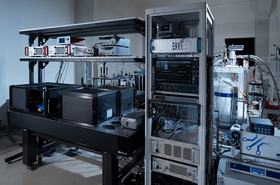
Company claims this approach provides benefits over traditional nitrogen-vacancy centers
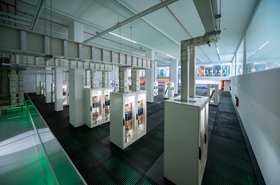
Installation expected to take place in the first half of 2026
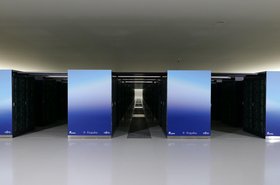
First time GPUs will be deployed as accelerators in a flagship Japanese supercomputer

Plus a round up of other recent quantum announcements
Design contract for system to run until February 2026
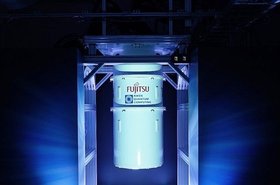
Builds on the 64-qubit system previously deployed by the partners

Will integrate Fujitsu's incoming Monaka processor

ANU will receive access to quantum systems at Riken
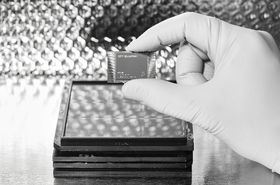
QuEra also set to deploy an on-premise supercomputer in Japan
Winning computing platform uses Japan's second domestically-made superconducting quantum computer

Using classical computing to help develop the next big thing

New system will help improve accuracy of heavy rain predictions
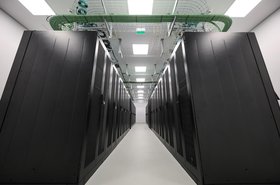
Supercomputer is housed at the University of Minho
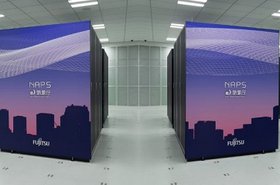
Will be used to forecast linear rainbands and torrential rains
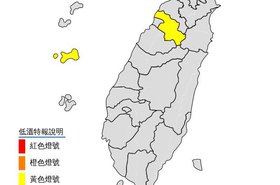
System will be used for numerical weather predictions

Spanish supercomputing center will acquire ~$15 million quantum computer this year
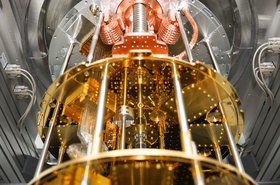
Baidu's 11 qubit system launches, planning 36 qubit soon
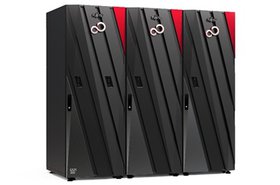
PNC still waiting to be decommissioned after NLEDS delays
Company to end SPARC server sales in 2029

The first time a Dutch university has built its own supercomputer
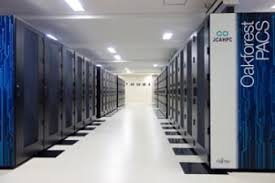
Wisteria/BDEC will use its 33 petaflops to handle simulation and learning
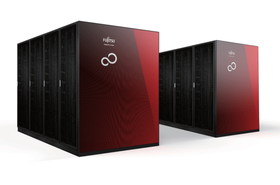
€20 million, 10 petaflops Fujitsu system will be powered by renewable energy, join EuroHPC network
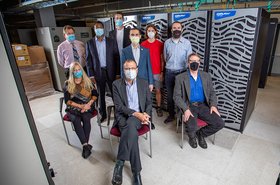
Using the same processor as the world's fastest supercomputer, Fugaku
The exascale era is here

Exascale here we come

The machine is expected to deliver up to 6.6 petaflops and should be operational by July 2019

Japan’s exascale efforts will be powered by Arm

Made by Fujitsu and Mirantis, and supported by a cloud platform based on OpenStack