
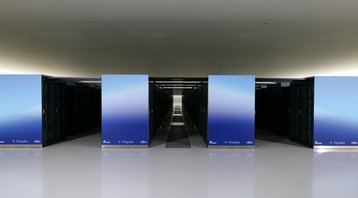
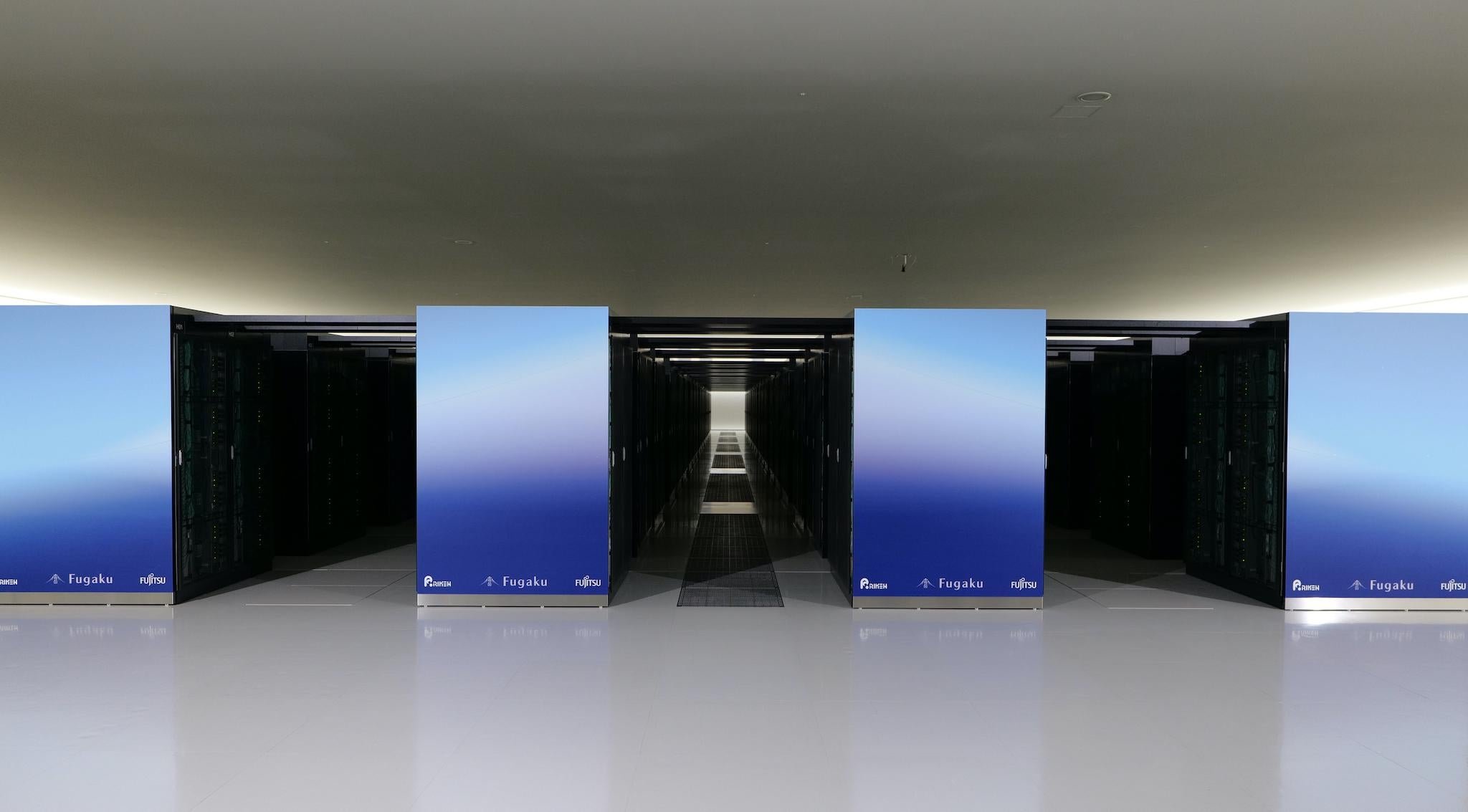
Fujitsu has been awarded the contract to design the successor to the supercomputer Fugaku, dubbed FugakuNEXT.
Set to be housed alongside the current system at Japanese research institute Riken, the contract includes the compute hardware, with the basic design phase scheduled to run until the end of February 2026.
Fujitsu has been developing energy-efficient CPUs under the code name Fujitsu-MONAKA, set for 2027, and it is technology resulting from this project that the company says will form the basis for FugakuNEXT.
Built on 2nm technology, Fujitsu-MONAKA chips integrate with GPUs and other accelerators, and use a microarchitecture optimized for advanced 3D packaging and ultra-low voltage circuit operation. The company announced last year that it would combine the Arm CPU with AMD's Instinct GPUs.
Fujitsu said its tentatively named Fujitsu-MONAKA-X CPUs – the successor to the original Fujitsu-MONAKA chips – will form the basis for FugakuNEXT, allowing the system to not only “inherit and accelerate existing Fugaku application assets but also incorporate state-of-the-art AI processing acceleration capabilities to meet growing AI demands.”
This next-generation CPU is intended for broad application across sectors supporting society and industry, extending beyond its role in FugakuNEXT, Fujitsu said.
"We are excited to be a part of the FugakuNEXT project, which is poised to revolutionize Japan's scientific and technological landscape,” said Vivek Mahajan, CTO in charge of system platform at Fujitsu.
“Fujitsu is determined to build a system that can dynamically meet customer needs, drawing on our invaluable experience from Fugaku and the cutting-edge technologies of Fujitsu-MONAKA and Fujitsu-MONAKA-X.
“By forging diverse partnerships, we will deliver the powerful computing infrastructure that society and industry need to succeed. What's more, we'll be channeling the expertise cultivated through this project into the development of next-generation Neural Processing Units (NPUs) and other advanced AI processors, taking Made-in-Japan technology from Japan to the world and spearheading the adoption and acceleration of AI for businesses and society."
First deployed in 2020, the 442.01 petaflops Arm-based Fugaku ranked first on the June Top500 list of most powerful supercomputers from that year.
In the most recent edition of the list, the Fujitsu-made system placed seventh behind three exascale systems (all operated by the US Department of Energy), two European supercomputers, and Microsoft Azure's Eagle.
A successor to Fugaku was first teased by Japan's Ministry of Education, Culture, Sports, Science and Technology (MEXT) in August 2024, with the government claiming at the time it would be the world’s first zettascale supercomputer.
However, the zettascale peak performance the supercomputer is aiming to achieve relates to AI performance, which is measured in FP8, or 8-bit precision calculations, compared to traditional compute performance, which is measured in double-precision calculations, also known as FP64 – the industry standard for large systems.
A system boasting 100 petaflops of FP64 performance is more powerful than a system that has achieved 100 petaflops of FP8 performance, for example.
Despite this, a planning document previously published by MEXT suggests that if the FugakuNEXT system is built as planned, each node of the proposed system would have a peak performance of “several hundred” teraflops of FP64 performance, potentially totaling exaflops of performance and meaning Japan could potentially once again house the world’s fastest supercomputer.


Comments