
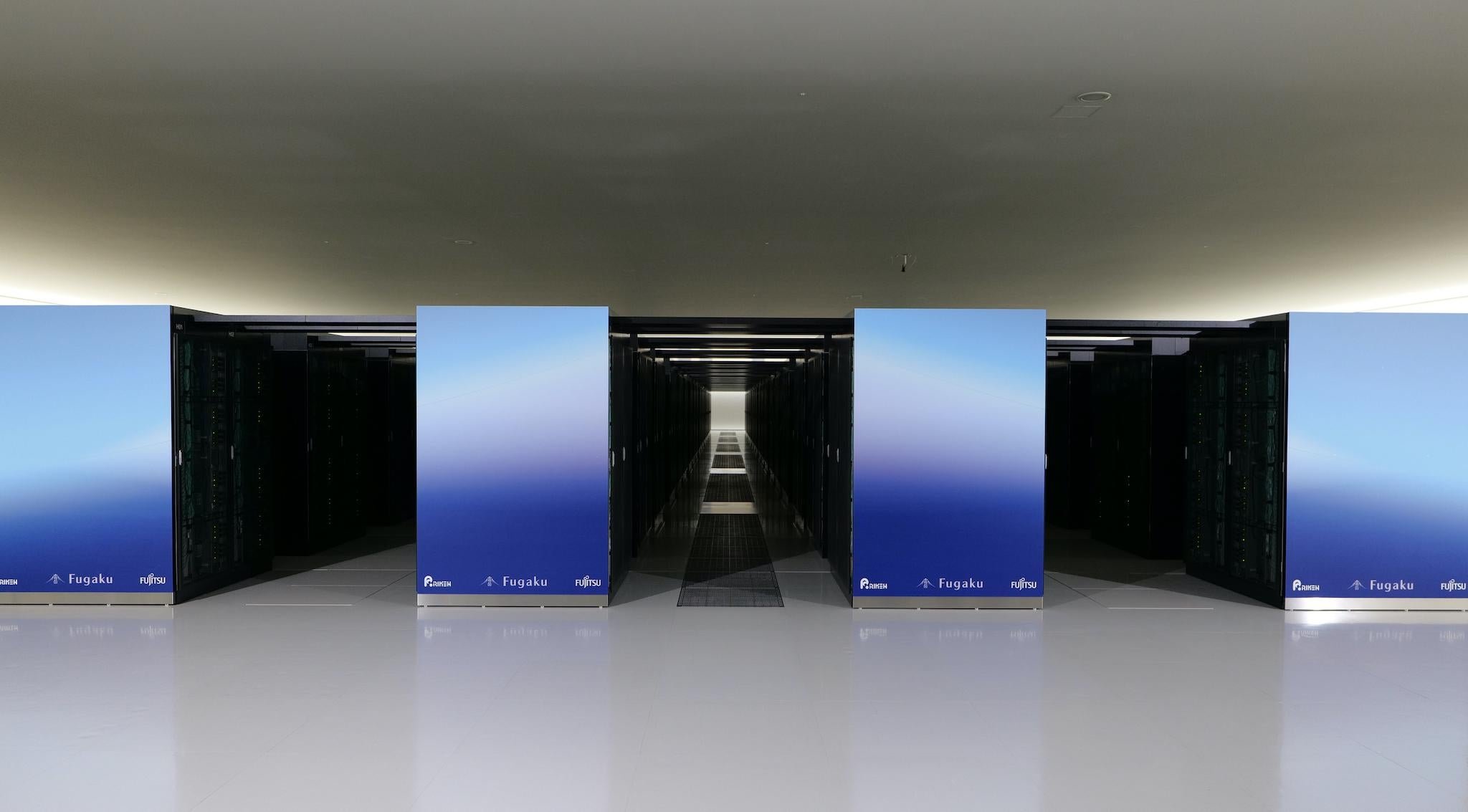
Japanese research institute Riken has announced a collaboration with Nvidia, which will see the chip giant work alongside Fujitsu to co-design the successor to the Fugaku supercomputer, currently known as FugakuNEXT.
The inclusion of Nvidia hardware will represent the first time GPUs will be used as accelerators within a flagship Japanese supercomputer.
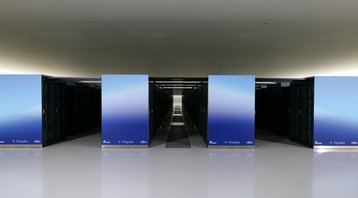
Fujitsu was awarded the contract for FugakuNEXT, a hybrid AI-HPC system, combining simulation and AI workloads, in June 2025. The company will continue to lead the basic design of the overall system, compute nodes, and CPUs, Riken said in a statement, while Nvidia will lead the design for the GPU infrastructure.
Fujitsu has been developing energy-efficient, Arm-based CPUs under the code name Fujitsu-MONAKA, set for release in 2027. Built on 2nm technology, Fujitsu-MONAKA chips integrate with GPUs and other accelerators, and use a microarchitecture optimized for advanced 3D packaging and ultra-low voltage circuit operation.
The successor to the original Fujitsu-MONAKA CPUs, tentatively named Fujitsu-MONAKA-X, will form the basis for FugakuNEXT, allowing the system to not only “inherit and accelerate existing Fugaku application assets but also incorporate state-of-the-art AI processing acceleration capabilities to meet growing AI demands,” Fujitsu has previously said.
These Fujitsu-MONAKA-X CPUs will pair with Nvidia hardware using NVLink Fusion, silicon that enables high-bandwidth connections between Fujitsu’s CPUs and Nvidia’s architecture.
Slated to come online in 2030, FugakuNEXT will support applications including scientific research, experiment simulation, and Earth systems modeling. Riken, Fujitsu, and Nvidia will also collaborate on software developments, including tools for mixed-precision computing, continuous benchmarking, and performance optimization.
“Designed on the basis of advanced technologies from both Japan and the US, FugakuNEXT will feature AI-oriented hardware performance exceeding 600 exaflops in FP8 precision (sparse), and is expected to become the world's first 'zettascale' system as a supercomputer for HPC,” Riken said in a blog post.
The zettascale peak performance the supercomputer is aiming to achieve relates to AI performance, which is measured in FP8, or 8-bit precision calculations, compared to traditional compute performance, which is measured in double-precision calculations, also known as FP64 – the industry standard for large systems.
Therefore, a system boasting 100 petaflops of FP64 performance is more powerful than a system that has achieved 100 petaflops of FP8 performance, for example.
“Japan is a global technology leader, advancing manufacturing, robotics, and engineering excellence while focusing on natural disaster resilience and an aging population - and AI and HPC are uniquely poised to help address these complex challenges,” said Ian Buck, VP of hyperscale and high-performance computing, Nvidia.
“Through the collaboration of Riken, Fujitsu, and Nvidia, FugakuNEXT will deliver zettascale performance with application speeds nearly 100 times faster - within the same energy footprint as its predecessor - accelerating research, boosting industrial competitiveness, and driving progress for people in Japan and around the world.“
First deployed in 2020, the 442.01 petaflops Arm-based Fugaku ranked first on the June Top500 list of most powerful supercomputers from that year.
However, in the most recent edition of the list, the Fujitsu-made system placed seventh behind three exascale systems (all operated by the US Department of Energy), two European supercomputers, and Microsoft Azure's Eagle.





Comments