
Vodafone and satellite firm AST SpaceMobile are planning to deploy a new EU satellite constellation.
The two companies announced plans to form a joint venture (known as SatCo) in March to serve mobile network operators (MNOs) in all European markets and provide 100 percent coverage in every part of Europe.
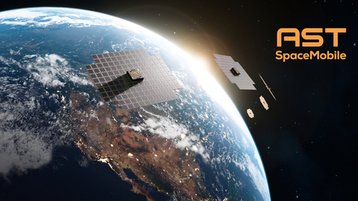
This week, Vodafone said the two companies aim to launch a EU satellite constellation that will provide secure and sovereign communications in Europe. Details on the planned satellite roll-out weren’t shared.
In addition to commercial mobile broadband, the constellation will support public protection and disaster relief efforts (PPDR) with direct-to-device services.
Vodafone said MNOs in 21 European Union (EU) member states and other European countries have expressed interest in adopting the service, with commercial launch planned to commence from 2026.
The companies have also selected Germany as the location for their main Satellite Operations Centre.
The center will allocate and map satellite connectivity used by SatCo to serve MNOs across Europe, ensuring ubiquitous mobile broadband in underserved areas and supporting emergency services and disaster relief agencies.
It will be located near either Munich or Hannover and will house one of a network of SatCo ground-based gateway stations across Europe.
Margherita Della Valle, CEO of Vodafone, said: “SatCo delivers a sovereign satellite solution to the whole of Europe. It will give European operators access to secure and resilient satellite communications, complementing existing terrestrial telecommunications networks. By establishing a satellite constellation in the EU and our principal command center in Germany, we are ensuring the next frontier of communications infrastructure is firmly embedded in Europe.”
“Together with Vodafone, we are accelerating the arrival of true mobile broadband from space across Europe,” added Abel Avellan, founder and CEO of AST SpaceMobile. “Germany’s Operations Centre will be the operations hub for our BlueBird constellation in Europe, enabling us to serve millions of users. Alongside our gateways, we are building a robust, secure infrastructure that ensures Europe stays connected with seamless mobile broadband, always.”
Founded in 2017, AST's first test satellite, Bluewalker 1, was launched in 2019; Bluewalker 2 was canceled. Its latest test satellite, Bluewalker 3, launched in 2022, with its first block of five BlueBird satellites launching last year. It plans to launch around 100 direct-to-cellular satellites in total – with 45-60 coming by the end of 2026 – offering up to 120 Mbps peak data rates per cell.
The firm aims to deploy nationwide intermittent service in the US by the end of 2025, followed by the UK, Japan, and Canada in Q1 2026.
Verizon and AT&T, along with Vodafone, are all investors in AST SpaceMobile, rivaling Elon Musk's SpaceX Starlink and Amazon's Project Kuiper.
Earlier this month, AST announced it had secured a $420 million loan with UBS. At the end of October, AST signed a deal with Saudi telco STC. The satellite firm says it has agreements with more than 50 mobile operators.





Comments