
NASA has officially submitted a filing to US communications regulator, the FCC, objecting to Blue Origin’s application for its “Project Sunrise” constellation.
First revealed in March, the Jeff Bezos-owned firm seeks to build a 51,600-sun-synchronous satellite constellation between 500-1,800km to move data center operations to orbit, citing the “fundamentally lower marginal costs of compute capacity” in space.
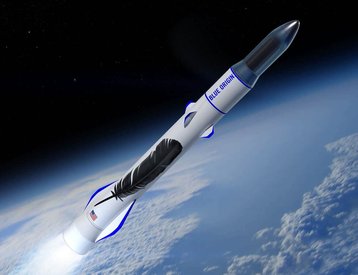
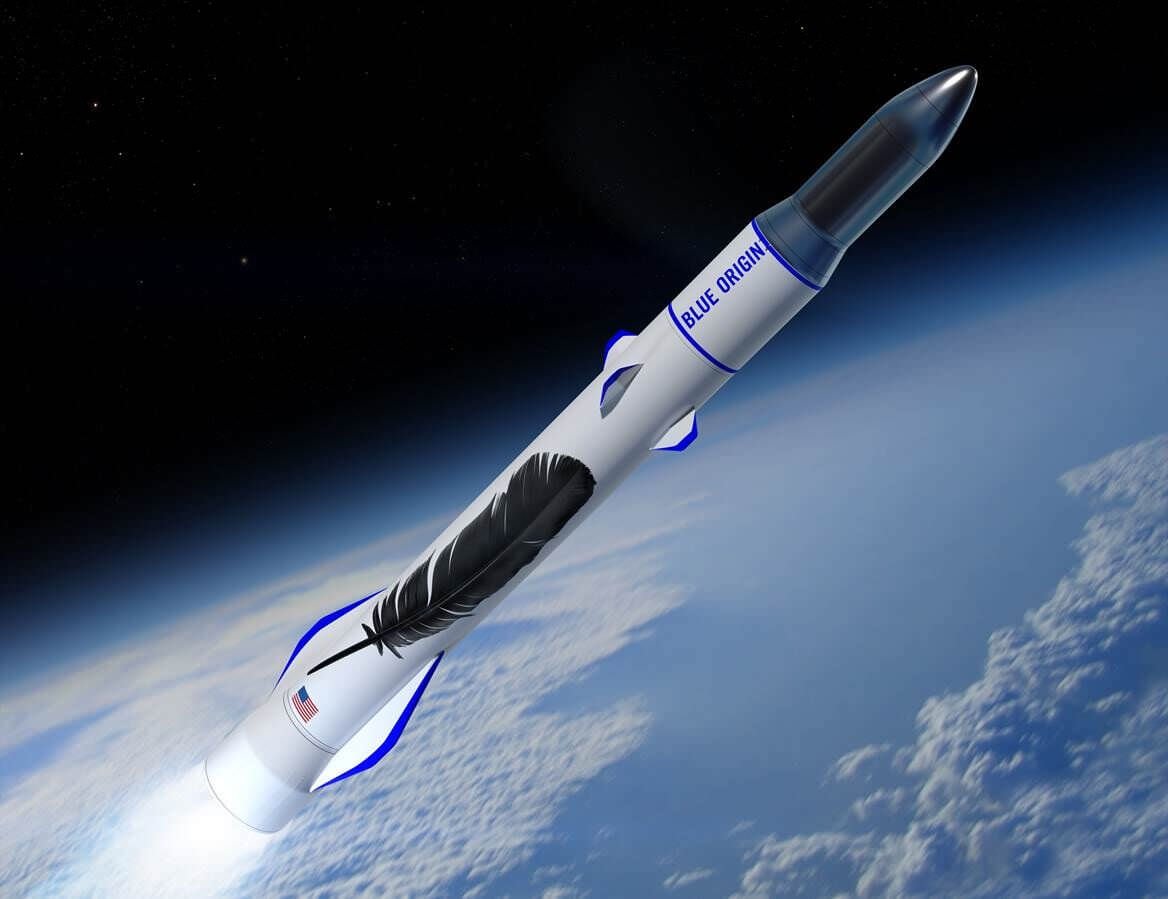
“NASA understands the importance of American superiority in space, fostering continued commercial innovation,” the filing states. “The Blue Origin Project Sunrise constellation requires commensurate transparency, technical rigor, and coordination to ensure long-term safety and sustainability of the space environment. Early and sustained technical engagement between NASA and Blue Origin is essential to develop appropriate mitigation strategies, preserve safe access to space, and ensure that this large-scale system does not compromise human spaceflight, national assets, or the scientific use of the space environment.”
NASA proposes the altitudes cited, up to 1,800km, overlap with critical human spaceflight paths and national science assets, an issue which Starlink has fallen foul of for years, risking serious debris dangers, made worse by Blue Origin’s disinterest in satellite end-of-life procedures in its application.
International outrage at the SpaceX constellation has led to the Elon Musk company committing to lowering more than 9,300 satellites comfortably below 500km.
NASA did welcome Blue Origin’s attempt to design post-mission disposal methods, and its consideration of the constellation’s impact on astronomy, a key concern attached to Starlink, and SpaceX’s future ambitions in orbit.
NASA also draws attention to ambiguities around fleet density and positioning, as well as unreasonable expectations from the launch market.
Amazon, also founded by Bezos, has its own satellite wing, Amazon Leo. The firm recently had to request a 24-month extension from the FCC after failing to meet the agreed-upon timescales of its launch rollout.
Amazon has previously objected to SpaceX’s filing with the FCC to launch a million satellites as part of the “Starcloud” initiative, specifically citing the infeasibility of launch, the speculative nature of many details, and threats to the space environment.
SpaceX would later fire back at these remarks, publicly declaring Blue Origin’s arguments “naïve” and “simplistic,” illustrating the sophistication of debate all too common between billionaire-backed big tech enterprises.
NASA emphasises that it has submitted similar comments on other large constellation proposals, perhaps hoping to sidestep the political sphere of the conversation. NASA mentioned an interest in working closely with Blue Origin to coordinate a more practical plan.
Given NASA’s input, the FCC may reject Blue Origin’s application or request a more comprehensive set of plans with expanded technical data on how the 51,600 satellites will coordinate with NASA assets and mitigate debris issues.





Comments