
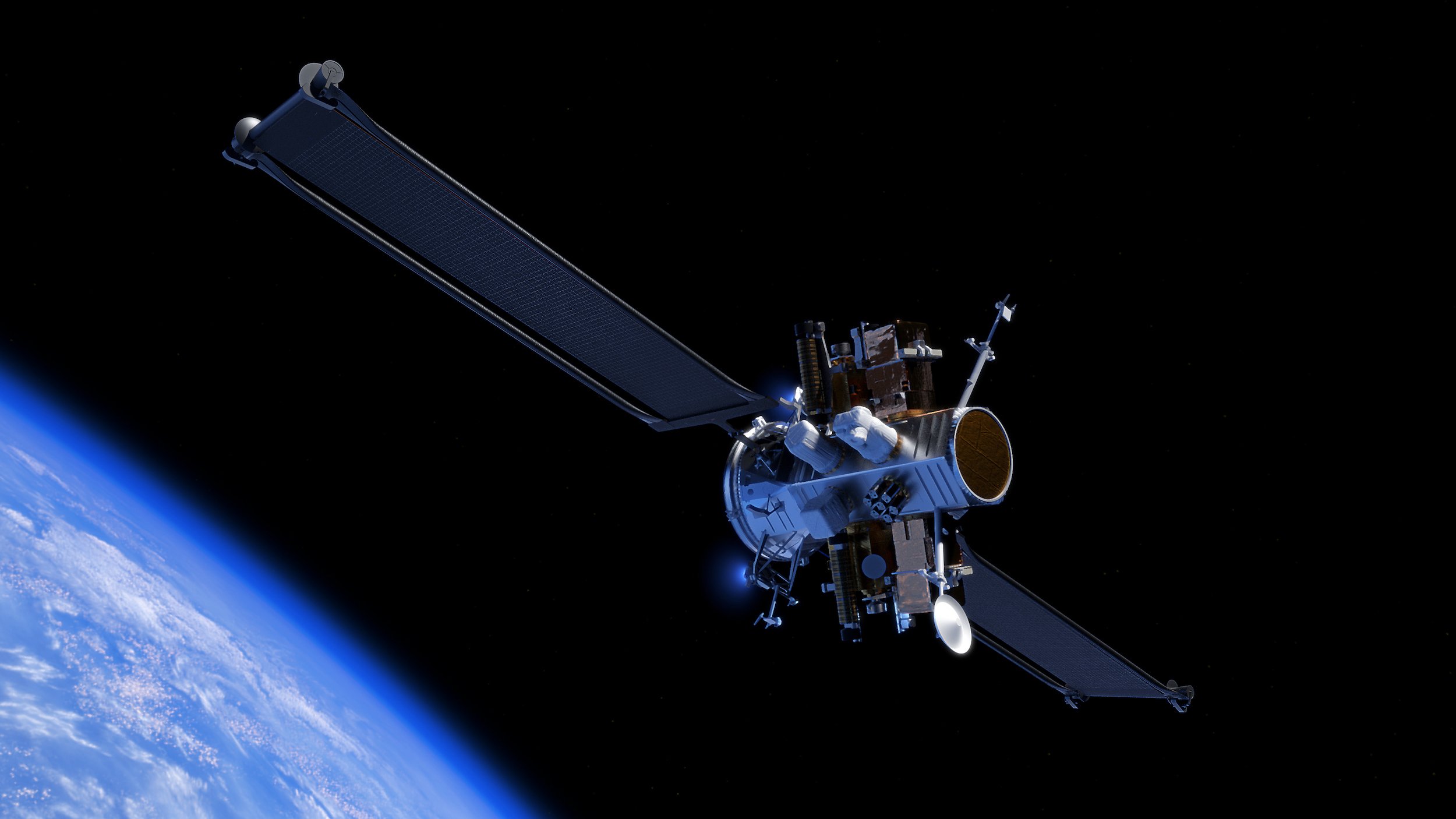
Blue Origin, an aeronautics company backed by the founder and former CEO of Amazon, Jeff Bezos, has filed for approval to “support data centers in space.”
According to the company’s application to the Federal Communications Commission, Project Sunrise will consist of up to 51,600 satellites in sun-synchronous orbit.
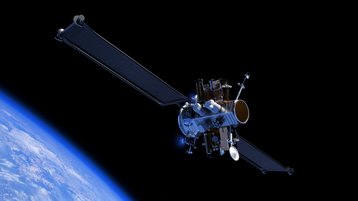
The data centers will use optical links to support communications through Blue Origin’s planned satellite communications network, TeraWave, itself announced earlier this year.
“Space-based data centers will be a complement to terrestrial infrastructure by introducing a new compute tier that operates independently of Earth-based constraints,” reads the application.
“The built-in efficiencies of solar-powered satellites, always-on solar energy, lack of land or displacement costs, and nonexistent grid infrastructure disparities, fundamentally lower the marginal cost of compute capacity compared to terrestrial alternatives.”
This pitch and business model are remarkably similar to those of its main competitor, Elon Musk’s SpaceX.
Earlier this year, SpaceX filed plans with the FCC to launch one million ‘orbital data center’ satellites. These data centers would connect to the company’s existing Starlink infrastructure via optical links, with Starlink then connecting by laser mesh down to ground stations.
Musk has previously said that Starlink’s “space to ground laser links will exceed” TeraWave’s rate of data transfer, which will supposedly support up to 6Tbps.
Both Blue Origin and Starlink argue that data centers in space will be cheaper, less onerous from a regulatory perspective, and sidestep existing issues with power infrastructure.
Nvidia announced this week that it had developed a space-specific module of its Vera Rubin GPU-CPU platform.
These space hopefuls are joined by a number of smaller companies that also have plans to put data centers into orbit, including Axiom Space, NTT, Ramon.Space, Aetherflux, and Sophia Space, to name but a few.
Last November, Starcloud (previously Lumen Orbit) successfully launched a single Nvidia H100 GPU into space.
But detractors have raised questions about the cost and technical difficulty of operating data center equipment in space.
A number of prominent figures, including OpenAI CEO Sam Altman, analytics firm Gartner, and short seller Jim Chanos, have decried space data centers as “ridiculous”, “AI Snake Oil,” and “peak insanity” respectively.



Comments