
Microsoft has teamed up with the University of Washington (UW) on a study that tested the potential of reducing the carbon footprint of cement through the incorporation of seaweed.
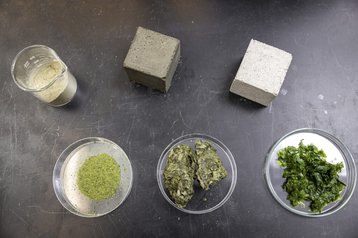
Scientists from Microsoft’s research team published a study in conjunction with the UW in the journal Matter. The study involved replacing part of the cement with whole macroalgae (seaweed), specifically Ulva, a fast-growing, carbon-negative plant that can be cultivated without using farmland.
The scientists dehydrated the seaweed before incorporating it into the cement mix. According to the researchers, through this process, they were able to use much higher amounts of cement than in previous demonstrations.
In order to better understand the impact of Ulva on cement, the team combined machine learning with a life-cycle assessment to design and test new cement mixes. Instead of relying on the traditional 28-day wait to check strength, their ML models could predict results early, allowing them to stop underperforming tests sooner and speed up development.
Through the study, the researchers were able to come up with a solution that lowered the cement's global warming potential by 21 percent compared to traditional cement, while maintaining strength requirements. In addition, the design process was able to achieve 93 percent of the possible carbon reduction in 28 days of testing.
According to the researchers, the study not only produced a greener cement option but also demonstrated a new framework for rapidly creating sustainable materials by blending experimental work, computer modeling, and environmental impact analysis. They went on to say that this approach could be extended to support the development of other eco-friendly construction materials.
“[T]his work establishes a framework with the potential to accelerate the design of sustainable cement with feasible experimental resources while satisfying critical performance requirements,” the authors stated.
The study was headed by Eleftheria Roumeli, an assistant professor of materials science and engineering at the University of Washington, along with Kristen Severson, a principal researcher at Microsoft Research.
Cement is a crucial material used in the construction of data centers, particularly for foundations and slabs. As part of its drive to decarbonize, several data center developers are beginning to explore low-carbon alternatives.
In May, Microsoft signed a deal with low-carbon cement company Sublime Cement to purchase 623,000 tons of cement over a six to nine-year period to use in its construction projects when ‘geographically possible,’ with data centers earmarked as one of the primary targets.
Microsoft also tested the applicability of lower-carbon concrete mixes in construction projects at its data center site in Quincy, Washington, back in 2023.
AWS, Meta, and Stack have also signed commitments or begun to use low-carbon cement in their construction processes.




Comments