
Google has launched a wetland restoration and research project near its Mountain View campus in California.
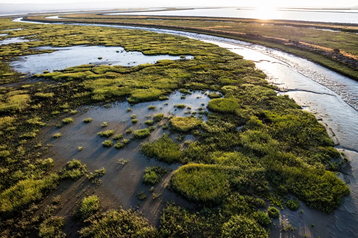
The project seeks to restore a degraded salt pond, known as Pond A1, sited right next to the Mountain View campus. The project is being undertaken alongside the South Bay Salt Pond Restoration Project and Ducks Unlimited.
“For over a century, salt production has displaced Bay Area tidal marshes with industrial ponds, impacting water quality, biodiversity, and ecosystem health. Decades of restoration efforts are now reviving these degraded areas into thriving ecosystems that benefit local communities and wildlife alike,” said Randy Spock, carbon removals program lead at Google.
In addition to the restoration project, the company has partnered with California-based academic researchers and will use the project as a test bed to accelerate novel approaches to carbon removal through reforestation and wetland restoration programs.
Google opened its Mountain View campus in 2022. The campus is primarily an office, research, and development campus, serving as a major workplace for the company’s advertising division. The campus features what Google calls a “dragonscale” solar skin, a rooftop solar array that generates power for the facility.
Google has signed several carbon removal deals over recent years. Most recently, the firm inked an agreement with Commonwealth Sortation LLC, an affiliate of AMP Robotics Corporation, to remove 200,000 metric tons of CO2e by 2030. AMP aims to collect organic waste from municipal landfills and convert it into biochar, capturing carbon and preventing the material from decomposing and releasing methane.
The firm has also committed $50 million through 2030 to support the removal of super pollutants, and inked carbon removal deals with waste management firm Vaulted Deep and reforestation firm Mombak.
The news comes hot on the heels of reports that Microsoft, by far the biggest buyer of carbon removal credits, had paused all future carbon removal purchases. The company responded to the news by contending that the pause was in fact an adjustment to the pace of purchases.





Comments