
The data center industry has always been defined by speed, but the pace of change today is something distinctly new. Facilities are scaling rapidly, densities are increasing with force, and expectations around performance, uptime, and energy use continue to rise in parallel.
Supporting this next phase of growth isn’t just about building bigger, better data centers, or deploying the latest tech – it’s about building smarter, more responsive systems that can adapt in real time.
At the center of this transformation sits one unifying principle: efficiency. Cooling has become one of the most critical pressure points in modern data center design as high-density AI workloads continue to generate unprecedented levels of heat.
In response, liquid cooling has quickly become a mainstream necessity. Designed to manage higher thermal loads with greater precision, these systems are increasingly forming the backbone of next-generation facilities.
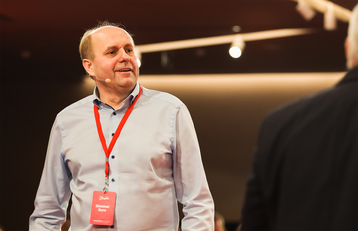
Liquid cooling is delivering some of the fastest efficiency gains today via solutions such as direct-to-chip liquid-cooled systems, where air cooling plays a role in managing residual heat and supporting overall system stability.
The adoption of new cooling technologies matter, and integration and end-to-end system optimization are what turn innovation into real efficiency. As data centers scale in size and complexity, the focus must shift from isolated innovation to holistic efficiency.
For Danfoss, energy efficiency is the starting point for everything that follows. As Dietmar Baro, SVP and CTO at Danfoss Climate Solutions, explains:
“Everybody talks about how rising power densities demand more cooling and what that means for energy and water use. The same applies to power, how to manage the shift from AC to DC, and how data centers can evolve from passive consumers to active contributors to the grids they are part of.
“This is where efficiency becomes decisive. We strongly believe that energy efficiency is one of the most powerful levers on both short-term gains and long-lasting optimization.”
Cooling: A chain reaction
Focusing on energy efficiency has a compounding effect across the entire data center ecosystem. While it can begin with cooling, its influence extends far beyond a single system or component. Improvements in efficiency can reduce overall energy consumption, stabilize operations, and unlock additional capacity without compromising flexibility and scalability.
As compute density increases, metrics such as power usage effectiveness (PUE) become increasingly sensitive to inefficiencies. Cooling systems play a central role in this equation, accounting for a significant portion of total energy use. And liquid cooling, with its ability to remove heat more directly and efficiently, represents a clear opportunity for optimization.
“When you're looking at energy efficiency, the biggest lever right now is cooling,” says Baro. “As soon as power density increases, you have to improve PUE. Liquid cooling is inherently more energy efficient – roughly 15 percent more so than traditional cooling system methods.”
The real advantage, however, lies in how these gains ripple outward – reducing energy consumption, lowering emissions, and improving system reliability. Efficiency effectively acts as a multiplier, creating a chain reaction of benefits that extend across the entire facility.
Connecting components
From high-performance cooling systems to modern control platforms, the tools required to build efficient infrastructure already exist. The challenge now centers around how these components and tools are brought together and operated as a unified, integrated network.
“Ultimately, the products are out there, but it comes down to assembling and operating them in the right ways,” says Baro. “This marks a clear shift from a component-focused or sub-system mindset to a systems-level approach, where the interaction between technologies becomes just as important as individual performance.”
Cooling is tightly coupled with IT load, power delivery, and control systems; when treated in isolation, it becomes reactive rather than integrated, leading to overcooling and wasted energy, undercooling and thermal risk, and ultimately an inability to fully utilize installed compute capacity.
Digital optimization is playing an increasingly important role in enabling this transition. Tools such as digital twin, system simulation in combination with artificial intelligence allow operators to create virtual models of data centers, providing deep insight into how different systems perform in real-world conditions and where efficiency gains can be realized.
“Digital tools help take the data centers, solutions, and products to the next level by showing precisely how energy use can be optimized,” adds Baro.
Danfoss’ latest Data Center Impact Paper reveals that digital tools like sensors, AI-supported controls, and variable frequency drives have the potential to lower energy for cooling by ten to 20 percent with short payback times.
By removing much of the guesswork, digital tools enable faster, informed decision-making. Operators can test different configurations, evaluate trade-offs, and implement changes with greater confidence, accelerating the optimization process while also reducing the risk of costly mistakes.

Seeing the whole picture
As data centers continue to grow in complexity, the need for transparency becomes more pressing. Modern facilities are made up of interconnected systems spanning cooling, power, IT hardware, and energy management. Each of these elements plays a key role in overall performance, and changes in one area can quickly impact the entire infrastructure.
Achieving true optimization requires a comprehensive understanding of how these systems interact. Baro emphasizes the importance of a holistic approach:
“We want to understand how the data center works end to end. This is only possible via a holistic approach that oversees each and every critical component across the facility. System simulation models, digital twins, and advanced analytics in combination with artificial intelligence are key enablers of this strategy.”
He draws a useful parallel with another sector that’s leveraged digital optimization: “In the automotive industry, they develop a new car but they don’t produce it for testing anymore. They do it digitally and then deliver directly to the customer. This is what we’re replicating in the data center space – we want to build up a digital ecosystem of the entire facility."
Intelligence in action
While system-wide transparency establishes the foundation for optimization, the application of collected and real time data is what turns insights into measureable, continuous impact. The integration of AI applications and advanced analytics into data center operations is enabling a more dynamic, responsive approach to energy management.
AI-driven systems support continuous performance monitoring, pattern analysis, and make real-time adjustments to optimize energy use. This moves operations away from static configurations and towards a more adaptive model, where systems respond automatically to changing conditions. Baro brings together the tangible benefits:
“AI-driven monitoring systems and digital twin analysis means we can optimize energy flows in real time, detect issues early, provide warnings, and generate insights so that we are continuously one step ahead.”
The ability to anticipate issues before they occur allows operators to act early, minimizing downtime and ensuring systems remain in peak condition. This continuous loop of monitoring, analysis, and optimization also ensures that efficiency is an intrinsic, ongoing process.
According to the Danfoss Data Center Impact Paper, end-to-end digital twin-enabled data center projects have shown up to 20 percent energy savings, 25 percent lower development costs, and 30-50 percent reductions in unplanned downtime, thanks to fewer breakdowns. This not only minimizes operational disruptions but also reduces maintenance expenses and extends equipment lifetime.
Nothing in isolation
Industry-wide collaboration is what makes systems-level optimization possible, aligning technologies across the stack to deliver performance and efficiency that no single player can achieve alone. No isolated organization has all the answers, and the challenges associated with scaling infrastructure for the AI era requires a distinctly collective effort.
Danfoss is actively engaging in front-end innovation and co-creation collaborative initiatives to drive innovation forward. Baro shares an example: “We’ve worked with Hewlett Packard Enterprise as its decarbonization partner, and the University of Southern Denmark on its supercomputer, combining efficient cooling technologies, sustainable energy management with advanced AI capabilities.”
Industry-wide collaboration and partnerships support new ways of thinking for a new era of efficiency and speed. This shift in which collaboration is being recognized as a distinct advantage in understanding how to increase workload density, improve efficiency, and reduce complexity in tandem.
“The ecosystem must collaborate from the outset, rather than attempting to solve these challenges alone” says Baro. “Open up, work with different kinds of people, on different solutions, via different partnerships to get faster insight into the best path forward – rather than focusing solely on pushing your own solution.”
Securing end-to-end efficiency
As data centers scale in size and complexity, the focus must shift from isolated innovation to holistic efficiency – without a systems approach and transparency, scaling amplifies inefficiencies.
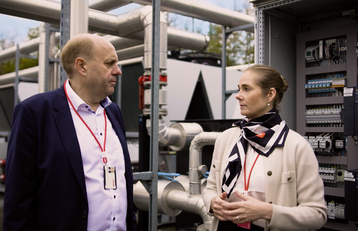


Looking ahead, energy efficiency is set to move even further up the priority list to become a core principle of system design and scale.
“That’s why at Danfoss energy efficiency is our core focus underpinning decision making,” says Baro. “We’re looking at how we can do more, better, faster, more efficiently, and how we can build energy efficiency into facility and system design.”
Being successful in this approach requires early planning and customer co-creation for critical systems such as cooling, as well as the integration of gray and white space technologies, advanced controls, sensor technologies, and data-driven software – underpinned by a move towards optimizing entire systems. Baro outlines this clearly:
“Shift away from component optimization and think about the end to end. It’s not only about having a great product, it’s about how it works when integrated into a system. This systems-level thinking is essential for delivering meaningful, scalable improvements.”
Efficiency now provides the common thread that ties the data center together. It connects technology, design and operation, and individual solutions with entire systems. By placing efficiency at the center of decision-making, this guiding principle will help to build data centers that are not only more powerful, but also more energy efficient, resilient, and future-ready.
For more information please visit datacenters.danfoss.com and watch our most recent DCD>Talks episode, here.
Comments