
Google has signed a new carbon capture deal to create biochar from landfill waste.
The search giant this week signed an agreement with Commonwealth Sortation LLC, an affiliate of AMP Robotics Corporation, to remove 200,000 metric tons of CO2e by 2030.
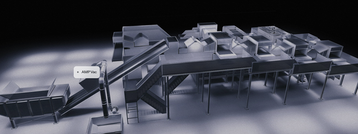
AMP aims to collect organic waste from municipal landfills and convert it into biochar, capturing carbon and preventing the material from decomposing and releasing methane.
“We’re excited to catalyze an approach to waste management that takes on the twin challenges of climate change: the near-term warming of methane and the long-term warming of carbon dioxide,” said Randy Spock, carbon credits and removal lead at Google. “AMP’s technology, through its partnerships with local waste management authorities, offers a scalable way to turn waste organic materials into a real climate solution, all while supporting local communities by reducing waste and mitigating air pollution.”
Google’s purchase will enable AMP to add biochar production capacity to the largest recycling project in the United States, potentially converting 5 million tons of organic waste into biochar over the next 20 years.
Last year, AMP affiliate Commonwealth Sortation signed a 20-year contract with the Southeastern Public Service Authority of Virginia (SPSA), a regional waste authority that serves eight communities and 1.2 million residents in South Hampton Roads, VA.
AMP’s AI sortation technology will process up to 540,000 tons of MSW annually, diverting or repurposing at least half of this material from landfill. Each ton diverted reportedly reduces or sequesters more than 0.7 tons of CO₂e.
The two firms will also collaborate to establish frameworks for quantifying the impact of waste diversion paired with biochar carbon removal on methane elimination.
“Recycling and carbon sequestration are a powerful pairing,” added Matanya Horowitz, AMP founder and chief technology officer. “The waste industry is built to capture value from materials. With biochar, we can turn organic waste from a major source of emissions into a durable, carbon-storing asset for municipalities and waste operators. Together with Google, we’re helping transform one of the economy's most emissions-intensive sectors into a force for climate impact.”
AMP said its biochar will first be used as landfill daily cover, where it can filter leachate, reduce odors, and help prevent methane emissions. Eventually, AMP aims to expand biochar use into other domains, including construction and cement.
AMP is backed by investors including Sequoia Capital, Congruent Ventures, XN, Blue Earth Capital, California State Teachers’ Retirement System (CalSTRS), and Microsoft Climate Innovation Fund.
The company says it has three full-scale facilities and more than 400 AI systems deployed across North America, Asia, and Europe. The company has previously deployed its technology in Portsmouth, Virginia.




Comments