
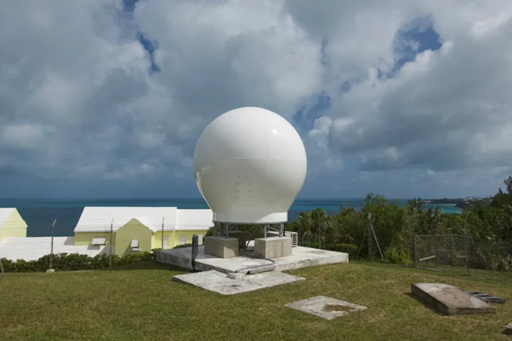
Jeff Bezos-owned space company Blue Origin has reported the successful testing of its first three satellite ground stations installed as part of its Quartz ground network in Bermuda, New Zealand, and Australia.
Quartz will be established across a phased rollout, targeting a total of nine sites by the end of this year, each purpose-built to address connectivity gaps in the satellite sector.
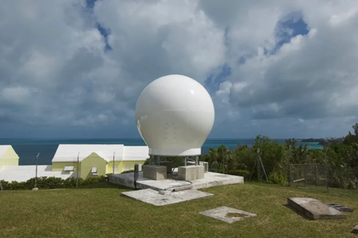
"Ground communications infrastructure has historically been one of the most fragmented and costly elements of space operations, for national security programs, civil, and commercial operators alike," said Tory Bruno, president of National Security at Blue Origin, in a statement. "With Quartz, we've built a single, fully integrated network that changes that equation. One interface, one operations team, transparent pricing, and a security architecture built to meet the most demanding mission requirements."
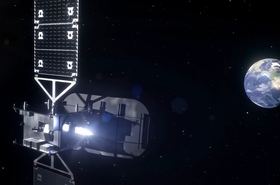
Announced in April, the 2026 phase of Project Quartz’ rollout involves 3.7-meter aperture antennas using S-band and X-band frequencies for low Earth orbit (LEO) supported by radiometric tracking, signal intelligence, and space domain awareness capabilities. The network will serve Blue Origin's planned TerraWave satellite constellation.
Bruno is president of the company’s Blue National Security Group, and has a past at Lockheed Martin. The industry veteran has emphasized the precision and security of serving mission operations, differentiating Quartz and TeraWave from the more commercial, civilian service offering in Amazon Leo. Since joining the company, Bruno has secured $2.4 billion in launch contracts under the US Space Force’s National Security Space Launch Phase 3 Lane 2 contract in 2025.
Toward the end of the year, Blue Origin expects to begin installing 9-meter apertures supporting L-, S-, X-, and Ka-band frequencies serving mission data, telemetry, tracking, and command (TT&C) for geostationary transfer orbit (GTO), geostationary orbit (GEO), cislunar, and beyond.
Blue Origin has partnered with RBS Signals, a ground station operator and dynamic spectrum leaser, to provide site surveys, antenna procurement and deployment, and network hosting. In the long term, Blue Origin has said that all these services will integrate to verticalize Blue Origin’s offering.
“Our mission is to provide reliable, flexible, and innovative communications solutions for the world’s most ambitious space operators,” RBC Signals CEO Ron Faith said in a separate statement. “Blue Origin’s vision for the future of space exploration aligns perfectly with our capabilities, and we look forward to supporting their missions with a resilient and globally integrated communications network.”
Founded in 2015, RBC offers satellite communications and monitoring in VHF, UHF, L, S, C, X, Ku, Ka, and optical bands from a network of more than 50 company-owned and partner-owned sites.
Despite the presence of Amazon founder Bezos, Blue Origin is planning an entirely separate constellation from Amazon Leo. Its own TeraWave fleet could expand to more than 5,400 satellites in low and medium Earth orbits, with additional plans for an orbital data center project potentially spanning tens of thousands of satellites.
Conversely, Amazon Leo, formerly known as Project Kuiper, announced aspirations to install more than 300 ground stations to match the rollout of its 3,232-satellite constellation.
Amazon purchased satellite operator Globalstar for $11.57 billion in April this year.


Comments