
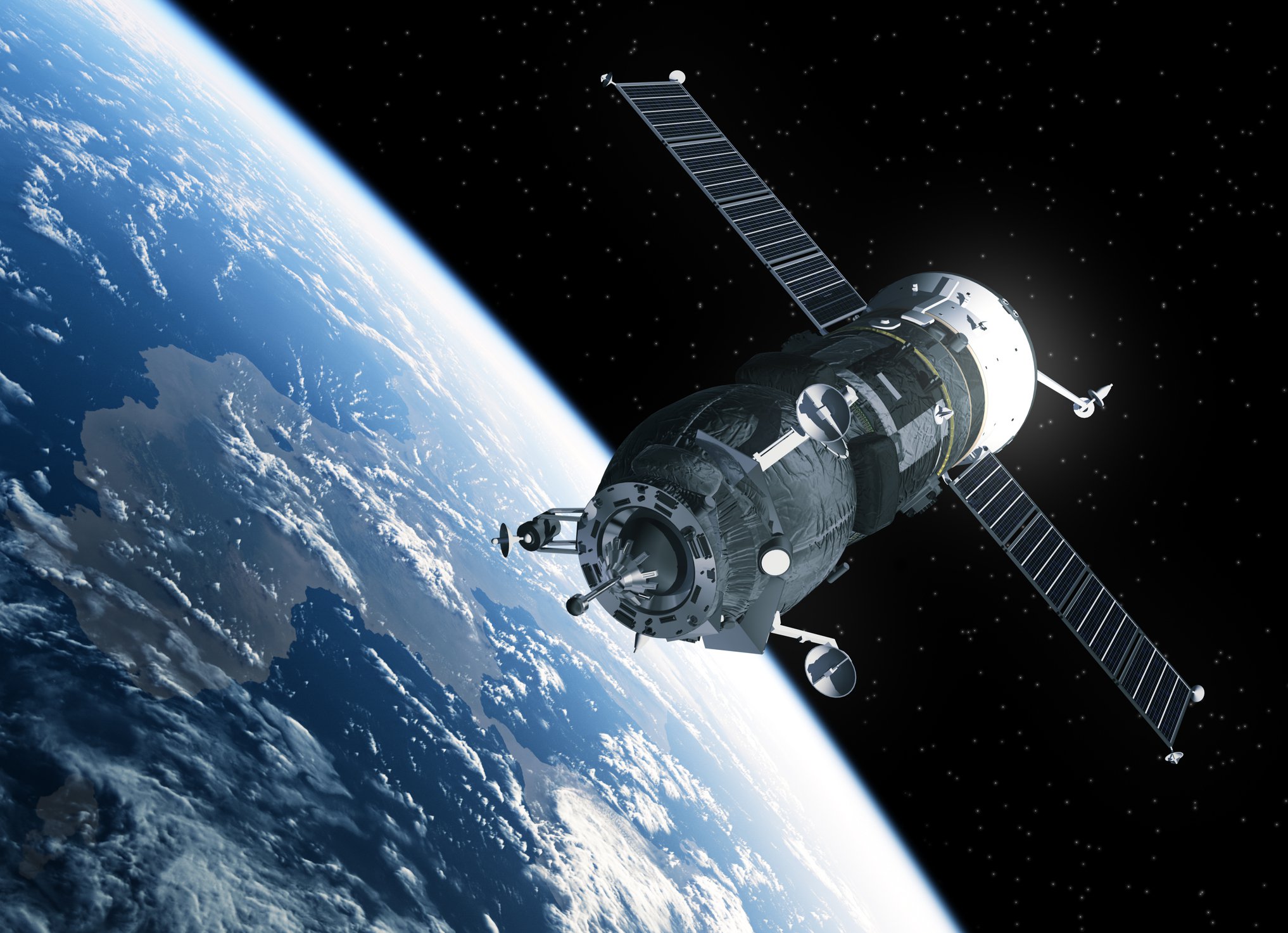
Globalstar had successfully positioned eight replacement HIBLEO-4 satellites into low Earth orbit (LEO), launching on the evening of August 15 on a SpaceX Falcon 9 rocket.
The mission is the first of two tranches placing a total of 17 satellites, which are necessary to deliver continuity of service in concert with Globalstar’s existing second-generation satellites.
“This launch marks the culmination of years of focused work across our company to ensure the long-term continuity and strength of Globalstar’s satellite network,” Globalstar’s CEO Paul E. Jacobs said in a statement. “Replenishing our HIBLEO-4 constellation is a proud moment for the entire team and an important step in advancing the reliable, resilient mobile satellite services our customers depend on every day.”
The satellites were assembled by Ontario-based MDA Space, developed, integrated, and tested in Montréal. Globalstar’s nine remaining HIBLEO-4 satellites are in the final stages of integration.
The replacement satellites have been in development since 2022, when Globalstar awarded MDA a $327m contract. The project has faced notable delays, for which MDA has blamed “certain key suppliers”.
The HIBLEO-4s were integrated onto Rocket Lab’s Lightning Platform satellite buses. In its own statement, small-lift space launcher Rocket Lab announced the successful launch of the satellites which it “built for MDA Space” before the company “made contact with all eight satellites and confirmed all were performing nominally” without mentioning SpaceX.
Rocket Lab’s shares subsequently appreciated nearly 4.3 percent in the United States on Monday.
For its own part, MDA Space chose not to mention Rocket Lab’s part in supplying HIBLEO-4’s buses in its press release, and Globalstar chose to mention neither Rocket Lab nor MDA Space in its account of the successful launch.

The HIBLEO-4 satellites support Globalstar’s SPOT service, used by first responders and support teams through direct-to-device (D2D) SOS for smartphones, enabling the use of emergency communications beyond the reach of standard cell service. Emergency comms have been understood to be the first pillar of the D2D market, and the least mature. In the next five years, satellite D2D is thought to expand to SMS, voice, and finally data service offerings.
Much of Globalstar’s capacity currently serves Apple. Amazon is in the process of buying Globalstar in a deal valued at some $11.57 billion, announced back in April.
The D2D technology at Globalstar will complement and perhaps influence Amazon Leo’s own offering in the sector. As part of the acquisition, Amazon has assumed responsibility for an existing relationship with Apple, which previously purchased a 20 percent stake in Globalstar for $400 million in November 2024, while giving the company $1.1bn in cash to expand the iPhone’s satellite services, committing 85 percent of Globalstar’s then-capacity to Apple.
As part of its acquisition, Amazon announced new agreements with Apple to power services for the iPhone and Apple Watch, including emergency SOS.
Globalstar also intends to orbit a 48-satellite constellation called C-3, which could launch as early as next year, offering a powerful D2D service capable of connecting indoors and inside vehicles. C-3 was seemingly funded by the $1.1bn injection from Apple, which sought a leading satellite network powerful enough to reach inside homes and cars.




Comments