
Quantum computing company Rigetti Computing has sold two 9-qubit Novera quantum computing systems, totaling approximately $5.7 million.
While the companies that purchased the systems have not been named, Rigetti said one customer is an Asian technology manufacturer, while the second is a California-based applied physics and AI startup.
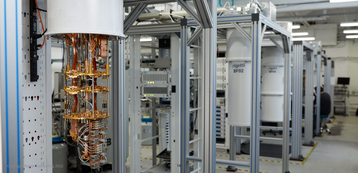
The former will use the quantum computer as a testbed to develop internal quantum computing expertise, including benchmarking and validating their own quantum technologies with Novera, Rigetti noted, while the latter will use their system for quantum hardware and error correction research.
Both systems are expected to be delivered in the first half of 2026.
Rigetti launched its Novera QPU, the company’s first commercially available quantum processing unit, in December 2023.
Built at Rigetti’s Fab-1 facility in Fremont, California, the Novera QPU includes a 9-qubit chip with turntable couplers for fast 2-qubit operations and a 5-qubit chip for testing single-qubit operations. The Novera QPU is based on Rigetti’s fourth-generation Ankaa-class architecture, which was first unveiled in August 2023.
“The Novera QPU continues to be chosen and trusted by national labs and researchers across the world to advance quantum computing technology R&D,” says Dr. Subodh Kulkarni, Rigetti CEO. “We are excited to see the increased demand for on-premises quantum computing systems as the industry matures.”
In August 2025, Rigetti partnered with Montana State University (MSU) for the deployment of a Novera quantum computer at the university’s Applied Quantum CORE (QCORE) facility. The deployment saw MSU become the first academic institution with an on-premises Rigetti quantum computer, which the university said it will use to advance quantum computing R&D.
That same month, the company announced the general cloud availability of its 36-qubit, multi-chip quantum computer, Cepheus-1-36Q, a four-chip quantum computer that Rigetti said provides a 2x reduction in two-qubit gate error rate compared to its predecessor, the Ankaa-3 system, while also achieving a median two-qubit gate fidelity of 99.5 percent.


Comments