
A telephone exchange (aka central office) in Brisbane, Australia, has been acquired and is set to be demolished.
Australian property investor and developer, Cbus Property, this week announced it has acquired 280 Elizabeth Street, located in Brisbane’s CBD.
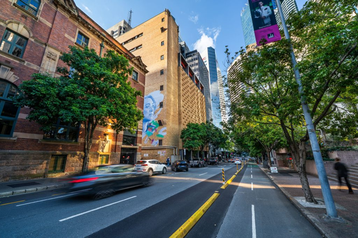
The 10-story site, also known as the Edison Exchange, is currently occupied by Australian telco Telstra, operating the site as a telephone exchange. The telco's lease on the site is set to end shortly.
Describing the 1,680 sqm (18,083 sq ft) freehold property as a “prime redevelopment site,” Cbus aims to build its third commercial office tower in the Queensland capital city.
Demolition works will commence immediately following settlement of the acquisition, with practical completion anticipated for mid-2030.
A construction contract with Hutchinson Builders – which worked with Cbus on projects at 205 North Quay and the under-construction 185 Wharf St – will be executed simultaneously with the site acquisition.
Cbus Property CEO, Chris Kakoufas, said: “This acquisition will continue our track record of delivering exceptional developments that capture market uplift through advantageous timing and delivery excellence ahead of peak construction cycle conditions.”
The current exchange was built in the 1960s by the Australian post office, but the Elizabeth Street site has operated as a telephone exchange since the 1880s.
Telstra sold 280 Elizabeth Street to Singaporean group Firmus Capital for AU$57 million in 2019 on a triple net (NNN) seven-year sale-leaseback deal, with a single one-year extension option.
The property was recently put up for sale by KnightFrank, which called the vacant building a “rare development opportunity” available for “immediate redevelopment.”
Cbus Property is a wholly owned entity of Cbus Super, the superannuation fund for the construction, building, and allied industries, with funds under management exceeding AU$105 billion.
2019 also saw Telstra sell a minority interest in 37 telephone exchanges to Charter Hall, in an AU$700 million (US$501.2m) sale-leaseback deal. Those leasebacks were on an average 21-year term, with Telstra retaining a 51 percent stake. The telco sold three data centers in Europe and Asia to I Squared Capital the same year, moving them under Hong Kong telco HGC Global Communications.
Telstra’s multi-year copper network switch-off started back in 2014. Its Public Switched Telephone Network (PSTN) shutdown is nearly complete, and the shut-off of other copper-based broadband services is ongoing.
Telstra is one of many incumbent telcos globally that are exiting or redeveloping their exchange footprints.
Canadian telco Telus is in the midst of shutting down its copper network to focus on fiber, and is converting many of its central offices (aka telephone exchanges) into residential developments.
In the UK, BT and Openreach are in the early phases of a major telephone exchange exit program.
Spain's Telefónica has completed its copper shutdown, closing some 8,000 sites, and is relaunching around 100 as Edge data centers.
DCD has covered BT & Openreach’s copper shutdown and exchange exit program in depth; read more here.





Comments