
Telefónica is accelerating its Edge computing strategy by converting disused copper exchanges into mini data centers totaling 1-2MW of capacity, with a medium-term target of more than 100 nodes.
Telefónica España has begun converting its old copper exchanges, now obsolete following the complete shutdown of the analog fixed network, into Edge data center nodes distributed throughout the country. The telco completed its copper switch-off last year.
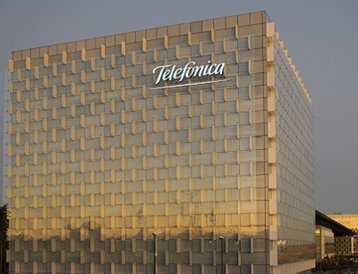
These sites, with capacities of 1-2MW each—compared to 100MW for large hyperscale centers—are geared toward low-latency cloud computing and AI services, prioritizing proximity to the customer to reinforce data sovereignty.
The company already has a dozen operational nodes and plans to launch commercial services shortly after a customer testing phase, with a deployment horizon of more than 100 centers in five to seven years.
The locations are live in Madrid (two), Barcelona, Valencia, Seville, Málaga, Palma de Mallorca, Bilbao, A Coruña, and Terrassa (Barcelona).
The deployment will continue throughout 2026 with seven additional locations: Zaragoza, Las Palmas de Gran Canaria, Valladolid, Gijón, Santa Cruz de Tenerife, Santiago de Compostela, and Mérida.
This initiative takes advantage of the capillarity of its network of power plants - many of which will be sold as real estate assets - giving them a "second life" as Edge infrastructures integrated with fiber and 5G connectivity.
Integration into European digital sovereignty project
The plan is part of a pan-European Edge computing project awarded to Telefónica in Spain, with a subsidy of €93 million ($111m) plus its own undisclosed investment, alongside operators such as Orange, Deutsche Telekom, and Telecom Italia. At the same time, the operator is moving forward with 17 additional Edge nodes by the end of 2026, complementing its leadership in FTTH (more than 31 million homes) and 5G to boost digital transformation in businesses and institutions.
Borja Ochoa, president of Telefónica Spain, highlights that this "Edge Plan" positions the country at the forefront of Europe in terms of technological sovereignty, enabling local infrastructures that avoid dependence on non-EU suppliers. The Edge architecture combines cloud elasticity with processing close to the data source, minimizing latency and ensuring European regulatory compliance.
Telefónica completed the switch-off of its legacy copper network last year. At its peak, the company had more than 8,500 copper exchanges.
The mobile operator has replaced the copper with fiber, which offers significantly faster speeds, consumes less energy, and requires less maintenance than copper networks. The carrier claims that fiber is 90 percent more energy efficient than legacy copper.
Telefónica had initially aimed to complete its copper switch-off in April 2025, and even brought forward its plans to retire its copper network by a year for last year instead, but missed its planned target.
This piece was automatically translated from DCD's Spanish site and edited by a member of DCD's editorial staff.



Comments