
Elon Musk's Starlink satellite unit has called for more space operators to share tracking data to reduce potential in-orbit crashes.
In early October, satellite broadband provider Starlink, a SpaceX company, released more information about its Stargaze situational awareness data project, which aims to share satellite pathing information for “free to all satellite operators.”
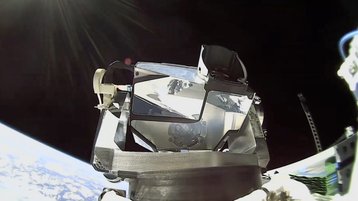
The initiative aims to map Earth’s orbits, as a space intelligence platform does, and issue certain information to its participants regarding potential conjunctions. The company poses sharing exhaustive satellite data with the company, which is very close to the Pentagon, as “responsible” behavior.
“Not sharing satellite maneuvers ahead of time can result in dangerous close approaches that would otherwise have been easy to avoid,” Starlink’s statement reads. “As the population of satellites in LEO continues to grow, we encourage every operator to adopt similar practices to prioritize the sharing of information and space safety.”
It appears Stargaze, which was announced in February, now also referred to as Space-Safety.com, will compile a proprietary map of all satellites, informed by Starlink situational awareness technologies, participating operators that share their data, and space intelligence providers.
The sharing part, conditional to an operator’s participation, appears to mean getting texts that your satellite might be about to crash into something, which it calls “conjunction data messages” (CDMs), rather than full access to the database.
Starlink has also started stating it shares all its ephemeris (satellite trajectory and maneuver data) “publicly,” which seems to mean it sends data to certain proprietary American databases which users must register with to access, which reserve the right to exclude access in the case of security concerns, which is essentially the problem we started with.
Virtually all governments prefer the whereabouts of their nation’s satellites to remain as private as possible, shared only with close allies, if that. No globally accessible master system exists, as is the case with ships or planes. Starlink is now suddenly claiming that responsibility, only no one’s allowed to see all the data except the company itself, with its participants on some kind of need-to-know basis.
At the International Astronautical Congress in Antalya, Turkey, on October 6, Michael Nicolls, senior vice president of Starlink at SpaceX and xAI, prided his company on how it has “begun to share data [with some Chinese satellite operators], but specified “there are many that we do not [share with].” This is not really what “public” data sharing implies, but it is a notable step forward in international cooperation.
Stargaze collects information from the 31,000 star trackers in the 11,000+ satellite fleet, which are designed to position the satellite by measuring the stars it can see, making them suboptimal for tracking satellites, which it merges with radar and optical satellite trackers from observatories on Earth managed by specialist space data platforms.
The Wild West in LEO
In 2026, Starlink reports its constellation encountered conjunctions with 650 “unique third-party satellites,” only half of which shared ephemeris, and around 164,000 near-miss events in the last six months, where the time of closest approach happened within four hours of an unannounced maneuver. The company warns that a one-meter satellite that dares to attempt orbit at the same altitude as the Starlink constellation possesses a daily collision probability of “~5×10⁻⁵."
In the October 6 presentation, the company drew attention to an ideal and an unideal conjunction event, recalling Starlink-32710’s sighting of an unannounced maneuver by “an object” on October 1, that would bring it within 57 meters. 32710 was able to analyze a new trajectory thanks to Space-Safety.Com in less than an hour and plan and execute a collision avoidance burn to restore a 1km distance.
Not so lucky was Starlink-2140, which had insufficient lead time to fully mitigate a near miss with yet another interloper in LEO in August. With CDMs arriving just 30 minutes before close approach, 2140 could only slew its chassis and solar arrays to a lower profile as the unnamed offender passed within 134 meters, a cautionary tale Starlink insists could have been prevented had only the other operator possessed the good sense to tell SpaceX everything it wanted to do in space that day.
Just trust me, bro
Since the Cold War, operators have agreed that a shared international platform about satellite trajectories would be required for proper safety, a task the United Nations or trade associations like GSOA were hardly cut out for. The unspoken solution became semi-militarized competing satellite intelligence platforms or government intelligence agencies, which did not collaborate with opposing geopolitical power blocs, but were adept at tracking one another’s satellites.
SpaceX now appears to be entering that space, building on those intelligence platforms’ existing data to create an even more closed platform that only promises its adopters warning messages about collisions.
“The long-term solution cannot depend on every operator joining a single company's system,” Prof. Chiara Manfletti, Neuraspace CEO and former president of the Portuguese Space Agency, told the press. “What we ultimately need is a federated and interoperable space-traffic ecosystem in which operators can securely exchange trusted trajectory and intent information across different platforms, organizations and national systems.”
On December 9, 2025, a Starlink satellite passed within 200 meters of a satellite launched by China from the Jiuquan Satellite Launch Center in the Gobi Desert. Both sides blamed the other for not sharing information prior to the near-conjunction.
Since then, SpaceX has been brought before the United Nations Security Council for a telling off, potentially motivating its announcement that it would lower its entire constellation into what is essentially very low Earth orbit (VLEO), a safer orbital plane, where debris from collisions cannot trigger the Kessler Cascade.
The politics of who has almost flown into whom has often been dictated by the party airing its grievance. Because of its massive constellation, Starlink has been on the receiving end of a vast majority of these complaints globally.
“To achieve [a bright future for humanity], space safety has to be done right,” Starlink says. “This should not be a geopolitical concern or a competition concern. It should be about ensuring that everyone who wants to use space can do so safely. We encourage every operator not only to share ephemeris data proactively the same way Starlink already does, but also to adopt the high standards of space safety that SpaceX and Starlink use every day.”




Comments