
Rebellions and Standard Energy have begun joint development of an artificial intelligence to support energy storage system (ESS) control in AI data centers.

First reported by BusinessKorea, the AI is designed to manage power flow between servers and ESS in millisecond intervals. It monitors real-time power demand and automatically controls power discharge.
The project is linked to the companies’ joint solution dubbed “Dopamine,” first reported on in August. The solution combines neural processing unit (NPU) servers with Standard Energy’s vanadium-ion battery ESS. The new control AI will subsequently be integrated into the platform.
Through this, the companies aim to reduce the electricity cost risks faced by AI data center operators. At present, under current power contracts, if peak demand exceeds agreed capacity multiple times, operators must pay surcharge rates of 1.5 to four times the base electricity fee. Due to the sudden workload spikes seen in AI data centers, data centers running these workloads are more vulnerable to these penalties.
As a result, the partners claim that by supplying stored ESS power during peak demand, operators can avoid exceeding contracted capacity. The control AI under development is designed to predict these situations and discharge stored power within that time frame.
A prototype of the control solution is expected in the first half of 2026, with commercial deployments following that.
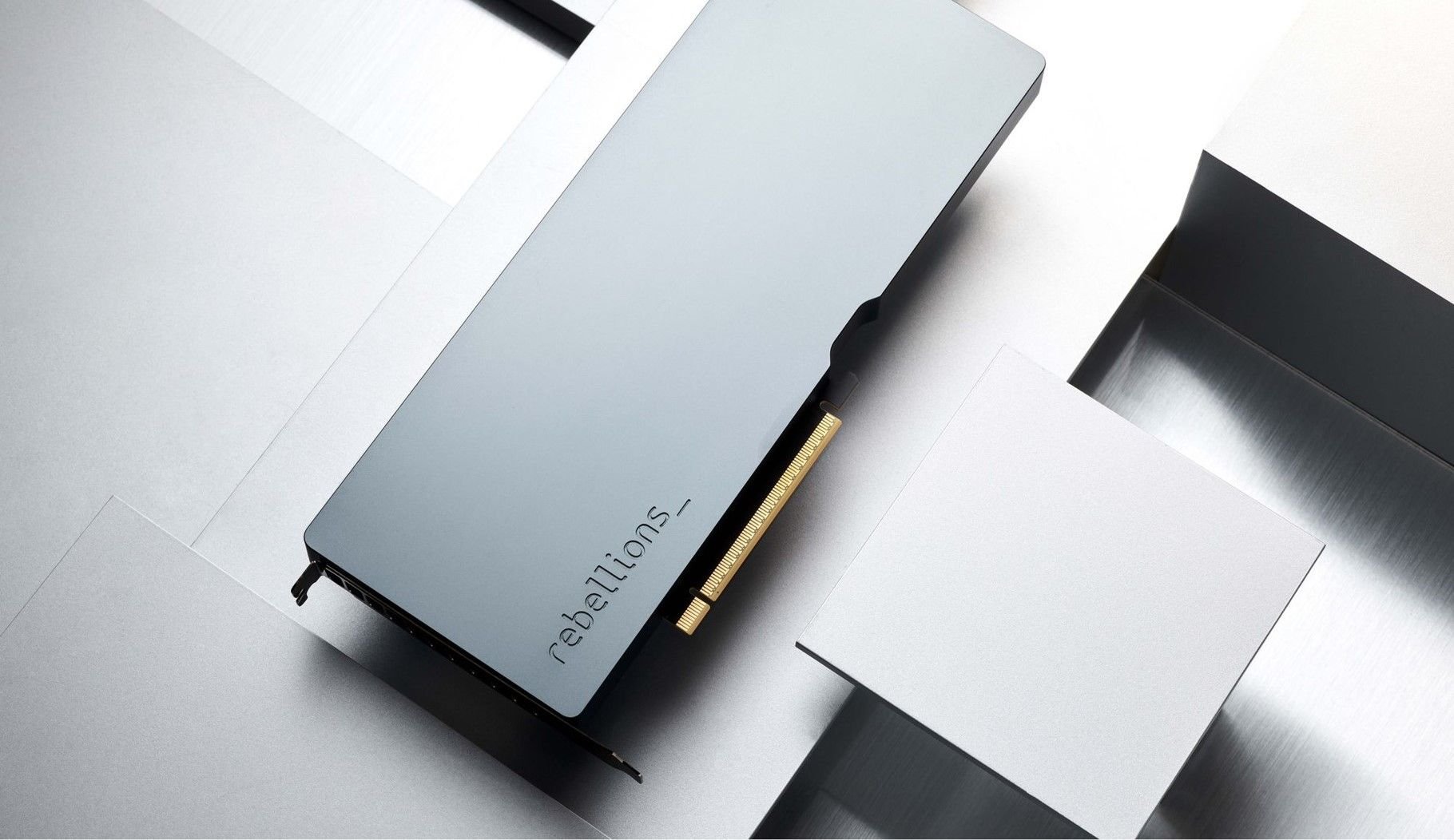
Founded in 2020, Rebellions is a South Korean firm that specializes in AI inference accelerators that offer energy efficiency and low-latency performance. In June 2024, the company agreed to a merger with Sapeon Korea, a semiconductor company that was spun out of SK Telecom in 2016, and in July of the following year, partnered with Marvell to offer high-performance, energy-efficient AI systems that support AI deployments across APAC and the Middle East. It was recently valued at $1.4 billion, following a Series C funding round.
Standard Energy was founded in 2019 and is headquartered in Singapore. The company designs and produces small to large-scale secondary batteries for ESS based on vanadium-ion battery technologies.




Comments