
SoftBank has detailed plans to fly high-altitude platform station (HAPS) aircraft to deliver direct-to-device network coverage over Japan.
Planned for this summer, the launch sees the Japanese carrier partner with US-based Sceye, which it made a major investment in last year.
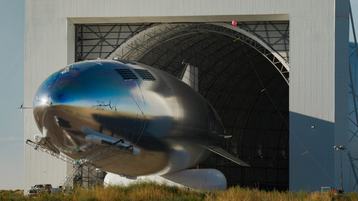
Sceye specializes in developing lighter-than-air (LTA)-type HAPS vehicles, similar to zeppelins or blimps.
In the trial, one such aircraft will launch from Sceye’s hangar in Roswell, Mexico, and travel across the Pacific to Japan under satellite-based control. After reaching Japanese airspace, it will establish a link with a ground gateway in Kochi Prefecture on Shikoku Island, located on Japan’s Pacific coast. The demo aims to deploy smartphone connectivity to simulate possible connectivity solutions in the event of a major disaster, such as the earthquake that beset Japan’s Kumamoto prefecture last week.
Sceye recently completed a 12-day, 6,400-mile stratospheric flight using its SE2 HAPS model, traversing from New Mexico in the US to the coast of Brazil. Claimed to be a record flight time, SoftBank intends to test whether the aircraft can reproduce the same flight performance under Japan’s unique weather and environmental conditions.
It also aims to test if telecom services can be delivered from an altitude of approximately 12.4 miles at a quality comparable with terrestrial mobile service, and whether HAPS radio transmissions cause harmful interference to surrounding ground-based mobile networks.
SoftBank said the preceding aircraft, network, and gateway preparations have now been completed. It also completed an end-to-end communications test linking the equipment intended for the HAPS aircraft to its Japanese mobile core.
The operator successfully tested voice calls, SMS, and mobile data across the complete Japan–United States path, verifying that a normal handset could communicate through the planned HAPS access equipment and onward into the operator’s existing core-network environment.
HAPS forms part of SoftBank’s wider Ubiquitous Transformation (UTX) strategy, which aims to complement terrestrial mobile networks with non-terrestrial infrastructure in the event of disasters. Rival telecom NTT DoCoMo has similar ventures, claiming recently to have carried more than 5 million connections to its consumer-facing Starlink service.
In its announcement, SoftBank stressed the differences between HAPS-based connectivity and its own Starlink offering, SoftBank Starlink Direct. The operator said that Starlink Direct is intended principally for mountains, islands, marine areas, and other locations outside ordinary network coverage, offering a broad, basic reach. In contrast, its HAPS service is intended for suburban areas, aerial applications, and other uncovered locations that require service closer to the quality and capacity of a terrestrial network, with a maximum diameter of about 200 kilometers in coverage. This offers a more localized, higher-capacity layer capable of supporting ordinary voice, messaging, and data services.
SoftBank added that commercial HAPS operations are targeted for 2027 or later.
“Our vision is to expand today's 2D communications infrastructure into a 3D communication network extending into space. To achieve this, we’ll connect multiple HAPS platforms with low Earth orbit (LEO) satellites using optical wireless communications, creating a multi-layered, 3D telecommunications network," said Masayuki Kamimura, senior director at SoftBank’s Ubiquitous Network Planning Division.
"Ultimately, we believe this network will support future innovations such as advanced mobility and AI-enabled services, while contributing to a broader digital transformation across society."



Comments