
Aerospace company Sceye has completed a 12-day, 6,400-mile (10,299 km) stratospheric flight using its SE2 High-Altitude Platform Systems (HAPS).
The flight traversed the stratosphere from New Mexico, US, to the coast of Brazil, claiming a record flight time.
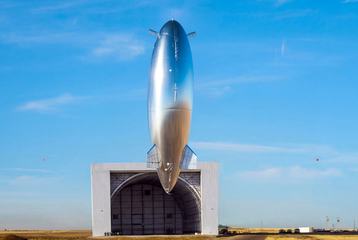
Sceye noted that it was able to spend more than 88 hours over areas of operation before it completed a planned and controlled termination. The flight was part of the company's Endurance Program.
According to Sceye, this program is built on Sceye's 2024 Control Dynamics Program, during which Sceye's HAPS became the first to close the power loop in the stratosphere by staying powered through a full day-night cycle while maintaining position over an area of operation.
High-altitude pseudo satellites (also known as high-altitude platform stations) are airships, balloons, or fixed-wing drones that provide temporary connectivity to an area from the stratosphere, above commercial flights and turbulent weather patterns.
The SE2 flight launched on March 25, 2026 at 8:26 AM MT from New Mexico.
"This is the defining step toward unlocking the stratosphere as a new layer of infrastructure," said Mikkel Vestergaard Frandsen, founder and CEO of Sceye.
"Endurance is what makes this possible. The ability to remain over an area for extended periods enables persistent connectivity and real-time monitoring where traditional networks and existing technologies fall short. Through the stratosphere, we can extend the reach of existing networks globally to billions of people that are unconnected and provide real-time actionable insights that significantly improve how we prepare for and respond to wildfires or other natural disasters."
The flight ended Sceye's Endurance Program, which set out to align flight duration with commercial requirements and establish a stable platform configuration for long-duration operations.
Sceye said during the test it was able to close the power loop, meaning it was able to maintain power, position, and altitude during each day and night cycle. The company leverages solar power during daylight, which charges batteries that operate at night.
On top of this, Sceye was able to close the pressure loop, thus maintaining vehicle pressure during each day and night cycle.
The test was carried out ahead of plans to launch pre-commercial test flights this summer.
As such, Sceye is preparing for its first pre-commercial test flight in Japan with SoftBank Corp. SoftBank is one of Sceye's investors, and announced plans last year to launch pre-commercial HAPS stratospheric telecommunications services in Japan during 2026.




Comments