
OVHcloud has launched its Quantum Platform, enabling customers to access cloud computing via the cloud.
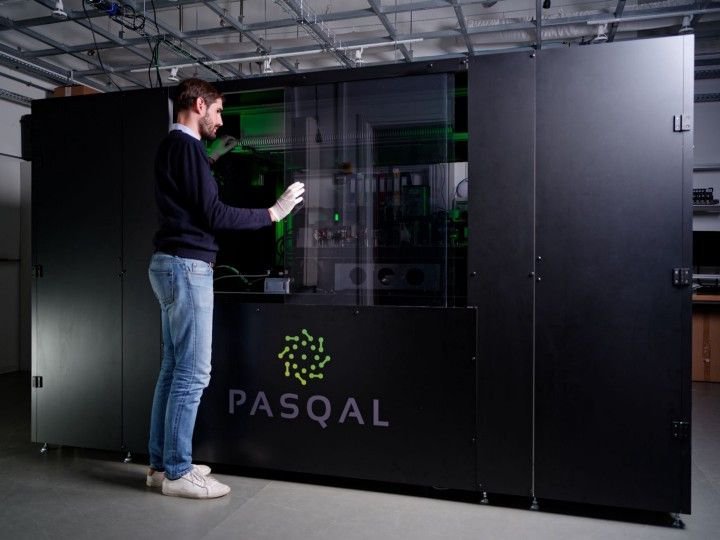
The European cloud provider said it will offer access to eight quantum computers, including the Pasqal Orion Beta QPU, which has a capacity of 100 neural atom qubits. In addition to the Pasqal QPU, OVHcloud has nine quantum emulators available on the platform.

Fanny Bouton, quantum lead at OVHcloud, said: “This launch gives us the means to offer our customers the most advanced technologies, while continuing to develop a European quantum cloud. Today, at OVHcloud, we are at the forefront of quantum computing and want to provide our customers with the means to iterate, test, and learn, so that we can all be ready to embrace quantum together.”
Loïc Henriet, CEO at Pasqal, added: “Making our quantum processing unit available on OVHcloud represents a major step toward European digital sovereignty. It ensures that quantum computing, from hardware to cloud infrastructure, can be developed, deployed, and operated entirely within Europe. This collaboration embodies our shared commitment to building an European trusted, independent, and competitive quantum ecosystem.”
The Pasqal QPU is hosted at Pasqal’s HQ in Massy, France, rather than an OVH data center.
OVH first revealed plans for the Quantum Platform in June 2025, with a planned launch in September.
Based in France, OVHcloud currently operates 44 data centers across four continents.
US hyperscalers, including Amazon Web Services, Google, and Microsoft, all have quantum offerings of their own. Both Google and Microsoft offer access to Pasqal's neutral atom quantum computer via their quantum platforms. Amazon launched its own quantum chip, dubbed Ocelot, in February 2025, and Google launched the Willow chip in December 2024.
Pasqal delivered two neutral atom quantum computers earlier this month, one each to Germany’s Jülich Supercomputing Centre (JSC) at Forschungszentrum Jülich (FZJ) and the French Alternative Energies and Atomic Energy Commission (CEA).





Comments