
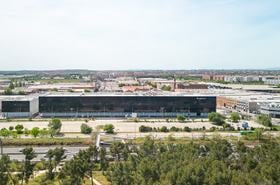
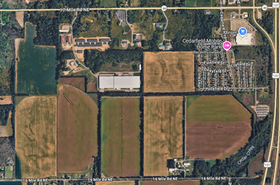
Microsoft has withdrawn from a data center project in Loughton, Essex, that was being developed with Nscale.
The two revealed they were working together in the UK in September 2025, with Microsoft planning to establish "the UK's largest supercomputer" at the site as part of a $15bn investment in AI infrastructure in the country.
Microsoft would have been the anchor tenant at the Nscale-developed, owned, and operated data center.

The data center project was previously aiming to be completed in late 2026, though access to a grid connection has been delayed, with it now not expected to get a power supply via the national grid until the 2030s.
While Microsoft has withdrawn from this site, an Nscale spokesperson told The Telegraph: “We remain committed to both the Loughton project and the UK, and we are exploring alternative power sources for the site, in addition to other expansion sites in the UK. Our relationship with Microsoft remains strong and long-term, and this unfortunate London-wide grid issue has no impact on our other contracts.”
Upon announcing the project in January 2025, Nscale said the data center would see an investment of around $3bn and support 50MW of AI and high-performance computing (HPC) capacity, and have a total power allocation of up to 90MW. DCD has contacted Nscale to see if this has since been adjusted.
Energy infrastructure issues in the UK were previously cited by OpenAI as the motivation to drop out of its Stargate UK project with Nscale in April 2026, though in this case the AI lab stated that it was related to regulations and the cost of energy.
Nscale is currently preparing for an initial public offering (IPO), with reports suggesting it could be seeking a valuation of up to $35bn.
According to the Business Times, a cohort of investors has since reportedly suggested that Nscale scale down its IPO and seek a valuation of between $16bn and $19bn to make it more attractive to buyers.
The company published its IPO prospectus in September, which noted that Nscale has five active data centers offering a combined 55MW, with 12 in various stages of development.
Much of the neocloud's value at present comes from large capacity commitments with existing investment-grade customers, due to the capital-intensive nature of the data center buildout and the fact that many projects remain ongoing, meaning the timing of losing an anchor tenant at the company's Essex data center site is unfortunate for Nscale.
The company has around $103bn in contracted revenue, of which Microsoft comprises around 40 percent at present. The Loughton, Essex, project is, however, but a small proportion of this.
Recently, Nscale's data center project in Glomfjord, Norway, was reported to be facing delays. While some publications reported that this has led to heavy penalties, DCD understands this to be inaccurate, with no penalties or fines incurred related to the six-month delay.
It is a tricky time to be in the neocloud business, with investors currently displaying a degree of uncertainty in the market. Investors have increased how much they are charging neoclouds to borrow money - last week, some of the yields on CoreWeave's bonds reached 15 percent, having been issued at 9.67 percent.
Todd Schoenberger, chief investment officer at CrossCheck Management, told Reuters: "It's not just CoreWeave; there are several (companies) that are falling into this category because of concerns that the revenue is just not going to be there to turn a profit and maintain the amount of debt that these companies are taking on."
Another neocloud player, Firmus, recently abandoned its own plans for an IPO in Australia, citing market volatility.
Neil Osnato, founder of infrastructure advisory firm Persistence Analytics Group, said he does not believe the problems experienced by Firmus are "evidence that AI infrastructure demand is unreal," but that "capital markets are beginning to distinguish more sharply between future demand narratives and demonstrated execution."



Comments