
Earlier this year, Virgin Media O2 launched its O2 Satellite service to provide direct-to-device (D2D) mobile connectivity in rural and remote not-spots in the UK.
The company paired with SpaceX subsidiary Starlink to launch the service, as many mobile carriers turn to satellite to cover some of the tougher to reach locations across the country.
It builds on the multi-year agreement that O2 signed with Starlink last year to support the telco's ambitions to expand rural network coverage in the UK.
One such location where the operator is providing its O2 Satellite technology is in the mountainous Snowdonia, located in northern Wales, UK. The area is surrounded by not-spots, meaning terrestrial cellular coverage is difficult to come by.
There are no cell towers providing coverage, as would usually be the case, so it makes the perfect location for O2's Satellite service, which leverages Starlink's constellation of Low Earth Orbit (LEO) satellites to beam connectivity to compatible smartphones.
These satellites are orbiting the planet at an altitude of about 350km and a speed of around 17,500mph.
The technology itself is in its infancy, and while Elon Musk, founder of SpaceX, suggests that satellite connectivity will compete with traditional terrestrial coverage, the current reality is very different.
But mobile carriers don't subscribe to a view that satellites will replace terrestrial coverage, and instead anticipate the technology will add a complementary service. This is a view held by Virgin Media O2 as well.
Virgin Media O2's terrestrial network currently covers 89 percent of the UK's population, but with Starlink's satellite connectivity this could jump to 95 percent, notes the telco.
"The laws of physics say that because of the spectrum and because of the propagation, satellite can't replace cellular," said Professor Rob Joyce, director of mobile access engineering at O2, during a press briefing.
"What it might do is it might stop us building more rural towers...it won't replace cell towers; it will stop us building more cell towers in rural areas."
Virgin Media invited DCD, along with a handful of the UK's press and analysts, to North Wales to showcase its O2 Satellite technology.

Patience required
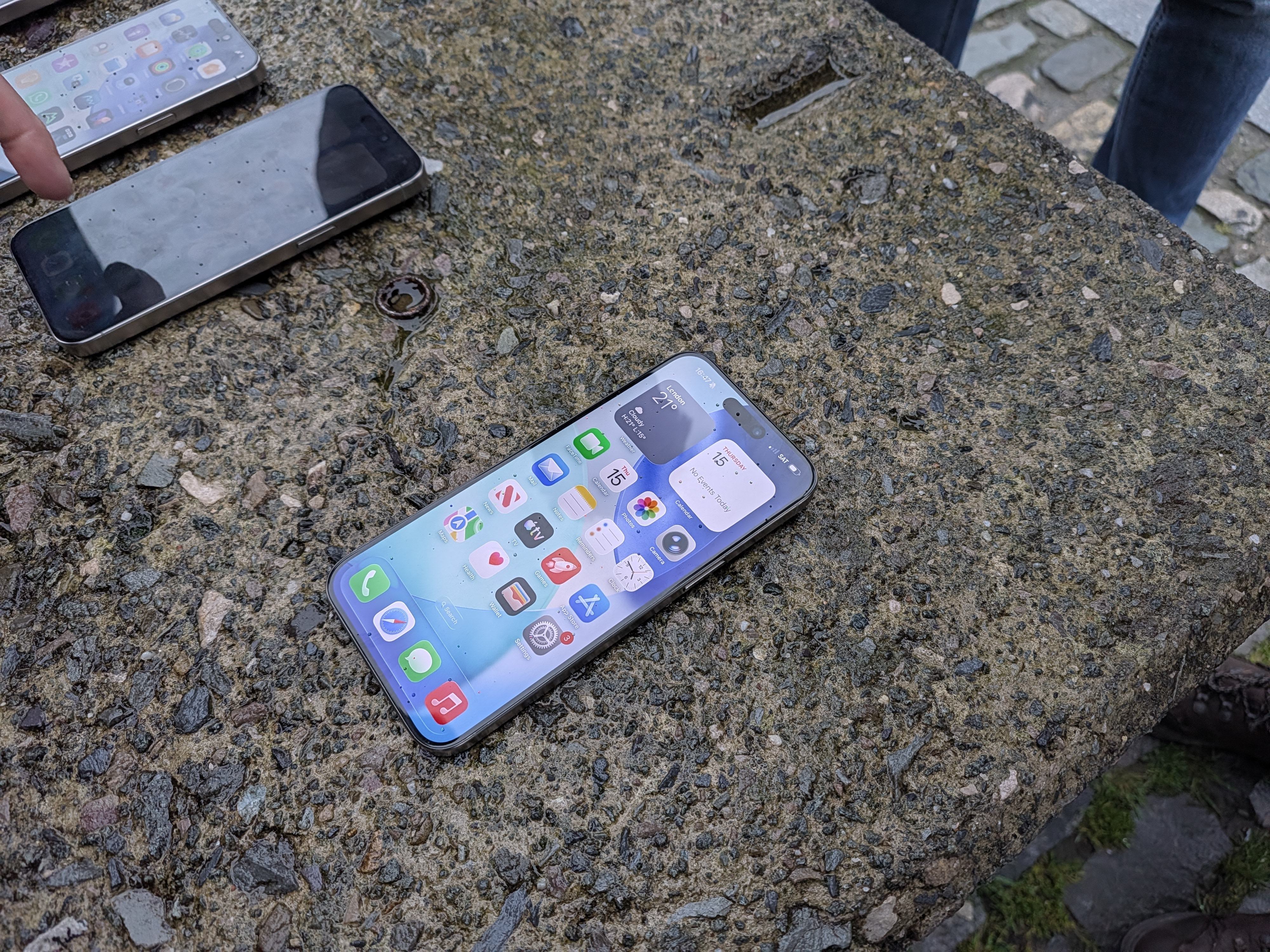
The telco charges a monthly fee of £3 (US$4) for its users who wish to use its satellite service, though it's worth pointing out that connection to the service, which will pop up as 'SAT' where the 5G would usually sit, is dependent on being unable to connect to traditional cellular coverage.
The service uses a shared 5MHz band within the operator's 1,800 MHz holding, which Joyce claims is enough to provide 4G service with roughly 4Mbps speeds. "We estimate about 4Mbps per second per spot beam, and these satellites have about 50 spot beams," said Joyce.
After the best part of a 10km hike, finding not-spots to test the connectivity become a challenge, with Joyce suggesting that the devices were trying to pair to Virgin Media O2's network.
After some perseverance, however, O2 Satellite's connectivity was working as intended. A trip to a slightly different part of the region had the desired result.
From here, the O2 team were able to demo the technology through sending texts, and even able to perform a video call in the wet, blustery conditions. The ability to be able to send texts shouldn't be lost if in the case of an emergency.
It's worth noting that the satellites currently supporting D2D services on O2 Satellite are part of Starlink's constellation of 650 satellites. "This is the first version of O2 Satellite. It's not the end product," said Joyce.
The second version is set to arrive in the coming years as Starlink prepares to make use of its recently acquired 800MHz spectrum from Grain Management in addition to the EchoStar spectrum it acquired to launch 15,000 high-capacity direct-to-device D2D satellites. This will deliver more bandwidth and capacity, points out Joyce.
"We're going to have a lot more bandwidth. It's 20 times or it's 100 times the capacity, depending on how much spectrum we deploy. We can then start thinking that we're going to have a real satellite network... we'll have comparable services to the terrestrial," added Joyce.
DCD will cover O2's Satellite plans in more detail in Issue #63 of DCD Magazine.







Comments