
Nokia last week announced that it has worked with more mobile carriers to engage in proofs of concept and/or trials to advance its work with AI-RAN.
The vendor, which is currently banging the drum around AI-RAN (radio access networks) pretty loudly along with its investor Nvidia, confirmed that more mobile carriers are testing its AI-RAN offering.
Indeed, A1 Group, Chunghwa Telecom, du, e&, Mobily, stc, TPG Telecom, and Zain Saudi are the latest mobile carriers to pair with Nokia to test its AI-RAN.
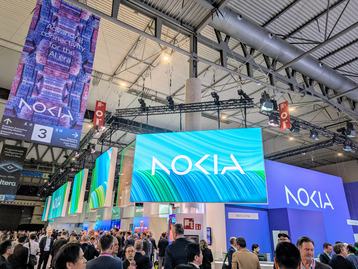
Nokia also highlighted that existing partnerships are continuing to build, noting that trials with operators previously announced, such NTT Docomo "continue to progress steadily."
The vendor has notably previously named other carriers including the likes of BT, Elisa, and Vodafone Group, as those who has also engaged Nokia over AI-RAN technology, plus France's Orange Group.
The company said its operator engagement over AI-RAN now spans North America, Europe, Asia-Pacific, and the Middle East.
Further partnerships have been developed with the likes of T-Mobile in the US, Indonesia's Indosat, and Japan's SoftBank Corp. All three of these telcos featured heavily in Nokia's MWC announcement in March, when the vendor mapped out its ambitions to work with Nvidia to develop AI-RAN ahead of the 6G era.
While Nokia's first commercial AI-RAN products aren't expected to go live until next year, the company spoke up about the importance of pairing with carriers to trial the technology.
According to Nokia, its AI-RAN platform has been able to deliver more than 20 percent improvements in spectral efficiency through AI-powered radio innovations, with further gains expected through to 2028.
This is important, notes Nokia, as it will enable telcos to "increase capacity, improve network economics and create new service opportunities by extracting greater value from existing spectrum and infrastructure investments, reducing reliance on traditional hardware refresh cycles."
"AI is reshaping the future of telecommunications and creating a significant opportunity for operators to rethink the role of the radio network. Together with Nvidia and our growing ecosystem of partners, we are helping operators transform their networks into intelligent, programmable platforms that can support both connectivity and AI services," said Emma Falck, president of mobile infrastructure, Nokia.
"The increasing engagement we are seeing from service providers around the world shows that AI-RAN is moving quickly from vision to commercial reality and becoming a foundational technology for the AI-native 6G era."
Nokia and GPU giant Nvidia first penned an agreement to develop AI-ready RAN solutions back in 2024, long before Nvidia became an investor in the vendor.
"AI-RAN will transform the mobile network into one of the world’s largest distributed AI infrastructures. Global operator momentum demonstrates that AI-RAN is becoming the foundation for 5G Advanced today and then software upgradable to AI-native 6G tomorrow," added Ronnie Vasishta, senior vice president of telecom, Nvidia.
The concept of AI-RAN first emerged in 2024 when the AI-RAN Alliance was launched. Both Nokia and Nvidia are executive members of the alliance.


Comments