
Japanese conglomerates Mitsui and Hitachi could put data centers on used boats.
The pair announced today that they had signed a memorandum of understanding to assess the project’s feasibility and appeal before deciding to move forward.
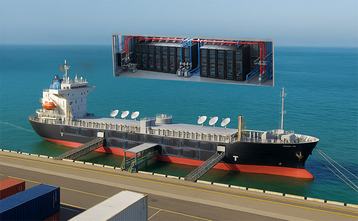
They are effectively betting that shorter construction periods, access to seawater and river water cooling systems, and the ability to sidestep land acquisition costs will make the venture appealing to investors and operators looking to grow their data center portfolio at a lower price tag.
Mitsui and Hitachi also argue that building data centers on barges would sidestep regulatory concerns that would otherwise apply if a developer was building on land.
If the so-called “Floating Data Center” project is approved, it would commence operations as early as 2027 and focus primarily on Japan, Malaysia, and the United States.
Mitsui’s transport subsidiary Mitsui O.S.K Lines would be in charge of the project’s maritime aspects, whilst Hitachi would be in charge of data center services.
But the conglomerates have not specified whether the “second-hand vessels” would come from Mitsui itself or other transport companies.
Mitsui O.S.K. Lines previously partnered with energy systems provider Kinetics to collaborate on developing a 20-73MW data center on a 9,731-ton ship.
Mitsui is not the first to consider putting data centers on boats.
Google filed a patent in 2008 proposing data centers on boats moored out at sea that would utilize wave energy for power and seawater for cooling. It is yet to deploy any waterborne facilities, however.
US-based Nautilus Data Technologies, founded in 2014, built a 6.5MW, 20,000 sq ft (1,858 sqm) data center on a floating barge in Stockton, California. But the company put its flagship project up for sale at $45m in November 2024 after pivoting from offering capacity to focusing on cooling infrastructure.
French startup Denv-R has placed a small containerized data center on a floating platform in Nantes.
What makes Mitsui and Hitachi’s proposal different is its size. Mitsui says that a car carrier ship – known as a ro-ro, or roll-on roll-off, ship – has a floor area of approximately 54,000 sqm (580,000 sq ft), making it almost three times the size of Nautilus’ barge.
Keppel is also planning a floating data center project in Singapore. According to a 2025 Keppel environment report, the proposed modular floating data center development comprises a four-story, 19.2MW waterborne module and shoreside infrastructure, occupying approximately 9,870 sqm (106,240 sq ft) of land and 7,580 sqm (81,590 sq ft) of sea space. It would be cooled via seawater.
Unabated demand for data centers has pushed developers to find increasingly creative places to put them.
China’s HiCloud currently offers capacity from its underwater data centers, which are either placed on the seabed or float just under the surface, and Amazon founder Jeff Bezos and Tesla founder Elon Musk are two of the largest players in the controversial race to put data centers in space.






Comments