
Kepler Communications is adding Nvidia hardware to its planned optical data relay satellites.
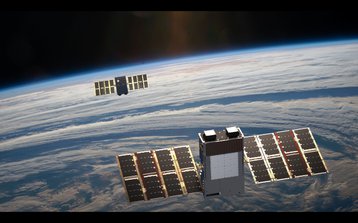
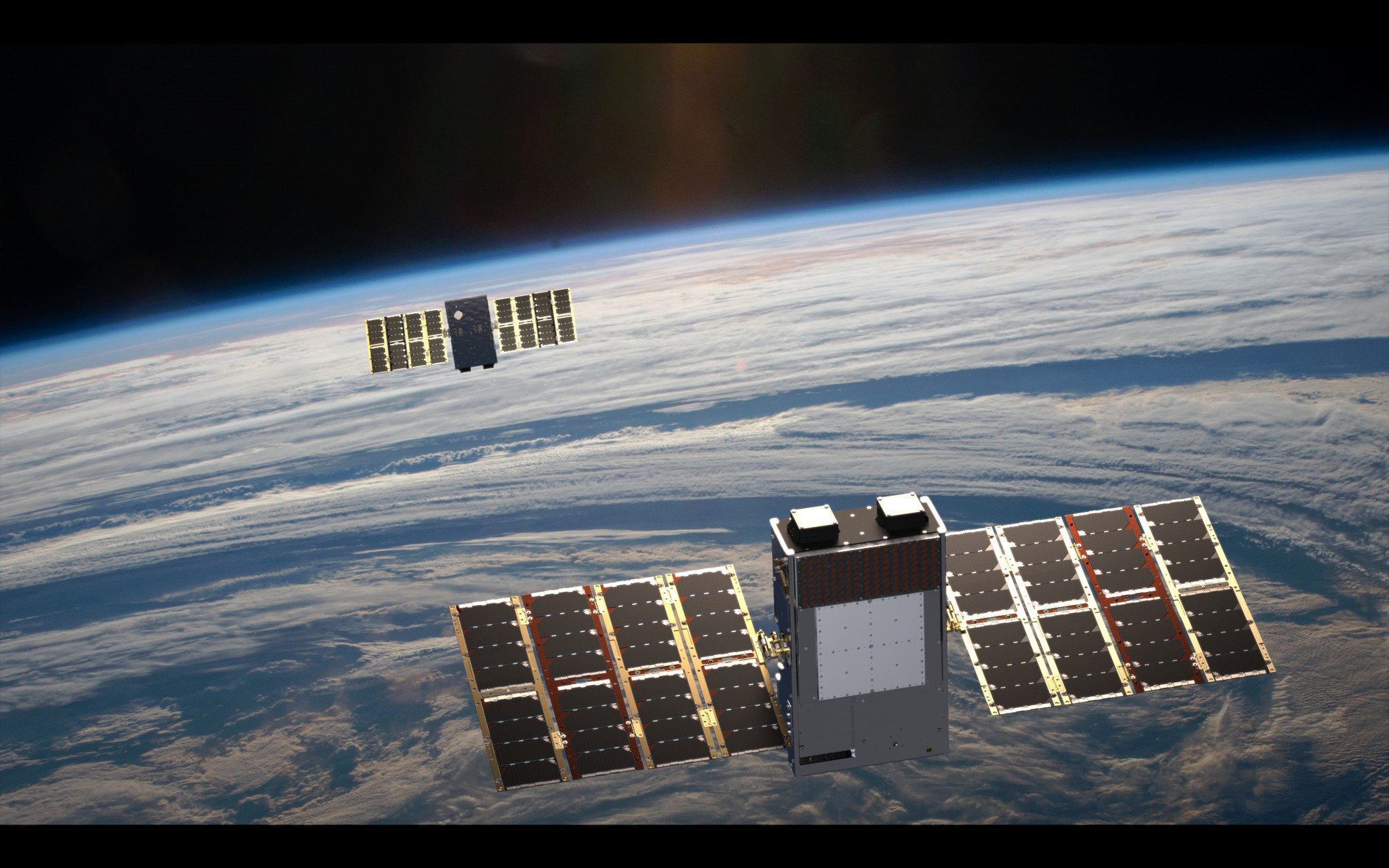
Kepler has announced it will equip on-orbit computing across the first tranche of its constellation, utilizing 40 Nvidia Jetson Orin modules as Edge compute GPUs across ten satellites.
“This architecture removes one of the longest-standing constraints in space operations,” said Mina Mitry, CEO and co-founder of Kepler Communications, in a statement. “By leveraging Nvidia AI infrastructure in our optical network, data can be processed, routed, and acted on in orbit rather than waiting to return to Earth. As we extend the scale of our infrastructure, this becomes a natural extension of terrestrial computing, which enables AI-driven detection, faster decision-making, greater resilience, and new mission architectures for our customers and partners.”
Kepler itself stresses applications like AI-driven Earth observation analytics, multi-sensor data fusion, RF signal intelligence, autonomous network operations, and intelligent optimization.
Unlike some, the company has not stressed the need to adopt the computing responsibilities of earthside data centers, a tech trend experts have recently decried for a wealth of reasons, including the limits of downstream speed from orbit.
While demand for terrestrial compute is soaring, the practical need for Edge computing in space is not as clear-cut, with the extent of true demand still being understood. Some examples of space AI have been experimented with, though none have suggested running these programs wholly in orbit.
Gartner VP analyst Bill Ray, who penned a scathing report on the unviability of orbital data centers, has also emphasized that space compute is best used in orbit, such as “processing satellite imagery … or managing complex mesh routing for communications.”
Nvidia is also launching its technology with Aetherflux, Axiom Space, Planet Labs PBC, Sophia Space, and Starcloud, stressing space-hardened hardware to stand up to the semiconductor ionizing radiation of orbit.
“Space computing, the final frontier, has arrived,” said Jensen Huang, founder and CEO of Nvidia. “As we deploy satellite constellations and explore deeper into space, intelligence must live wherever data is generated. AI processing across space and ground systems enables real-time sensing, decision-making, and autonomy, transforming orbital data centers into instruments of discovery and spacecraft into self-navigating systems. With our partners, we’re extending Nvidia beyond our planet – boldly taking intelligence where it’s never gone before.”
In November, during a high point of the recent orbital data center mania, Starcloud sent an Nvidia H100 GPU to space on a test satellite, claiming it would deliver up to 25x more AI compute in space. Starcloud recently announced a Series A funding round closing with $170 million and a $1.1 billion valuation.
Ontario-based Kepler Communications aims to orbit ten 300-kilogram (661-pound) satellites, each equipped with a minimum of four optical terminals capable of space, air, and ground connection. The company could expand its fleet to more than 100 machines in later phases.





Comments