
Kepler Communications has committed to launch its first tranche of ten optical data relay satellites in January 2026, kicking off the operator’s constellation providing hosted payload services with on-orbit compute for government and commercial customers.
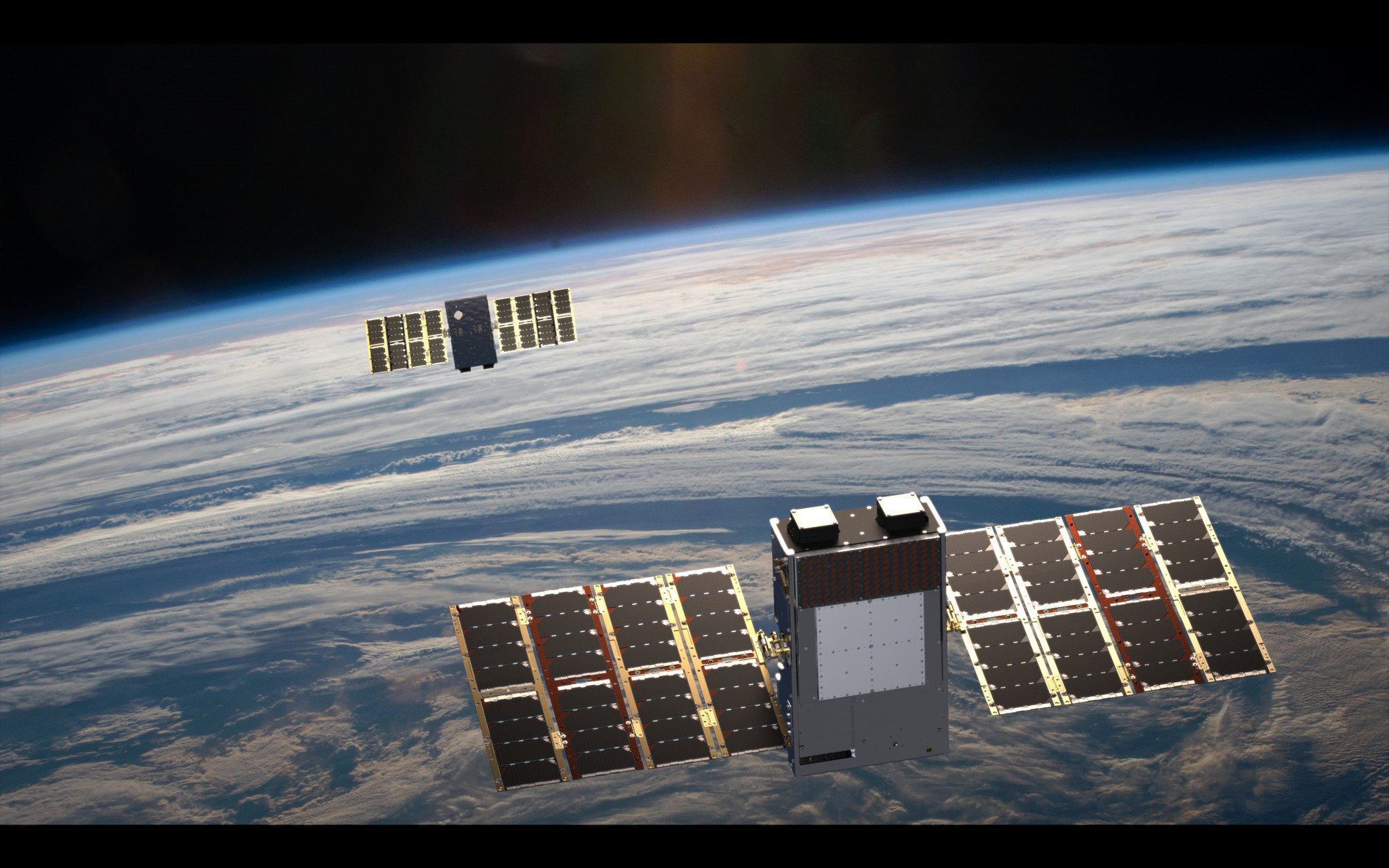
Launching via a SpaceX Falcon 9 from Vandenberg Space Force Base, Ontario-based Kepler Communications Inc. will orbit ten 300-kilogram (661 pounds) class satellites, each equipped with a minimum of four optical terminals capable of space, air, and ground connections, beginning the rollout of its optical constellation.

“Optical data relay is redefining how space systems communicate, operate, and deliver value,” said Mina Mitry, chief executive officer and co-founder of Kepler Communications, in a statement.
“It removes the high latency and bottlenecks of traditional RF links and allows our customers to move data continuously, securely, and at the speed of light. With real-time connectivity and advanced computing in orbit, operators can unlock new possibilities for defense and intelligence, real-time situational awareness, commercial innovation, and sustained human operations in space."
The system is designed for compatibility with the US Space Development Agency’s (SDA) optical communications standards, targeting seamless interoperability between government and commercial connectivity.
Functioning as an IP-based mesh network, the constellation will selectively route data between satellites in the interest of faster, more resilient performance.
Its on-orbit compute capacity supports distributed GPU and CPU processing and storage, with the intent to operate scalable Edge processing supporting space-based cloud capability. Its modular design will seek to enable hosted payloads to integrate sensors and other hardware into Kepler’s platform, hoping to streamline costs for customers, cutting out the need to buy spacecraft and ground infrastructure.
Future tranches of satellites in Kepler’s constellation will enable new applications and increase capacity, with a mind to orbit 100-gigabit optical technology in its second phase of launches, fully backwards compatible with earlier generations and interoperable with both SDA and ESTOL optical communication standards.
This year, Kepler was a partial recipient of $14.2 million in funding awarded by the Canadian Space Agency (CSA), distributed across 18 Canadian companies powering 20 advanced space technology projects.
Kepler raised $500,000 to power its “orbital cloud infrastructure,” hinting at government interest in building out the strategic capability.



Comments