
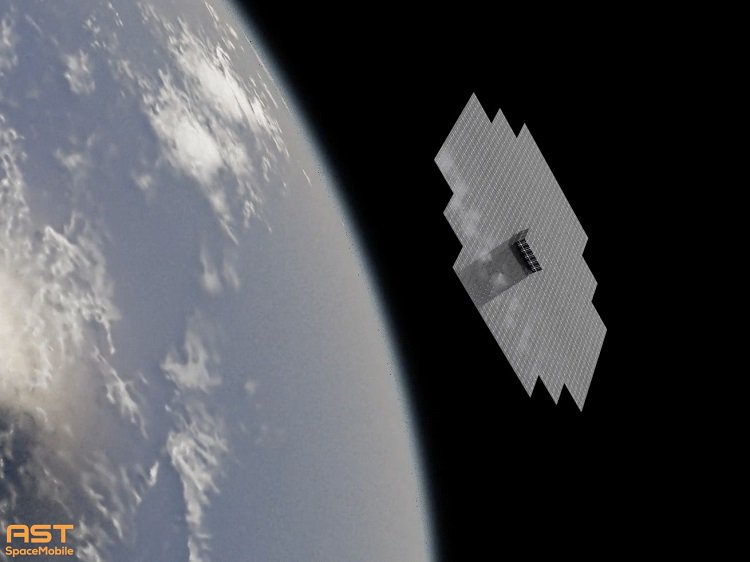
The Federal Communications Commission (FCC) has given AST SpaceMobile permission to launch and operate its non-geostationary orbit (NGSO) satellite system in low Earth orbit (LEO).
Approval from the FCC is a grant for AST to launch and operate its constellation of 248 low Earth orbit (LEO) satellites.
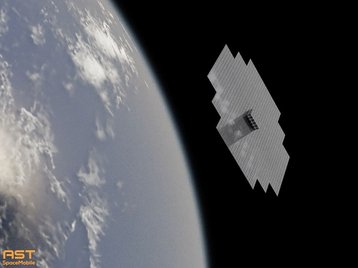
The constellation will operate using premium low-band spectrum in the 700 MHz and 800 MHz bands.
AST SpaceMobile is pushing to compete against SpaceX's Starlink and Amazon Leo, with the announcement coming days after AST SpaceMobile lost its BlueBird 7 spacecraft following a failure in the positioning stage of its Blue Origin launch.
The satellite operator has partnerships with US carriers AT&T and Verizon, meaning that the company is a step closer to launching D2D satellite services for these carriers, plus first responder network FirstNet.
"Today marks an important step as we continue scaling our network and moving closer to commercial service,” said Abel Avellan, founder, chairman, and CEO of AST SpaceMobile.
“We are accelerating deployment of our constellation, advancing integration with leading mobile network operators, and preparing to deliver seamless, space-based cellular broadband directly to everyday smartphones, bringing us closer to connecting people everywhere.”
Approval from the FCC comes around a year after the regulator granted AST SpaceMobile permission to carry out testing with its carrier partners. The FCC also separately approved requests from AT&T and AST SpaceMobile to carry out D2D connectivity trials with FirstNet last year.
Founded in 2017, AST's first test satellite, Bluewalker 1, was launched in 2019; Bluewalker 2 was canceled. Another test satellite, Bluewalker 3, launched in 2022.
AST was planning a constellation of almost 170 satellites; the first 20 were originally due to enter operation by 2023, with another 90 deployed through 2024. According to more recent press releases, it seems to have revised its constellation plans down to 100.
Verizon and AT&T, along with Vodafone, are all investors in AST SpaceMobile, rivaling Elon Musk's SpaceX Starlink.


Comments