
Deutsche Telekom has announced its support for the European Union’s IRIS² satellite network, intended to reinforce sovereign connectivity capacity for governments, businesses, and citizens of Europe.
The telco joins a consortium known as SpaceRISE, including SES, Eutelsat, and Hispasat, which aims to pool expertise in the interest of delivering IRIS² (aka Infrastructure for Resilience, Interconnectivity, and Security by Satellite).
“As a core team member, Deutsche Telekom is actively contributing its expertise in the field of infrastructure on the ground,” a Deutsche Telekom spokesperson told DCD. “In a first design phase, we are developing concepts for IT and data center services, secure networks (WAN), and a 5G core network for the system and have signed a contract with the SpaceRise consortium in this regard.”
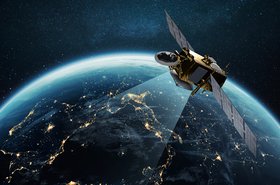
Composed of 282 satellites across low and medium Earth orbits, IRIS² will ensure broadband availability in rural and urban areas for public and private users. The name stands for Infrastructure for Resilience, Interconnectivity, and Security via Satellite.
In total, the budget for IRIS² is €10.6bn ($11.1bn), with €6.5bn ($6.82bn) coming from public funding. The EU previously secured a €6 billion ($6.3bn) deal to develop its own satellite Internet system back in 2022, when the bloc said it was aiming to have the system up and running by 2027. The date is now set for two years later, in 2029.
The European Union stands as the project’s anchor customer for services, with funding arriving from public investments by the EU, European Space Agency, and private investments by the SpaceRISE consortium. Funding after 2027 will be “subject to the adoption of successor programs by the European Parliament and Council alongside the availability of appropriations,” explained a statement in December.
The terrestrial end of hybrid networks
Despite the marvels of satellite technology, broadband services still leave gaps and other performance issues, outdone by a terrestrial alternative, especially by fiber in urban areas.
The hybrid network model, which merges the distant reach of LEO broadband with the tried and tested performance of terrestrial, is gaining consensus.
“The future of telecommunications lies in the seamless integration of terrestrial networks and non-terrestrial networks (NTN),” a Deutsche Telekom spokesperson told DCD. “This convergence will make it possible to provide reliable, high-performance communications services anywhere in the world – whether in densely populated cities, remote regions, or on the high seas. Especially in Europe, where, depending on the country, there is already an excellent infrastructure with up to 98 percent 5G mobile coverage, it is now a matter of intelligently supplementing these networks.”
Deutsche Telekom says it is actively driving the development of satellite communications and flying base stations that support existing mobile networks.



Comments