
Axia Energia, the new name for Brazilian utility Eletrobras, is expanding its strategy of integrating data centers into its power generation infrastructure with plans for a new facility.
After requesting authorization to develop a campus in Campinas, in the interior of São Paulo, the company now plans to install a data center in Sergipe, a state that historically receives few projects of this magnitude.
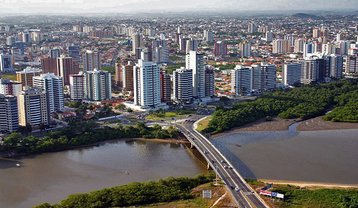
According to a report from BNamericas, the new project, called DC Xingó, is set to be implemented in the municipality of Canindé de São Francisco, in the far northwest of Sergipe, approximately 213km (132 miles) from Aracaju.
The data center project being developed by Axia Energia is in the initial documentation phase and aims to establish a direct connection with the Xingó hydroelectric plant, operated by the company itself.
In order to be energized and integrated into the National Interconnected System (SIN), the project still depends on formal authorizations from the Ministry of Mines and Energy (MME), the National Electric Energy Agency (ANEEL), and the National Electric System Operator (ONS).
Despite not yet having large-scale data centers, Sergipe has adopted strategic measures to become an attractive hub for investments in the digital infrastructure sector. The initiative seeks to diversify the local economy and attract technology companies interested in expanding their operations to new regions.
According to Desenvolve-SE, the state agency responsible for promoting economic development, at least eight companies are currently evaluating opportunities to set up data centers in the state. This movement has already resulted in the formalization of two memorandums of understanding and two letters of intent, indicating the concrete interest of investors in moving forward with projects in the region.
Among the main attractions highlighted by the state government are the competitive prices of electricity on the free market, which offer economic advantages for high-energy consumption operations, such as data centers. In addition, Sergipe has ample availability of renewable energy sources, such as solar and wind power, which reinforces the commitment to sustainable practices and meets the environmental requirements of companies in the technology sector.
Axia Energia operates a portfolio of 81 plants, including 47 hydroelectric plants, 33 wind farms, and one solar plant. The company claims to be responsible for around 17 percent of Brazil's installed electricity generation capacity, which reinforces its strategic position in the sector.
Among the resources considered for cooling the system of the future data center are the Marituba aquifer and the reservoir of the Xingó hydroelectric plant. However, the potential use of these water sources has raised questions from civil society organizations, which express concerns about the possible impacts on Sergipe's water security.
To encourage investment in the sector, the state also offers incentives through the Sergipe Industrial Development Program (PSDI). The program includes tax benefits, easy access to credit, and support in defining the location for industrial and technological ventures. The state government is also in the process of implementing an Export Processing Zone (EPZ), with the aim of attracting companies focused on exporting services, including data centers.
Sergipe currently has an active operation in the data center sector: Smart Datacenter, a venture developed in partnership with the State Secretariat for Economic Development and Science and Technology (Sedetec) that was inaugurated in 2024.
At the same time, the Optimus Technology group announced a significant investment, estimated at $1 billion (5.4 billion reais), to build a new data center and a research center focused on technological innovation. The project will be implemented in the municipality of Nossa Senhora do Socorro, in the Aracaju metropolitan region, which has also been selected as a strategic location for the future implementation of Sergipe's Special Economic Zone (SEZ).




Comments