
The exponential growth of the data center market thanks to an ever-increasing demand for more infrastructure and compute is driving the need for more sustainable operations. With power consumption related to data centers now accounting for approximately two percent of global energy demand, rethinking the kind of power that’s used, how it’s managed, and the integration of energy-efficient solutions, is a matter of urgency.
As data centers continue to evolve, the aging grid infrastructure that underpins them is struggling to keep pace. In an industry where speed to market is everything, modern data centers can no longer continue as passive energy consumers, catalyzing a shift towards “good grid citizenship” – with facilities now taking a more active role in supporting electrical infrastructure by giving any excess power back to the grid.
This good citizenship can – and should – extend to local communities too, where if viable, the heat produced from running high-density operations isn’t wasted, but instead put to good use, managed and redistributed into district heating systems and other areas of need, helping bolster both environmental and efficiency goals without impacting on performance.
But of course, where there is more heat, the onus on how we cool sensitive IT equipment is another challenge, particularly as ESG and other regulatory compliance becomes increasingly complex.
Thankfully, HiRef is focusing its strategy on developing energy efficient scalable technologies that align with both customer needs and sustainability mandates – playing a pivotal role in helping the industry to hit what are now in essence, moving targets.
Sharing how the company is tackling the dual challenge of sustainability and performance, Fabio Poletto, general manager at HiRef, discusses how smarter cooling technologies are revolutionizing the future of sustainable data center operations, exploring how updates to European F-Gas regulations alongside the potential of new technologies like heat pumps and refrigerant alternatives are impacting the industry.
Cooling the data center: A balancing act
Generative AI and machine learning applications are pushing data centers to their limits. As super high-density racks become the new normal, generating far more heat than traditional legacy data centers were ever designed to handle, the question of how to keep cool is a hot topic.
For these high-performance environments, liquid cooling is emerging as a powerful solution. While it’s not the only cooling method available, it is quickly becoming essential for hyperscalers tasked with managing the immense thermal loads of AI infrastructure.
Yet, as Poletto emphasizes, flexibility is key. “The market isn’t just hyperscalers. There are also colocation and enterprise data centers, each with different needs. Our job is to build systems that integrate various technologies, utilizing liquid and air, offering versatility that suits individual operational demands.”
Direct-to-chip liquid cooling delivers impressive efficiency but doesn’t manage the entire thermal load. That’s why hybrid systems that combine liquid and traditional air cooling are increasingly popular. These systems offer the ability to fine-tune energy use, reduce reliance on mechanical cooling, and optimize server performance.
HiRef offers advanced cooling distribution units (CDUs) that integrate liquid-cooled servers with heat exchangers and support infrastructure like dry coolers and dedicated high-temperature chillers. This integration ensures seamless heat management regardless of local climate or load fluctuations.
Depending on geographic location and workload requirements, HiRef provides custom configurations that combine dry coolers, adiabatic solutions, and high-temperature chillers. This modularity enables facilities to balance efficiency with environmental constraints and compliance needs.
For operators, getting the ratio of liquid to air cooling right is critical, and it’s vital that the approach to cooling takes into account the individual requirements and goals of the data center. HiRef assesses each facility’s layout and load to recommend the optimal setup – providing customers with tailored solutions that meet both present and future demands.
Cooling sustainably
Improving energy efficiency also means managing temperatures differently. One of the key strategies HiRef supports is optimizing for free cooling – leveraging ambient outdoor air instead of energy-intensive mechanical systems.
With liquid cooling systems capable of operating at higher temperatures, facilities can increasingly rely on external conditions for passive cooling. This shift not only reduces electricity usage, but also allows for significant operational cost savings over time.
But this sustainable future also depends on regulatory compliance, particularly in light of the recently updated F-Gas Regulation, which took effect in March 2024. The EU regulation aims to reduce emissions of fluorinated greenhouse gases to net-zero by 2050 by phasing out harmful high-GWP refrigerants like HFCs.
“The F-Gas regulation isn’t directly tailored to the data center sector,” explains Poletto. “It overlooks the specific risks we face – like flammability and refrigerant leaks. So, the challenge is to find alternatives that are both safe and efficient.”


To address this, HiRef is developing low-pressure refrigerants such as 513A and 515B. These solutions significantly reduce GWP while offering the reliability mission critical facilities require. The company’s multi-refrigerant platform supports both traditional and future-ready options, giving operators the flexibility to transition as and when conditions are just right.
Rather than imposing a hard shift, HiRef’s platform lets users decide when to adopt its greener technologies based on readiness and local conditions. “That’s vital,” says Poletto. “We’re not forcing a single solution. We’re enabling a transition path that meets each customer’s operational timeline.”
Safety and compliance remain central to this strategy. “We must offer green products without losing efficiency,” explains Poletto. “If efficiency drops, indirect CO₂ emissions rise due to higher energy use. The true measure is global emissions – across the product’s entire lifecycle.”
To back its claims, HiRef validates performance with rigorous internal testing via the company’s internal R&D driven labsThese controlled environments allow HiRef to qualify every innovation, while customers and consultants are invited to test equipment on-site – because seeing is believing.
The rise of heat pumps
One of the most promising developments in sustainable data center operations is the adoption of heat pumps. These systems recover heat generated by servers and repurpose it for secondary uses, such as district heating or hot water production – closing the energy loop.
“The heat pump is a key technology to drive sustainability forward,” says Poletto. “It not only cools the data center but also supplies heating for surrounding areas, making data centers active contributors to urban infrastructure.”
HiRef has invested heavily in developing high-temperature heat pumps designed for data centers. These pumps can capture thermal energy from liquid cooling loops and redirect it into municipal networks – reducing waste and lowering carbon footprints.
This type of circular energy model aligns with broader goals of urban integration, where data centers don’t just consume but also contribute to their physical surroundings and the people within radius.
Still, success depends on collaboration. “The big challenge is aligning all stakeholders – data center operators, utility companies, municipalities. Everyone has different interests, and it’s not easy to get them all around the same table,” says Poletto.
Despite the complexities, this kind of cross-functional cooperation is essential if data centers are to become active participants in the energy economy, rather than isolated, power-hungry infrastructure hubs.
A circular economy
HiRef’s commitment to sustainability extends beyond energy efficiency to include economic and social responsibility. “We always consider total cost of ownership,” says Poletto. “That means proposing solutions that might cost more upfront but save money over time in maintenance and operation.”
To illustrate this approach, in Copenhagen, HiRef introduced a CO₂-based chiller system for a facility located next to a metro station. The alternative, propane, was cheaper initially but raised safety concerns due to the location. CO₂, though more expensive, was safer and more sustainable in the long run. “A solution can’t be considered sustainable if it’s not also safe,” adds Poletto.
HiRef backs its technology with robust after-sales support, training both internal teams and external partners. “We introduce new technology fast. If we don’t support our partners with training and knowledge, we risk losing customer trust,” explains Poletto.
Education is embedded into HiRef’s model. The company works with partners and clients to ensure they understand new systems and can maintain them properly, making the technology not just available, but viable and truly sustainable.
Anticipating the next changes in regulatory standards
HiRef places a premium on staying ahead of the curve, and that means more than just waiting for new regulations to come into force and responding in turn – it requires deep collaboration and knowledge exchange across sectors.
“Collaboration is the most important thing we can do to anticipate what’s coming,” says Poletto.
To that end, HiRef fosters what Poletto calls “contamination” – the deliberate cross-pollination of ideas between industries. “What’s standard in one sector may be innovative in another. We find opportunities by looking outside our bubble,” he adds.
This open-mindedness is crucial as the industry navigates layers of challenges and uncertainty. The AI boom has highlighted the interconnection between data, energy, infrastructure, and climate. As such, addressing these challenges in isolation is no longer viable.
“It’s easy to get blinkered and become too focused only on your own domain. But the real breakthroughs happen when we work across boundaries,” says Poletto. “Our job is to create solutions that tackle multiple problems at once.”
The future of high density, AI-ready data centers operating with a social and environmental conscience, is bright. It’s clear that to truly realize this vision, collaboration, constant innovation, and a measured approach that allows individual facilities to move forward at a pace that’s right for them, is key to moving the industry as a whole.
HiRef is continuing to extend its influence by embracing that collaborative approach, designing innovative products with sustainability and performance at the forefront, and supporting the entire sector in scaling sustainably. Whether it’s through heat reuse, hybrid cooling, or low-GWP refrigerants, the company is proving that high-performance infrastructure and environmental responsibility are not mutually exclusive.
Discover our latest projects on our website
More from HiRef
-
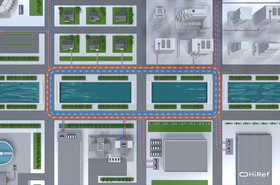
Sponsored From waste to wealth: Energy sharing for more livable cities
How one man's trash can become another's treasure through heat recovery, turning waste heat into a valuable resource
-
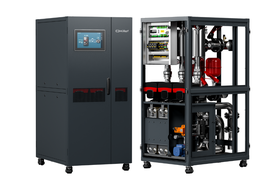
Sponsored Liquid cooling solutions for high-density computing applications
HiRef's CTO, Matteo Faccio, highlights advancements in liquid cooling over the past few years, optimizing efficiency and sustainability
-

Sponsored More than just a load of hot air
How HiRef has evolved from cooling data centers to championing the reuse of waste heat
Comments