
For the last few years, enterprise AI strategy has been defined by a race for compute. Global computing capacity grew astronomically as customers rushed to buy GPUs. As AI moves from training spectacle into its everyday reasoning and inference phase, Huawei argues that approach is starting to show its limits.
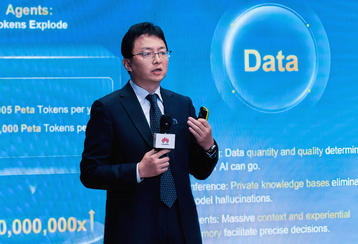
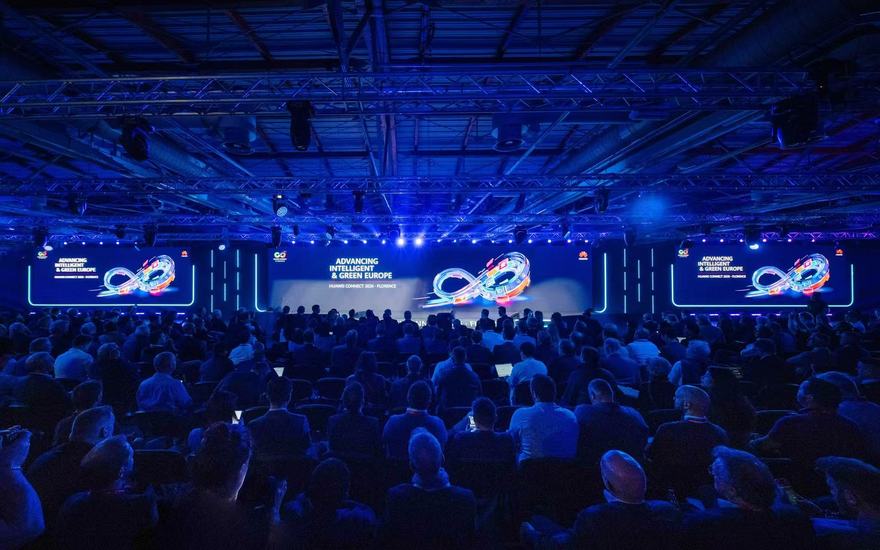
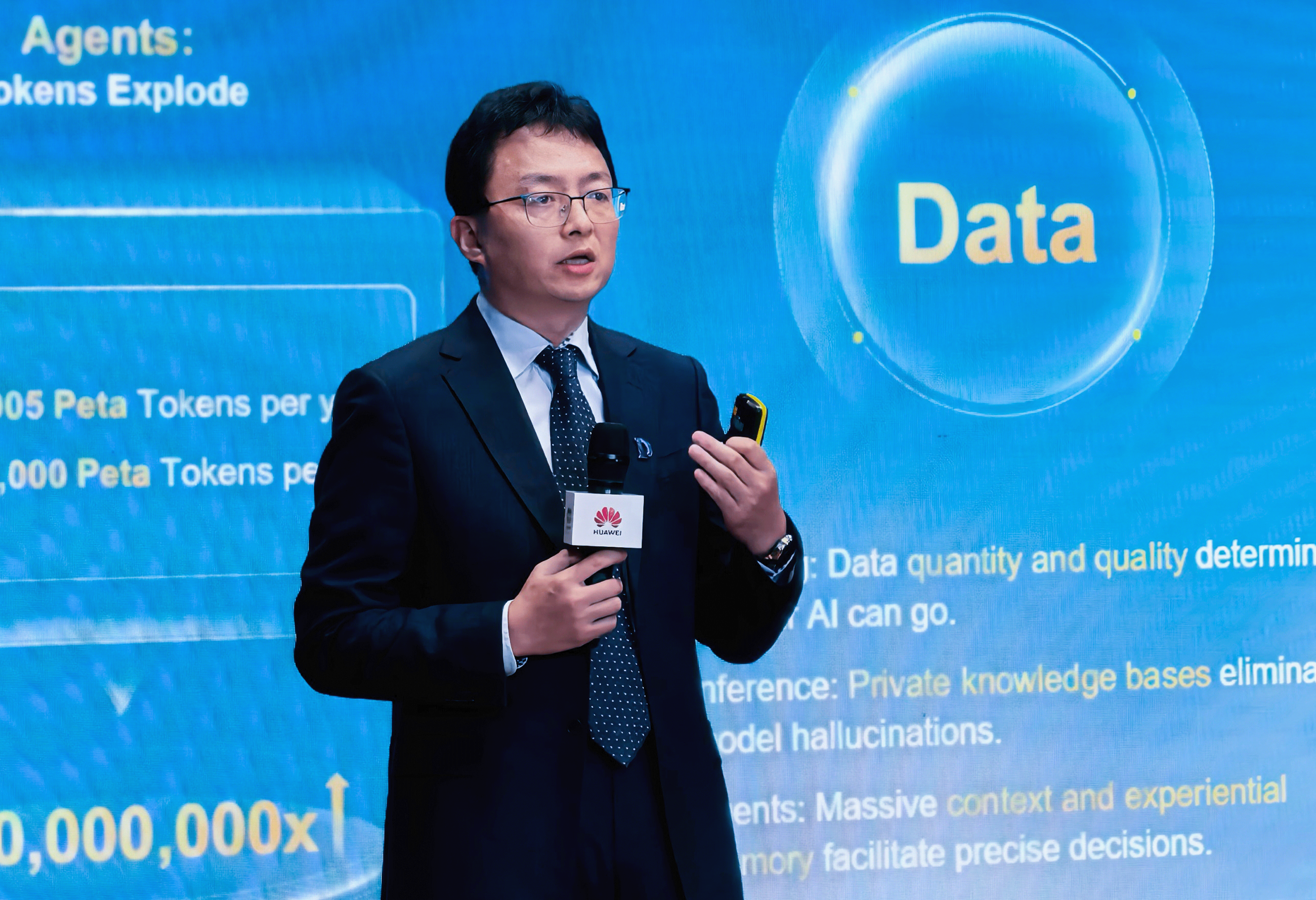
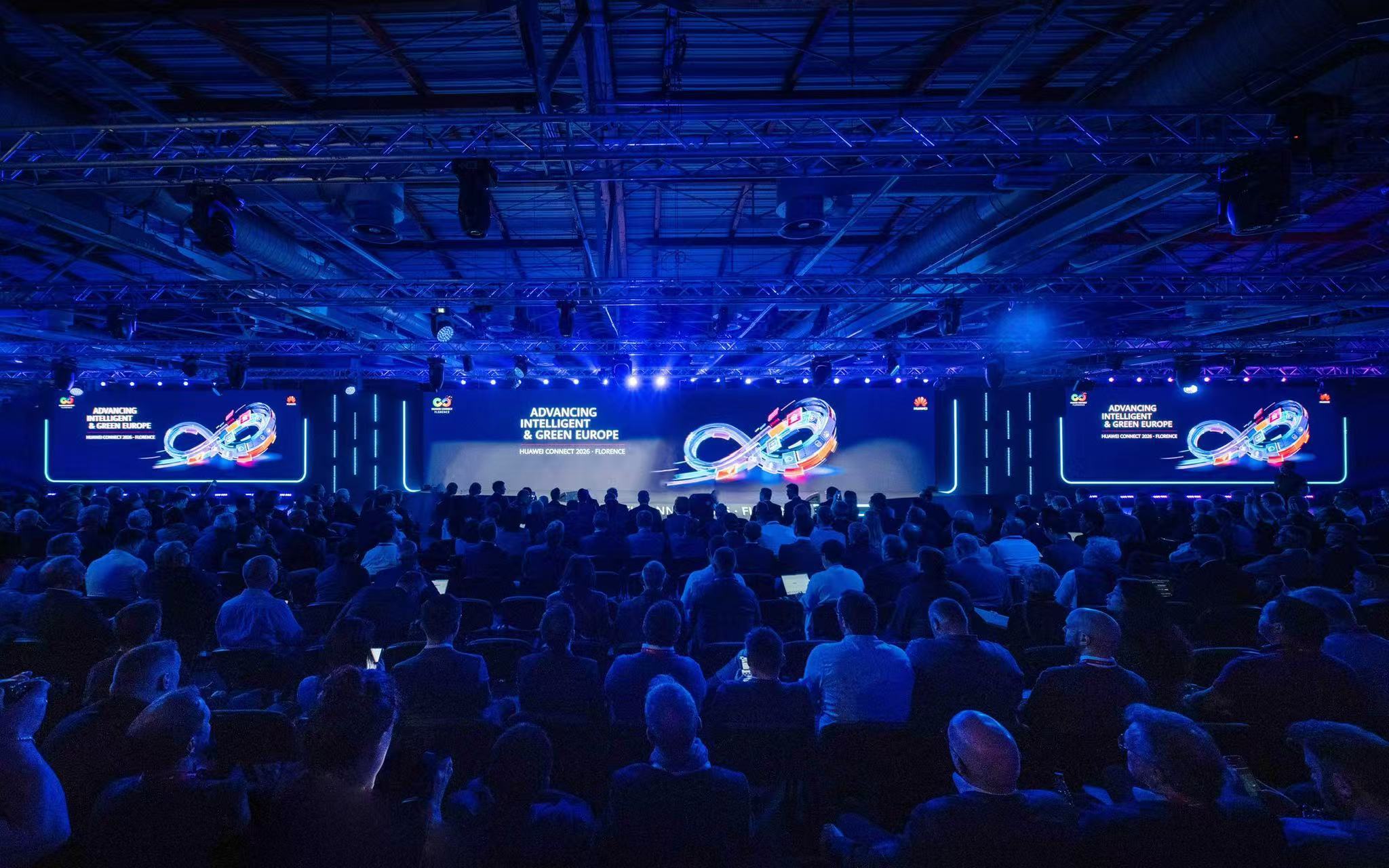
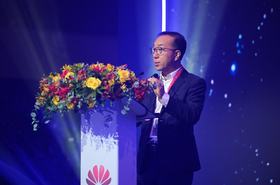
That was the central message of Yuan Yuan, president of Huawei’s Data Storage Product Line, in his talk, Data awakening, infra evolving, at the Summit, held at Florence’s Fortezza da Basso during Huawei Connect 2026. In his view, the industry has had its computing power race, and the data showdown comes next. Companies that move first from traditional IT to an AI-ready data center will have the advantage once agents become standard.
Three waves, then a fourth
Yuan describes recent AI history as a series of waves. First came compute; second came models, where enterprises soon found they couldn’t simply plug commercial models into their operations.
“Even open-source models had to be tuned for specific industries, and the number of open models has now passed 3,000,” he explains.
The third wave, starting last year, is agents and tokens. As Yuan describes:
“Everyone is thinking about tokens – how they are generated, consumed, and how to build agents that can carry out more tasks. The challenge is to bring AI into real-world workloads while ensuring its reliability and security.”
The fourth wave is data. Yuan says recent improvements in leading models came mainly from more high-quality data, not new algorithms. Inference also needs good data to keep hallucinations in check, and agents need data in the form of memory.
For CIOs, this changes the question. The issue is how efficiently the organization can turn raw data into knowledge and context that improve every token it generates.
A five-layer blueprint
To guide that shift, Huawei recommends a five-layer architecture for AI workloads, split into two domains. The computing domain is made up of the agent framework, models, and heterogeneous compute. The data domain is made up of a data lake and a knowledge and memory platform.
Huawei sees the data domain as the foundation of the computing domain, and thus of all intelligence. In conversation with DCD at the event, Wu Junjie, VP of the Data Storage Product Line, explains:
“Computing power and algorithms have converged, making it increasingly difficult to build differentiated competitive advantages. Only data continues to appreciate in value long-term as business operations progress. Therefore, GPUs or models will always require high-quality data.”
According to Junjie, high-quality data has two requirements. The first is the data lake, where all enterprise data has to be stored in full and be easy to search. Storage therefore has to be denser and more energy-efficient, which matters especially given Europe’s tight energy supply. Data scattered across separate business services also has to move across systems and regions as needed, much like a “drag and drop” catalog.
“The data lake should consolidate all the data into a unified catalog to support both training and inference,” Yuan says.
The second is the knowledge and memory platform. Raw data can’t go straight into AI – it first has to be tuned into knowledge through extraction, vectorization, and built into graphs before models can understand it. Junjie argues:
“Issues such as model hallucinations, memory loss, and long waiting times sound like problems in the computing domain, but in fact, they are caused by insufficient data preparation.”
This means context is lost when the KV cache runs out of room, or history isn’t stored properly, and adding more GPUs won’t fix a gap in the data layer. Only once high-quality data is ready does it make sense to talk about tuning models, building agents, or getting more out of compute.
Inside the “3+1” AI Data Platform
Huawei built these ideas into its AI Data Platform reference architecture. It describes it as a “3+1” design, where the “3” are a knowledge base, a KV cache store, and a memory bank, and the “+1” is the Unified Cache Manager (UCM), which manages inference memory data. Together, they aim to improve knowledge quality, strengthen long-sequence inference, and prevent inference memory loss.
This architecture matters now because traditional data platforms were built for people, not for AI or agents. As agents start doing analysis, making decisions, and carrying out tasks, they have to understand data and act on it, not just browse it.
Junjie explains it with a baking metaphor:
“Think of raw data as flour. In the past, all you needed to do was store and manage the flour, but what AI aims to do is make a cake. If you don’t process the flour into batter in advance, it cannot be used directly.”
The AI Data Platform is designed to do that preparation inside the storage layer, transforming raw data into a form that AI models and agents can use when they need it. The batter is made where the data lives, reducing the need to move it elsewhere for processing.
At the product level, OceanStor A800 has grown from a training storage system into the full AI Data Platform for knowledge and memory generation. Underneath it is the OceanStor Pacific, which provides the high-capacity, scalable data lake for mass data preparation and collection.
The lake keeps the pantry stocked, and the platform does the baking.
Knowledge versus memory
Both the AI Data Platform’s knowledge base and memory bank store information for AI to draw on, making them easy to confuse. But Huawei emphasizes that their value lies in the distinct roles they play. As Junjie explains, customers initially invested in GPUs and then added KV cache to speed up inference:
“Soon they found that efficiency alone is not enough for industrial usage. The first thing we need to deal with is accuracy. It is what decides whether AI is a toy or a productivity tool.”
Accuracy depends in part on giving AI access to reliable knowledge. The knowledge base tackles hallucination by grounding responses in relevant information. It works as a data pipeline, turning literature, records, and other text into high-dimensional vectors in real time and retrieving the right knowledge for each question. That keeps outdated or inaccurate information from distorting answers.
The memory bank addresses agents’ usefulness in production. It deals with amnesia – AI’s inability to retain and learn from past experience. It holds past inference results, user preferences, and work habits to help the system improve its performance over time. Without it, Junjie says, every inference would be a first attempt, and AI could never evolve. As Yuan puts it:
“Because we have memories, we can evolve to become smarter and smarter. We can avoid making some mistakes.”
Junjie put a figure on the potential accuracy gains, stating that combining the right knowledge database with inferencing memory could raise accuracy from 50-60 percent to 97-98 percent.
Case study one: A hospital’s diagnostic agents
Yuan’s most detailed example came from a large Chinese hospital that sees thousands of patients a day. To help meet healthcare demand, it wanted AI agents to handle first-round diagnosis, but three problems stood in the way.
The first was language, whereby hospitals use internal terminology that is often discernible only to those working in the organization, so it had to be translated into knowledge a model could use. The second was regulation, as clinical guidelines and evidence-based rules had to be turned into structured knowledge that agents could serve. And the third was time. A patient describes symptoms in the moment, but a sound diagnosis also needs a time-based view of their medical history.
Huawei’s answer combined these sources into a large knowledge graph alongside a vector database, which became the knowledge base for the diagnostic agents.
“The result was a roughly 40-fold improvement in diagnostic report generation, with fewer errors caused by hallucination,” Yuan says.
Case study two: AI coding and the KV cache wall
The second example covered AI coding assistants, which banks and software companies are adopting quickly. Coding workloads involve many rounds of long context and produce large amounts of KV cache, “often more than 20TB of storage a day,” according to Yuan. On-chip memory cannot hold that much, so the cache has to spill into external storage.
Working with an AI coding company, Huawei used its KV cache system to roughly double token throughput. By getting more output from each accelerator, better storage performance could mean a more cost-effective alternative to adding inference capacity by buying more GPUs.
Case study three: Memory for customer service
The third example focused on memory. Many companies want smarter AI customer service, but scripted chatbots often fall short because customers have to repeat themselves, and issues that should be solved at the first point of contact are not.
Huawei’s approach for a banking customer analyzed historical service conversations, pulled out useful information, and loaded it into a large graph that serves as a memory for the service agents. Parallel access returns relevant context within seconds. The bank’s first-contact resolution rate rose by 30 percent.
“You have to build memory systems into your AI systems,” says Yuan.
Why the data layer is a cheaper bet
That brings us back to the central question: why invest in the data layer instead of putting money mainly into individual AI applications or models? Huawei’s answer starts with how most enterprises approach AI today. They build AI on top of their traditional IT stack. Data stays on legacy storage, compute runs on separate clusters, models rely on third-party tools, and agents are fitted into new frameworks. As Junjie explains:
“This approach results in broken workflows, low efficiency, and a proliferation of security risks.”
Huawei’s answer is to rebuild data infrastructure at the architectural level, not upgrade one component at a time. The aim is a baseline that supports the whole journey from data preparation and training to agent deployment, which enterprises then build on layer by layer within the five-layer AI DC model.
The savings come from getting more out of hardware that enterprises already own, as demonstrated in the coding case. The memory bank also saves money, using small in-built models to summarize and compress conversation history, removing repeated content so only what matters goes into the next round of inference. That means fewer input tokens and less GPU time.
What comes after the data showdown
If the first step is building a data foundation that makes it possible for AI to understand, the next is enabling it to act. Asked by DCD what comes next, Junjie says:
“The industry is changing from reading data to gathering knowledge. Legacy storage is not enough right now. AI-ready infrastructure is the foundation for any serious AI deployment.”
In the short term, Huawei expects competition to stay focused on how much data an enterprise has and how good it is. Over the longer term, the advantage will move to how well IT systems work together and how deeply AI is built into the business.
“The deep coordination between infrastructure such as storage, computing, and networking, and business systems like databases, ERP, and CRM, will determine the level of automation and intelligence in enterprises. At that time, compliance, trust, and permission control will become hot topics,” explains Junjie.
Huawei’s five-layer model reflects this shift, with its agent framework layer providing a secure environment for agent actions and observations – expected to become as important as the underlying data infrastructure.
This broader vision echoes the theme of Huawei Connect itself. In his keynote welcome, Huawei deputy chairman David Wang said European industries are preparing for a major leap in productivity powered by AI. Yuan’s argument is that realizing that potential will depend on who refines their data best, not on who has the most compute.
His closing line summed up the message: “The next chapter of AI is data.”
More from Huawei
-

Sponsored Maximize tokens per watt to power the AI era forward
The new blueprint for next-generation, grid-interactive AI data centers
-
Sponsored Huawei Cloud unveils four strategies to accelerate AI adoption in Brazil
"Huawei Cloud will continue to enhance AI capabilities, strengthen ecosystem collaboration, and provide secure, easy-to-use cloud platforms and localized services"
-

Sponsored Huawei redefines AI infrastructure at MWC 2026
At Barcelona’s MWC, Huawei unveiled the AIDC architecture and a new generation of AI-Powered Green Sites designed to tackle the challenges of high-density computing
Comments