
UK telco BT and its infrastructure unit Openreach are closing and exiting thousands of telephone exchanges (aka Central Offices) as part of efforts to shut down the group's copper network.
DCD takes a look at some of the iconic telephone exchanges in London and their history.
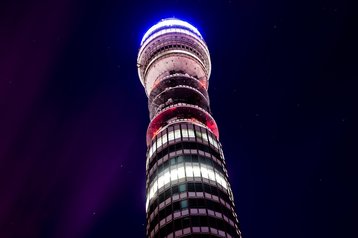
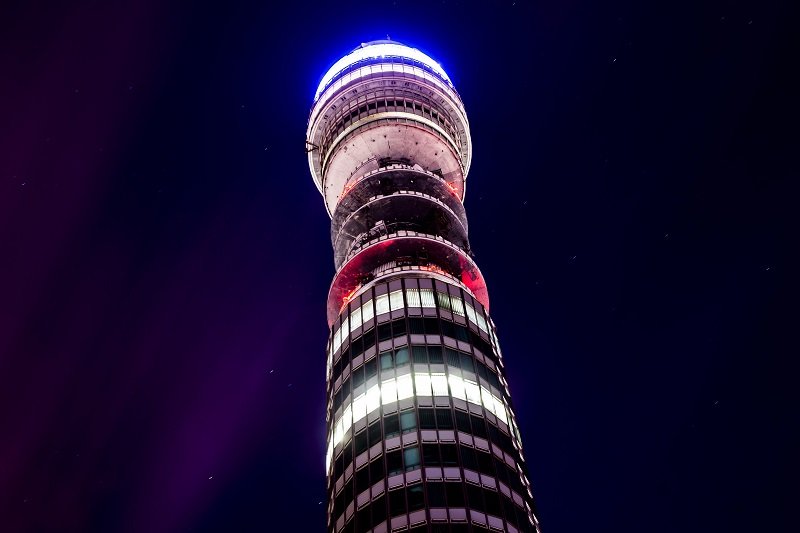
The BT Tower
Some exchanges exist quietly in sleepy corners of quiet villages. Others loom over the landscape. The most notable is probably the BT Tower in central London.
What was then the Post Office Tower was launched in 1965 by Prime Minister Harold Wilson. At 620 feet (189 meters), it was Britain’s tallest building at the time. It cost around £2.5 million to build – with the bill rising to £9 million including all the equipment (around £151.9m/$206m in today’s money).
The Tower was designed to carry aerials for the Post Office micro-wave network covering some 130 stations throughout the country, including what was then the Post Office satellite earth station at Goonhilly. It was built to host microwave antennae and replaced a shorter steel tower built on the roof of the neighboring Museum telephone exchange in the late 1940s to provide a television link between London and Birmingham.
A system of broadband and microwave radio links was proposed to meet the expected growth of the long distance telephone and television networks in 1954, according to BT. Two options were considered: a ring of radio stations on the outskirts with broadband links extended to central London by cable, or a single large radio station near the center. The latter idea won out.
The Tower and the four-story building at its base were equipped to handle 150,000 simultaneous telephone connections and provide 40 channels for black and white or colour television.
The Grade II-listed tower was open to the public until 1971 and featured a revolving restaurant operated by Butlins. It revolved once every 23 minutes. Though no one was injured, the restaurant was closed to the public after a bomb exploded in the roof of the men's toilets. The Angry Brigade, a far-left anarchist collective, claimed responsibility, while a call was also made by a person claiming to be the Kilburn Battalion of the IRA.
The restaurant remained opened by invitation until 1980, when Butlins’ leased expired. BT and Openreach still use the tower’s observation deck for corporate events. DCD was told we are likely one of, if not the last, journalists to go up the tower before its closed.
Despite its obvious nature and its public restaurant, it was for a period designated a classified location under the Official Secrets Act.
Hotel operator MCR announced the acquisition of the BT Tower from the telco in early 2024 for £275 million ($346.8m).The hotel chain plans to turn the tower into an "iconic” hotel. MCR said BT will take a “number of years” to fully vacate the premises due to the scale and complexity of the work to move technical equipment.
MCR has 150 hotels across 37 US states. Its first project outside the US, MRC aims to bring the rotating restaurant back into public use.
Full details haven’t been shared, but according to an interview with the Sunday Times, “billions of miles of telephone wire” from inside the tower will be woven into hotel wallpaper in a nod to the site’s roots. Rotary phones in rooms are reportedly being considered. An infinity swimming pool is also said to be on the cards. Openreach tells DCD the exchange’s main distribution frame is also set to be kept and made into a feature.

Baynard House and Faraday Building
Along the banks of the river Thames and close to Blackfriars Bridge and station, its hard to miss Baynard House. Once the site of Baynard Castle – destroyed in the great fire of London, the site was long home to warehouses. BT’s four-story brutalist block was completed in 1979. As well as being an office and telephone exchange, it was also the home of the BT Museum for 15 years. Around 2012 it was the site of the largest rooftop solar deployment in the City of London and the second largest of a corporate building in the UK.
Notably for art lovers, it is home to The Seven Ages of Man by Richard Kindersley; an eerie cast aluminum sculpture commissioned by the Post Office and erected in 1980, it features a totem pole of heads representing the different stages of life. Notably for cinema lovers, it is the roof of Baynard House that was used when actor Tom Cruise broke his ankle shooting a stunt for Mission Impossible: Fallout – a shot which made it into the final cut of the film.
Across the street is the much older and more classically aesthetic Faraday Building. The five-story Neo-Georgian facility stands in stark contrast to its sibling across the street. The facade features nods to Hermes/Mercury, the Greek/Roman deity known as the messenger of the gods, as well carvings of telephones, switching equipment, and cables.
After previously hosting a building that was home to a society of lawyers, the land was first acquired by the General Post Office in the 1870s and saw a new building developed to house the Post Office Savings Bank. The building was converted into a telephone exchange around 1902; launching with some 200 subscribers, it had grown to some 10,000 within three years. The site was rebuilt for a dedicated automatic international exchange around 1933, with the new Faraday Building named after English electromagnetism scientist, Michael Faraday. Notably, the construction of the Faraday Building obscured the riverside view of upper parts of St Paul's Cathedral, leading directly to regulations protecting views to and from the dome.
Kingsway Exchange becomes a tourist site
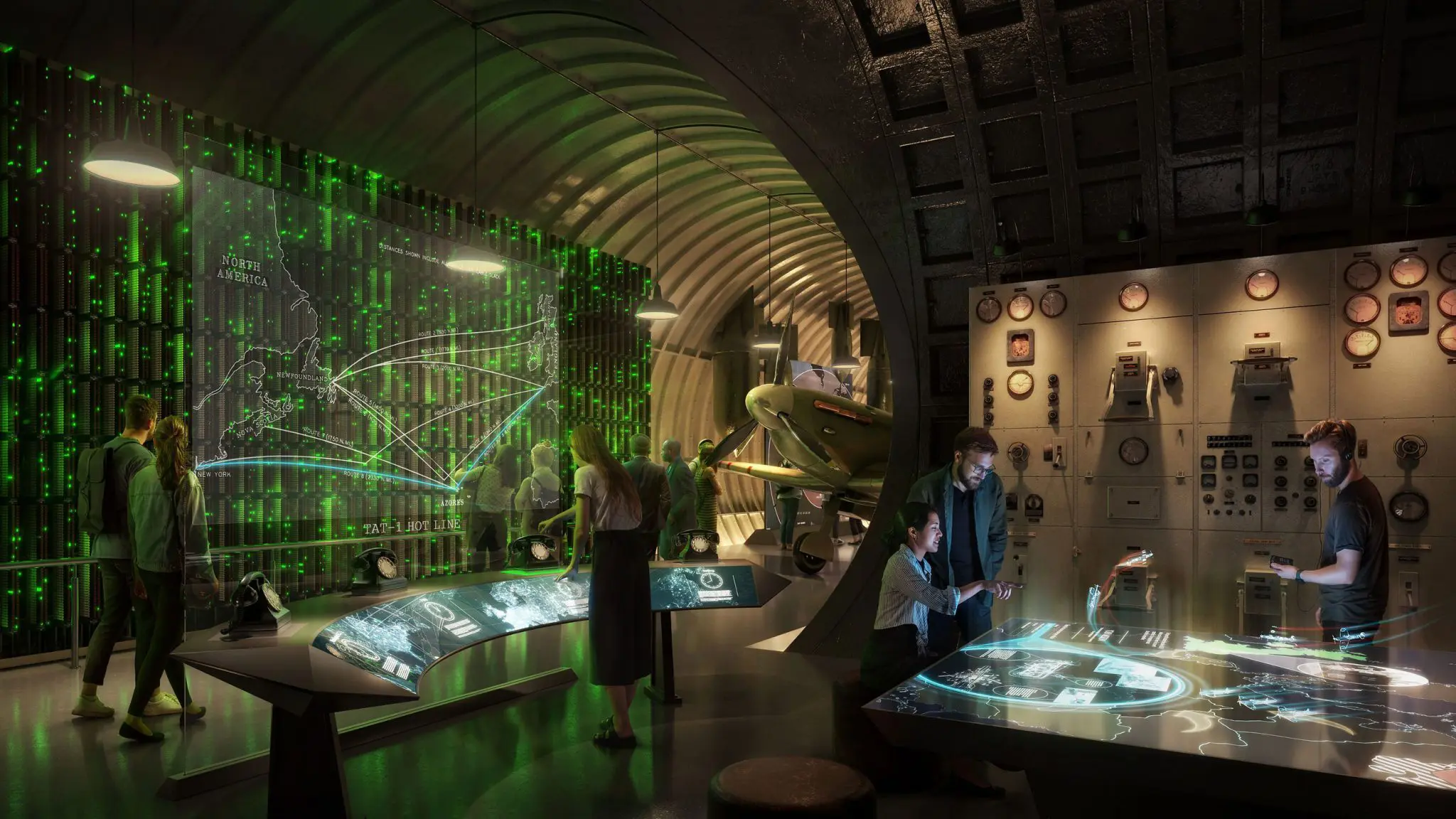
In 2023, BT sold the former underground Kingsway Telephone Exchange, which is set to be turned into a new tourist attraction.
Originally built in 1940 and designed to shelter Londoners during the Blitz (though reportedly never used), the tunnels went on to be used by the Special Operation Executive forerunners of MI6, before being repurposed into the Kingsway Telephone Exchange in the 1950s where it housed a maximum of 5,000 trunk circuits.
In 1956, it housed the first Transatlantic telephone cable – TAT-1 – which was used as a hotline link between the White House and the Kremlin during the Cold War. During the 60s, 70s and 80s, up to 200 engineers worked at the exchange. Once the exchange was no longer needed, Kingsway was repurposed for the Radio Interference Investigation Group.
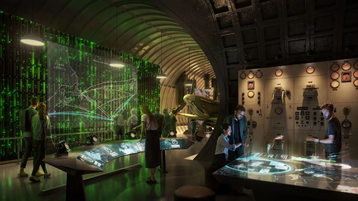
During the 1980s, it housed the Kingsway Computer Centre, a backup for the International Circuit Allocation Record Update System. Around this time, the site was purchased by BT, before being closed in the 1990s after large amounts of blue asbestos were found. It had been trying to sell the site since 2008, at the time was reported as looking to secure £5 million (around £8.5m/$10.3m today).
With backing from private equity firm Castlestone Management, the tunnels were purchased by a consortium called London Tunnels Ltd. The company plans to invest around £140 million ($170m) in restoring and fitting out the 25ft wide tunnels, and another £80m ($97m) in installing interactive screens, scent emitting technology, and acoustic pinpoint speakers throughout the 8,000 sqm network. London Tunnels hopes to launch the attraction in 2027.
Drinking in the shadow of the BT tower
Pubs with fun names are a staple of British culture. According to posts on the BT Telephone Exchange Enthusiasts Club Facebook group, it wasn’t uncommon for the larger telephone exchanges to have bars in the building!
It is rare, though, that pubs are named in honour of digital infrastructure. Rarer still are ones that are still open.
The Telephone Exchange in London Bridge opened in 2019. The building was erected in 1915 and was used as a wartime telephone exchange from 1940, which inspired the new name and décor.
Previously a Jamie's bar, renamed and rebranded after being bought by Fuller’s, the site featured “old telephones adorn the art deco walls, teamed with quirky furnishings and vintage leather seats,” according to the brewer. The site closed around 2023. A couple of DCD editors remember a hazy night out there once but not the decor.
One of the few other pubs with a close history to our digital world that DCD is aware of, however, is also unlikely to ever serve a pint again. In the shadow of BT Tower, at 2 Clipstone Street in Fitzrovia, lies the now-empty Tower Tavern.
The original pub on this site was first licensed in 1776 as the Bastard Arms. The truth has been lost to time, but sources online say it was either named after the landlord, John Bastard, or in honor of Henry Fitzroy, the bastard son of Charles II. It was renamed to Fitzroy Arms in 1826.
That original building was demolished, and the new drinking establishment became the Tower Tavern around 1970, a few years after the opening of the BT Tower (then the Post Office Tower).
A flat-roofed cube of white tiles, it isn’t the prettiest venue. A local community Facebook group once labelled it “the worst looking pub in London.”
It closed around 2021 in the wake of Covid-19. The University of Westminster owns the property and reportedly chose not to renew the lease after it expired.
The existing building was set to become a new student hub as part of a wider redevelopment of Cavendish Block into a new student experience center, but its current status is unclear. A report from late 2024 said the University was “exploring options” for the former pub.
DCD heard the pub has been bought by the same buyers of the BT Tower, but the university told this publication it is “not selling the Tower Tavern pub.”
We have followed up about its plans for the site, and what might become of the delightful sign above the door.
This piece is part of a series on the UK’s copper network shutdown and Openreach’s exit exchange program. Many features within this series first appeared in DCD>Magazine #58. Register here to read the whole magazine free of charge.
- Copper gets the cold shoulder
- The end of the line: The UK’s copper switch-off
- BT’s landlord looms large over the UK’s telephone exchanges
- Copper exchanges in all shapes and sizes
- UK ISPs and altnets on Openreach’s telephone exchange exits




Comments