
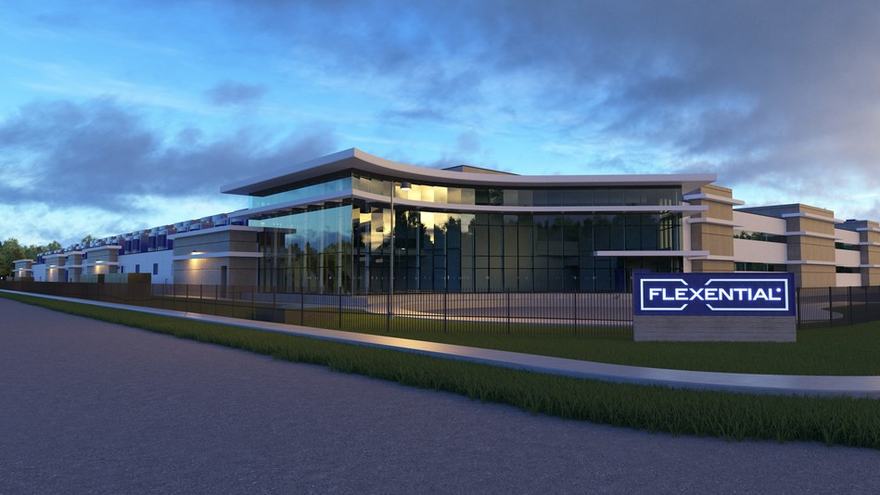
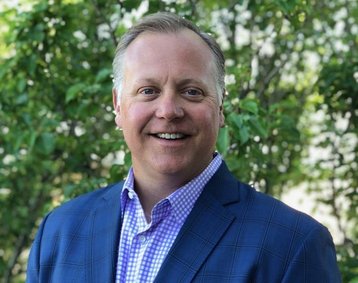
Flexential CEO Ryan Mallory isn’t afraid to embrace the buzz that surrounds the data center industry in the age of AI.
“Hype is good if you know how to take it in context,” he says. “The publicity is fantastic - five years ago if I told someone I worked at a data center company, they’d be like ‘a what?’ Now we’re front and center in all aspects of the global economy.”
At the same time, Mallory is cogniscent of some of the downsides of the current hype cycle, and the importance of communicating that “not all data center companies are created equal.”
Certainly, Colorado-based Flexential has no plans to deliver the kind of mega campuses that are currently rising across the US and beyond, often leaving a trail of controversy in their wake. But the company does intend to develop its network of colo and wholesale data centers in its core US metro markets.
Having taken fresh funding last year, it has turned to Mallory to oversee the next stage of its growth.
Mallory steps up
Flexential was formed in 2017 by investment firm GI Partners when it acquired data center company ViaWest and merged it with Peak 10, a digital infrastructure firm that had been in GI’s portfolio since 2014.
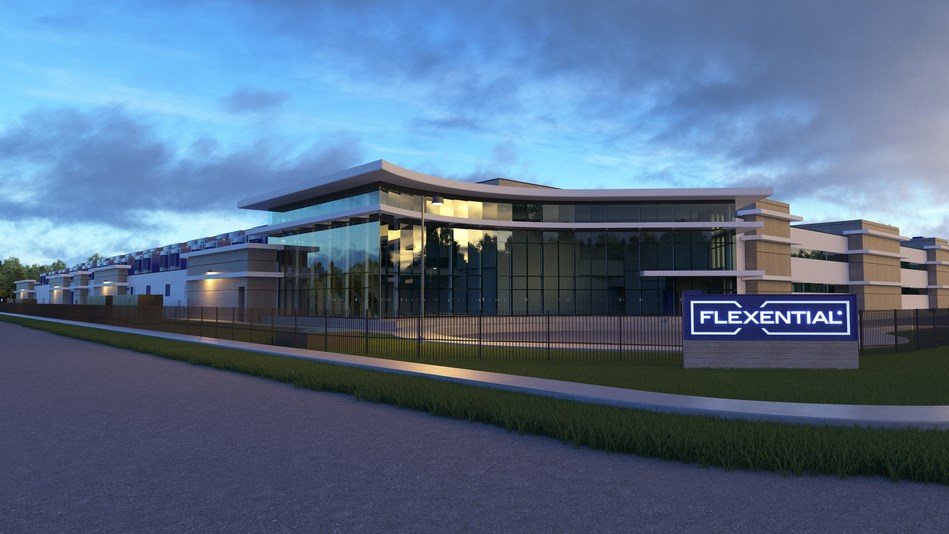
The company operates 42 data centers across the US, spread across 18 markets, offering a total of 3 million sq ft (278,710 sqm) of data center space. With five more facilities in development, the company has more than 330MW of built and planned capacity.
Investors in the firm include Morgan Stanley, which became a co-owner in 2024 through its Morgan Stanley Infrastructure Partners fund, while last year saw GI reinvest in the company and welcome new external backers. These moves, along with an $800 million asset-backed securities (ABS) raise, have given the company funds to grow. Since this interview was first published, the company has revealed it intends to raise another $1.4 billion ABS, backed by 28 data center sites.

Issue 60 - Quantum of promise
Building the chips to power quantum computers
Mallory has been part of Flexential since 2020, serving as president and COO, and stepped into the CEO role in October, succeeding Chris Downie, who had run the firm since its inception.
“The transition was in progress for about six months, and Chris and I remain good friends,” he says. “The challenge for me is to take some of the foundations that have been put in place and look at how we grab hold of the incredible market dynamics we’re experiencing to take that to the next level.
“I’ve known Chris for the best part of 20 years, going back to when I was at Digital Realty and he was at Telx. He’ll always be a friend of Flexential, and now I’ve got the opportunity to take the company in my own direction.”
Mallory’s experience in the data center industry is extensive, spanning senior roles at the likes of Digital Realty and Equinix. He describes Flexential as a “wholesale, retail, and interconnection play.” As well as its data centers, the company operates a 100Gbps network backbone, which connects its sites and gives its customers high-speed access to cloud and network services through a platform called FlexAnywhere.
“Our wholesale focus is at 1MW-18MW,” Mallory says. “We don’t do build-to-suits, and I don’t think we will in the near future because we like the multi-tennant element. That gives us strong diversification, creates a very interconnection-rich ecosystem, and gives us protection from certain industry downturns.”
Mallory classifies retail customers as those seeking less than 1MW of space and says all the firm’s data centers have at least one data hall to accommodate these customers. While Flexential is active in 18 markets, he says the company’s growth is focused on eight key locations - Atlanta, Charlotte, Dallas, Denver, Hillsboro, Nashville, Phoenix, and Salt Lake City.
“These are areas where we’ve either got market leadership or strong gravitational pull based on our customer base,” Mallory says. “We want to treble the size of the platform’s power base in the next five years. We’re not going to be building multi-gigawatt campuses, but we’re actively looking for opportunities in the 22MW-72MW range.”
Projects currently under development include a 22MW data center in the Parker area of Denver, which could go live later this year, and a 27MW facility in Hillsboro, which will be the firm’s fifth Oregon site.
Avoiding obsolescence
Anchor tenants at Flexential data centers include hyperscalers and AI-focused neoclouds, Mallory says. In May 2025, it was revealed AI cloud Coreweave was taking 13MW of space at a Flexential data center in Plano, Texas.
AI dominates most conversations around data centers, and Mallory says his company is beginning to feel the impact of the long-talked-about move from AI training to inference, where these expensively-trained tools are put to use by enterprise clients, running workloads in facilities closer to users than the clusters they were trained on.
“We’re starting to see the forefront of the inference adoption,” he says. “We have very deep and rich healthcare and finance ecosystems across our platform, and these customers are coming to us and showing interest in taking large chunks of upcoming facilities on a pre-planning basis, because they’re starting to plan further in advance to get the capacity they need.”
When it comes to meeting the rapidly changing requirements of AI workloads, Mallory says his firm aims to “never have an obsolete data center,” with the company constantly reviewing the designs of its facilities. Its sixth-generation data center design is currently in the works, which will be fully geared toward liquid cooling pods.
Within existing facilities, Mallory says the company “has been able to support [AI clients] from an air and liquid-cooled perspective.” He explains: “We’ve been able to provide multiple tap sizes, in-line coolant distribution units (CDUs) and data hall CDUs, and now it’s about us being able to stay ahead of the curve. We’re starting to change our approach to power and cooling, because the cooling component is becoming a much bigger influence.”
Our friends and neighbors
Mallory lists two major challenges as he settles into his new role leading Flexential. The first is ensuring that his company is a good neighbor to the communities they operate in.
“I’m highly focused on making sure I personally spend time in the municipalities we operate in and that our teams are working with local groups,” he says.
Mallory adds that his firm has experienced a “mixed bag” of reactions when engaging with residents and local officials near its data centers. “You get people talking about things like water rationing and brown-outs,” he says. “We try to take the time to talk to even the most staunch of objectors because I do understand these concerns - no one wants a high-tension power transmission line built in their backyard.
“We’re a business, but our people live in these communities as well, and we don’t want to harm them. I think if you can sit down with people and be present at community events, not just council meetings, they start to understand that we’re not just looking for massive tax breaks. We want to be good participants and pay our fair share.”
The other pressing issue on Mallory’s mind is workforce development, and finding the people who will build and run data centers now and in the future.
“Staffing is a big challenge, and we’re looking at how we can work with secondary schools and trade schools to interest young people who aren’t planning to go to university in apprenticeships,” he says.
“In areas we’ve been able to do that, we’ve seen some fantastic traction, and it’s something we’re trying to get better at, to make sure people don’t think everything in the industry is to do with making Larry Ellison richer, so he can buy another island in the South Pacific. Data centers can be really important for society and these communities.”






Comments