
Neutral host provider Boldyn Networks has a well-known 20-year concession with Transport for London (TfL) to provide high-speed, 5G-ready mobile coverage across the entire London Underground network.
As part of this concession with TfL, Boldyn is also working to provide network infrastructure above ground for Londoners.
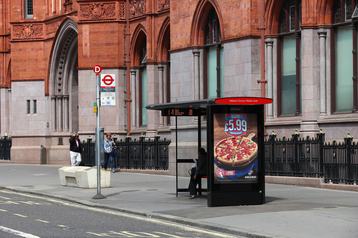
To do this, Boldyn is utilizing street assets, also known as streetscapes, which consist of existing street furniture such as bus stops, lampposts, and security cameras. It's effectively another term for small cells.
Last week during Mobile World Congress, Andy Conway, chief technology officer of Europe, Boldyn Networks, told DCD that these streetscapes are being used to support mobile operators' small cell strategies in London.
As the neutral host provider, all three of the UK's telecoms operators, EE, VodafoneThree, and Virgin Media O2 use Boldyn's network infrastructure to provide coverage for their respective customers.
Conway explains that these TfL streetscape assets are often located within Zone 1 and 2 near "red routes," which he notes are some of the city's highest areas for people traffic.
We've got access to TfL streetscape assets above ground, which are by and large near London's red routes," he said.
"But what we're able to do with those streetscape assets is to have conversations with the mobile network operators to essentially use them as part of their small cell strategy in London."
The UK's telcos have increasingly turned to utilizing small cells within their networks to mitigate the challenge of finding rooftop space in crowded cities such as London, which Conway points out is difficult to install new masts as rooftops become harder to access.
"The challenge in a place like London is they've practically run out of rooftops for the macro cellular sites, while planning permission is still incredibly difficult for those big macro sites as well," he adds.
Closer to the end user
Conway wants more of these small cells, noting that the purpose of these sites is to bring connectivity closer to the end user, highlighting London as the ideal use case. Though he adds that Boldyn is cautious to implement these without disrupting the aesthetic of London's streets.
Boldyn's big project at present is still ongoing, though on track to be complete this year, said Conway.
The neutral host provider revealed in January that 62 out of the 121 Tube stations located underground have been connected with 4G and 5G, along with the entire Elizabeth Line.
According to Boldyn, work is underway to extend coverage in the tunnels along Tube lines, with the vast majority of the Northern and Metropolitan lines due to have coverage in the tunnels by the end of summer 2026.
DCD recently attended a press tour at Battersea Tube Station to visit the network facilities installed at the station. The tour will be covered in full detail in Issue 60 of DCD>Magazine.




Comments