
When people think of Sweden, they’ll most likely think of flatpack furniture, reliable car manufacturers, meatballs, and almost certainly Abba.
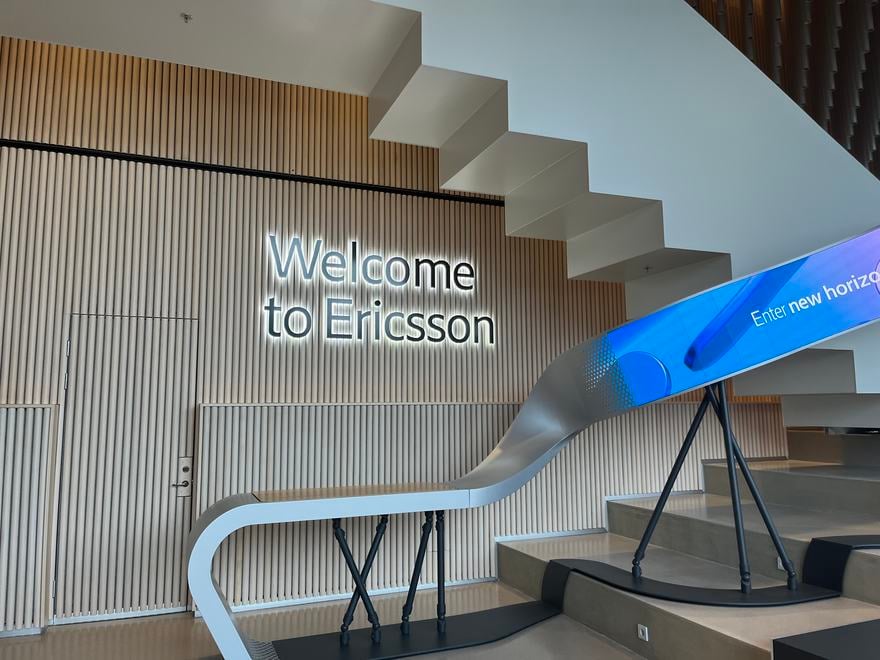
But this year, another Swedish icon is in the spotlight, as the country’s telecoms giant Ericsson celebrates its 150th anniversary.
To some of a certain vintage, the name Ericsson might evoke memories of Sony Ericsson, the company’s mobile phone venture with Sony in the noughties. But the story is much larger than just handsets.
“Ericsson is what is underneath all mobile telephones,” explains Gunnar Wetterberg, a Swedish author and historian. “It provides the know-how that makes it possible to connect with one another, plus the base stations that link all mobile phones and all mobile networks to one another.”
Wetterberg recently authored Connected: Engineering across generations, a book that details the 150-year history of Ericsson from its inception to the present day.
Heading to where it all began
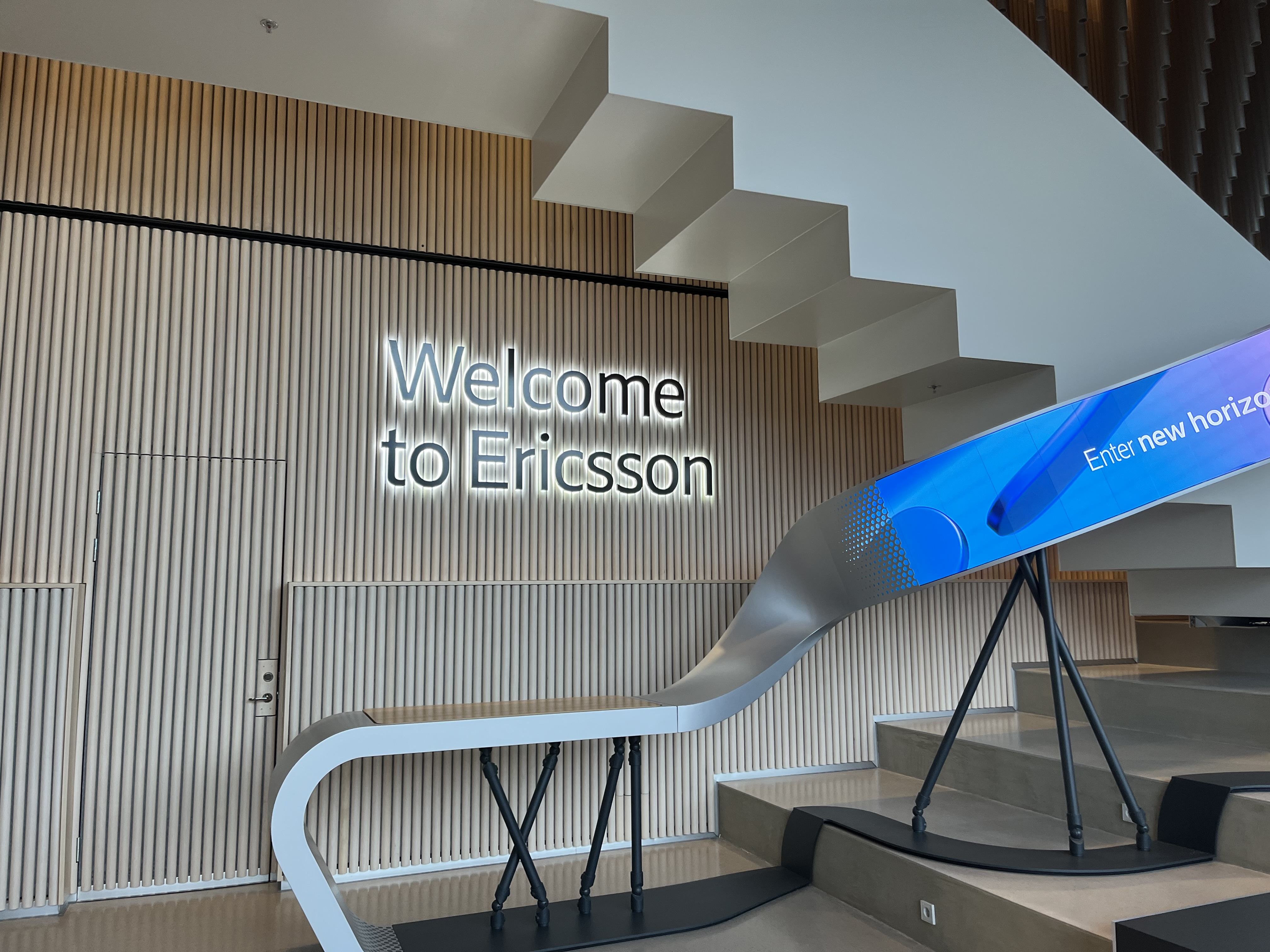
DCD headed over to Stockholm in mid-June to Ericsson’s HQ for a deep dive into the vendor’s history, as the telco giant looks to the future.
DCD Magazine #62 - The coming wave
Will compute at sea sink or swim?
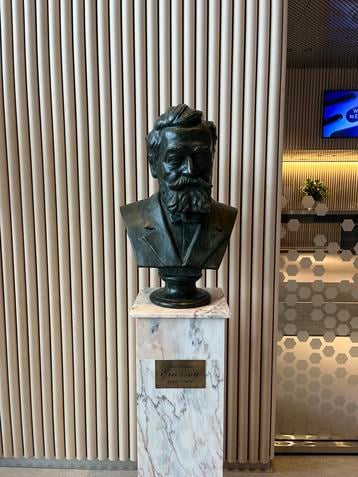
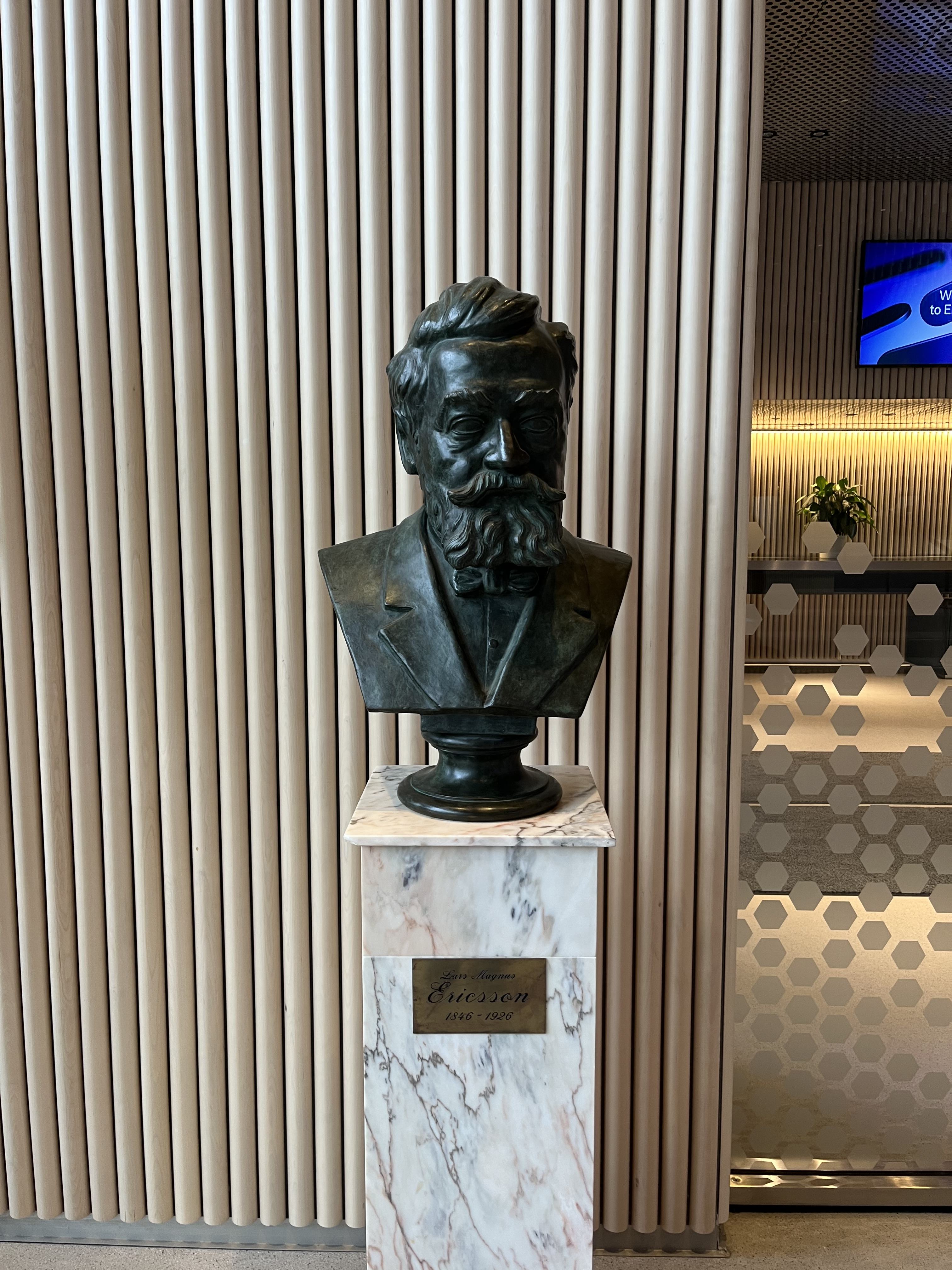
The network vendor was established in the immediate wake of Alexander Graham Bell inventing the telephone - the modern incarnation of Bell’s work is the US mobile carrier, AT&T. Just weeks later, Lars Magnus Ericsson founded Ericsson on April 1, 1876, initially as a repair company. Interestingly, this date was exactly 100 years before tech giant Apple was founded.
“He was a self-taught man,” says Wetterberg of the company founder. “He never had much schooling, but did training in the workplace.”
Initially a blacksmith apprentice, Mr. Ericsson learnt his trade abroad in Germany and Switzerland after he got a stipend from the Swedish National Board of Commerce. During a two year period away from Stockholm, he moved between different German workshops, spending a lot of time at Siemens & Halske, which at the time was the major player in telegraphy.
“He was employed in a workshop that served the Swedish National Telegraph Agency, and it was there that he was trained, but when he came back from Germany, his place as a shop steward had already been taken, and so he decided to set up his own workshop and started in the midst of Stockholm a small workshop,” explains Wetterberg.
In the early days, there were only four employees at Ericsson, and the company started out repairing the telephones that had been imported both from Germany and from Bell. A short time later, Ericsson started to make its own telephones to undercut the prices set by Bell.
Lars Magnus Ericsson led the business from 1876 up until 1900.
Standing the test of time
Those early years paved the way for a company that has stood the test of time amid plenty of challenges, says Wetterberg.
“The remarkable thing about Ericsson is that they've survived five or six major technological shifts, and all their rivals, all competitors from the old days, they are gone, or at least they've left telecom. So the ones that are left today, Huawei, Samsung, Nokia, they are just 30 to 40 years old, and that's pretty impressive,” says Wetterberg.
During this 150 years of existence, the vendor has also managed to survive several financial crises, he points out.
And a century and a half later, challenges still present themselves. In recent years, the vendor has had to contend with a flat RAN market, amid a period where telecom carriers are struggling to maximize profits.
This comes as telcos are heavily investing to build and maintain networks, while consumers see mobile operators as a cheap commodity, which is squeezing the profits of the carriers.
Ericsson itself is going through an interesting period as the world gets to grips with the promise of AI. The network vendor has been tasked with embedding AI capabilities into its mobile network.

Navigating the AI boom will be the responsibility of Per Narvinger, the company’s newly named CEO.
It was actually during DCD’s visit to Ericsson’s Kista headquarters that news broke of the transition. On a damp summer’s afternoon, Ericsson revealed former CEO Börje Ekholm was stepping down after close to a decade at the helm.
“Dear colleagues, the mountains are calling. I must go,” Ekholm’s internal email to employees started. Staff at the company’s HQ were not shocked at Ekholm’s announcement, with the CEO’s departure having first been mooted in 2025.
He had been CEO of Ericsson since 2017, during which time he presided over the company’s 5G launch, a global pandemic, and the early years of the AI revolution. He will officially depart at the end of September, but will stay on as executive advisor to Narvinger until June 2027.
The incoming Narvinger is no stranger to Ericsson, having been at the company for his entire 28-year career, beginning as a research engineer and most recently serving as EVP and head of networks.
“This is a pivotal time in our industry. As AI continues to industrialize, this will increasingly require advanced connectivity solutions, an area where Ericsson is leading,” Narvinger said upon his appointment.
Work to do with 5G
As Ekholm literally heads for the hills, his successor, Narvinger, will be kept busy taking Ericsson’s 5G strategy to the next level amid ongoing change.
Across the industry, the 5G era hasn’t taken off as hoped, with promises of early use cases such as augmented reality, autonomous vehicles, and smart cities failing to materialize as expected.
Several prominent industry voices have criticized 5G’s impact, though Ericsson isn’t giving up the ghost on the technology just yet. “The feeling is that there’s so much more to be done within the 5G envelope,” Gabriel Foglander, head of strategic RAN leadership at Ericsson, tells DCD.
“We are at the midpoint of 5G, where we've had a concentrated focus on building out capacity and the coverage of the 3.5GHz layering in most markets, which in many cases has almost doubled the spectrum assets that are available for an end user.”
Foglander points to Fixed Wireless Access (FWA) as one of the key use cases for 5G.
Whether criticism of 5G’s lifecycle so far is fair is certainly up for debate. 5G has been the fastest-growing mobile technology in history, with more than 3 billion subscribers globally hooked up to networks.
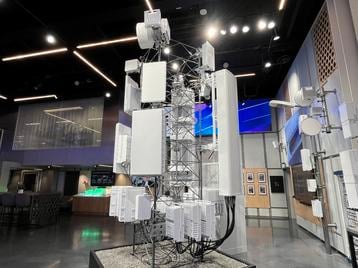
Ericsson has provided its network equipment for 187 live global 5G networks, as most carriers and markets deployed 5G Non Standalone (5G NSA) initially, which is built upon the 4G Core. The company is looking to support mobile carriers’ migration from 5G NSA, adds Foglander.
“We feel strongly that there is still much to do with converting NSA-centric operations into more of a Standalone approach and unlocking that diversity of the different communication needs that comes with that transition,” he says.
“Going from NSA to SA releases network efficiencies, so it's a good investment case if you're in the process of modernizing your equipment because you can unlock a lot of capacity, spectral efficiency, and also energy efficiency.”
Foglander claims that those carriers that adopted 5G SA earlier have seen greater success at driving more monetization opportunities, tapping into dedicated 5G SA technologies such as network slicing as a way of offering tailored user experiences.
“I don't think it's necessarily a super big regret to do it [NSA] in the first phase, because it allowed quick uptake and build out of the mid band. I think the regret should be that we linger too long,” says Foglander.
He also highlights the success that China has had with 5G, after shutting down NSA a couple of years into the cycle. China is, of course, the home of one of Ericsson’s big rivals, Huawei.
Learning ahead of 6G
Still, these lessons are something that can be taken into the 6G era, says Foglander, who suggest that 6G will likely see standalone capabilities introduced much earlier in its lifecycle.
When 5G was first launched by mobile operators in 2018, initial networks were based on 5G NSA infrastructure, which leveraged the 4G Core. To some naysayers, it wasn’t until 5G SA came into play that “true 5G” had launched.
“This definitely shapes 6G introduction strategies,” Foglander says. “We're in full agreement that this would be a good transition model, because it safeguards that if you invest in a proper SA network you can avoid getting stuck in the early phase of 6G and making a mistake, or staying too long in NSA.”
He says that the gap between 5G and 6G will be easier to bridge than 4G was to 5G, as Ericsson pushes its multi-radio access technology (multi-RAT) spectrum sharing for an “efficient” 5G–6G coexistence.
“You had a bit of a complication because 4G and 5G had different physical properties, so it was hard to bridge that from an overhead efficiency point,” he says. “But now because 5G and 6G are more aligned on the physical layer, it is possible for us to design a solution that does 5G-to-6G spectrum sharing in a much more efficient way.”
Although the 3GPP standards of 6G are still being defined, Ericsson has been preparing for 6G since 2019, when 5G was in its infancy.
Ericsson has run several prestandardization projects for 6G, both regionally and nationally. Earlier this year, the vendor completed a 6G pre-standard overthe-air (OTA) session.
While it’s not fully clear what 6G will look like by the time these networks are expected to commercially launch in the latter part of this decade and early 2030s, the bet is that these networks will be built around AI.
Speaking in February, Erik Ekudden, SVP and chief technology officer at Ericsson, said the company’s aim is to be “the provider of the best networks for AI."
Rather than wait for 6G to arrive, the vendor has already launched a number of AIready radios, as it embeds AI RAN within its software for more intelligent, energy-efficient networks.
Meanwhile, Foglander suggests that the company’s Open RAN strategy will continue into 6G. Although initially skeptical of Open RAN as a concept, the vendor’s stance has shifted considerably in favor, striking lucrative deals with carriers such as AT&T, Vodafone, and Orange, to name a few.
“We’re betting this [Open RAN] will continue,” says Foglander. “I would say we are executing in all layers of our Open RAN strategy and we currently have 160 radios that are Open RAN-ready.
“We are all in on this becoming the interface of 6G and are continuing to invest in SMO (service management and orchestration). I think it will now play an important role, as a platform for embedding agentic AI into the RAN as well.”
Passing the baton on
Ericsson is already embedding AI into its RAN, as part of its shift from manual systems to more autonomous, AI-driven systems.
The fact that the company is already doing this with its 5G network is encouraging for network operators ahead of 6G’s arrival, especially as the demand for ultra-low-latency inference will grow even further.
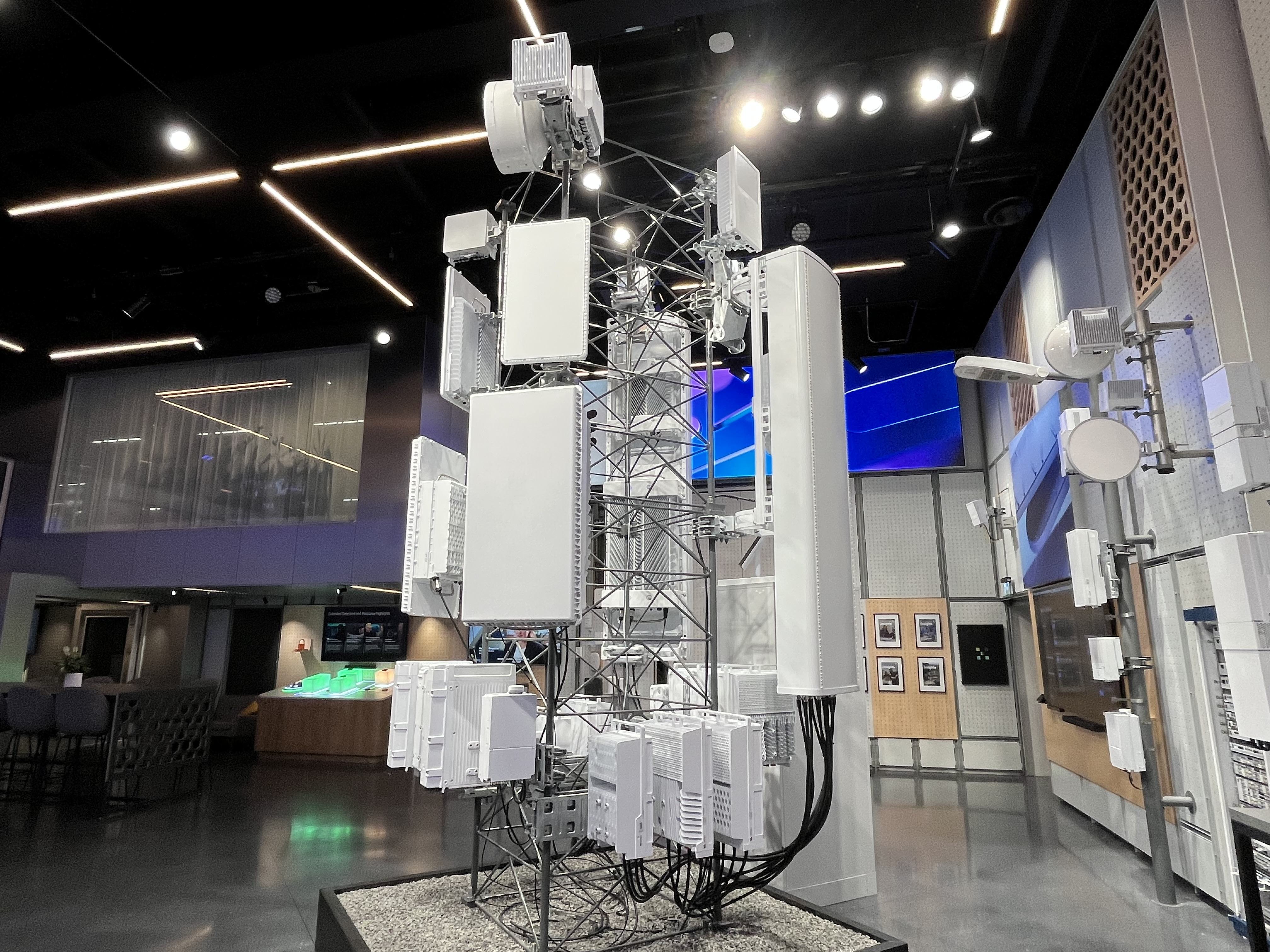
At Ericsson’s HQ, the vendor’s keen to showcase its latest and greatest technology through its Imagine Studio, where it provides a glimpse of the use cases it hopes to support.
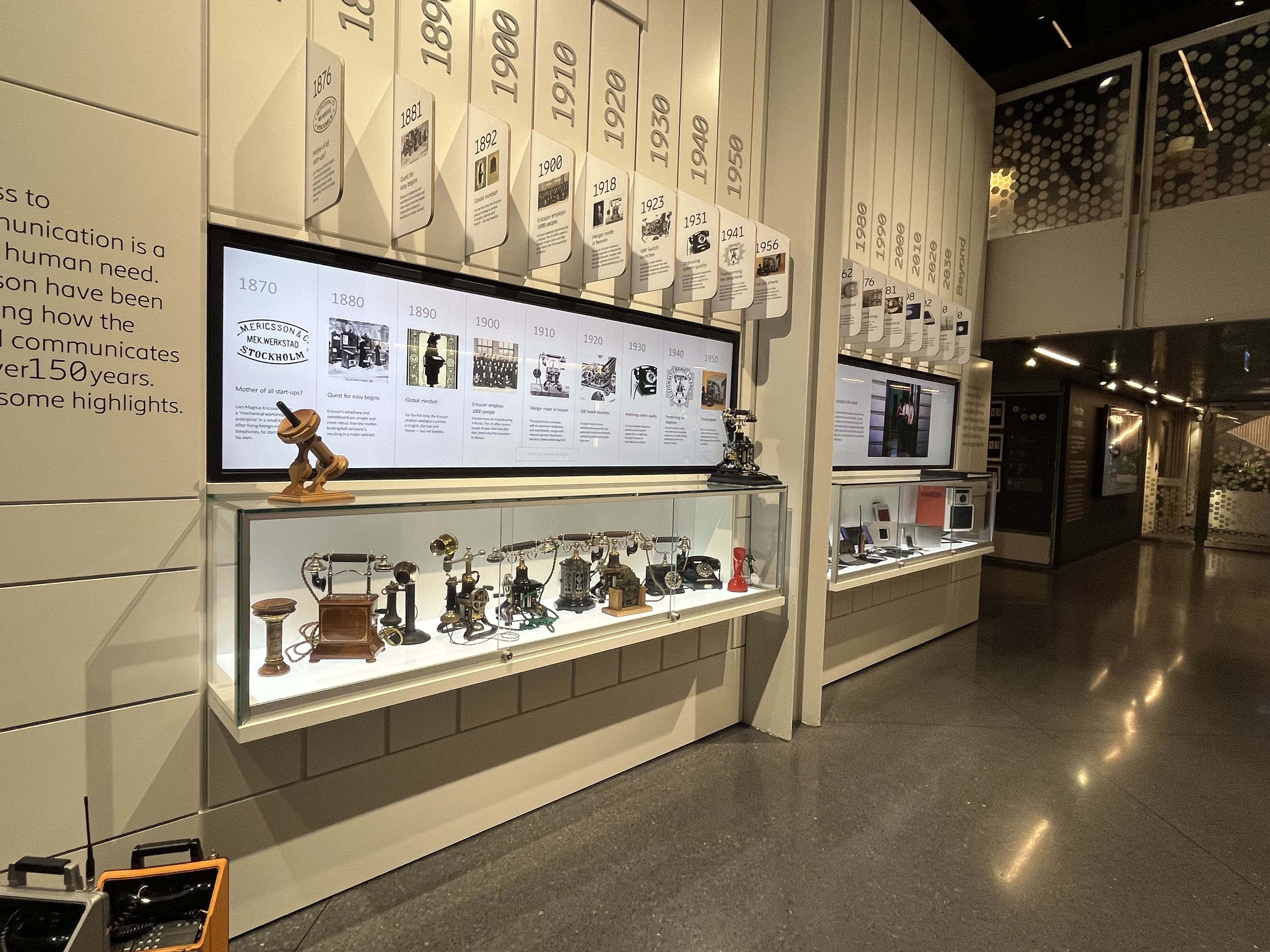
But equally, Ericsson is just as proud of its heritage as one of the oldest telecommunications institutions in the world, showing off some of its legacy telecoms kit and boasting about its role in developing key technologies such as Bluetooth, which emerged from the firm’s labs in the early 1990s, and named for the Viking king.
For now, the company’s key focus is on its network infrastructure, where AI will play a huge role. “We began investing in AI more than a decade ago, and over the next two to three years, AI will increasingly be part of our solutions,” the outgoing Ekholm stated back in 2023.
Narvinger picks up the baton from Ekholm to lead the vendor further into the AI-defined era. At the start of the 20th century, Sweden was one of the most important telecommunications markets in the world, primarily because of Lars Magnus Ericsson. 150 years later, the company is still every bit as important for the industry.






Comments