Fire protection for Li-ion battery energy storage systems
This paper discusses the development of a managed-risk fire protection concept for stationary Li-ion battery energy storage systems.
This paper discusses the development of a managed-risk fire protection concept for stationary Li-ion battery energy storage systems.
Now, lithium-ion batteries have emerged as a viable alternative and a growing number of users are evaluating this technology for UPS applications in mission-critical environments.
This Design Guide provides a comprehensive overview of the risks, environmental challenges, & best practices in applying very early warning smoke detection in the latest telecommunication & data processing facilities.
The Future of Fibre Optics in the Data Centre Networks
Driving network reliability and meeting edge demands
Key findings of a recent survey of 600 data center operators about deploying AI
This paper establishes why micro data centers are best suited to support edge computing over other alternatives such as server rooms and traditional data centers.
This paper will provide an introduction to switching transients that may result in excessive transformer intra-winding stress.
Download your free infographic provided by our exclusive content partner Vertiv
Experienced users know that traditional lead-acid batteries are often considered the ‘weak link’ in their data center’s power chain. With strings and strings of batteries required to support a modern facility, it might feel as if a possible failure is lurking at any time.
The Challenge: Providing adequate smoke detection in a data center facility is often a challenge in itself but especially in a facility within a multi-tenanted building.
This white paper compares both scenarios, presents the advantages and disadvantages of each, and identifies which environments can best leverage the prefabricated module approach.
This Schneider Electric paper provides a brief overview of li-ion batteries in comparison to VRLA batteries for static UPS applications, including optimal chemistries and technologies.
How Next Generation Data Centers Are Bringing Cost-Effective, High-Performance Computing to Any Size Organization
This paper provides specific availability improvements broken down by eight key systems including power, cooling, physical security, environment, and management.
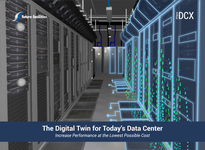
Data center operators are building 3 data centers for every 2 data centers they need. Find our more about how the digital twin can maximize your data center performance
Almost half of data center decision makers are having to increase capacity within their existing power & cooling infrastructure.
Download this ebook by Cadence (Formerly Future Facilities) to find out more.
This report demonstrates why it is extremely important to control the substation environment and this can be achieved by minimising moisture ingress into substations and controlling the temperature and humidity within the building.
With increased extreme weather related events and rising sea levels due to climate change, critical infrastructure is becoming more threatened by water ingress and flooding. This paper outlines how data center operators can mitigate for threat
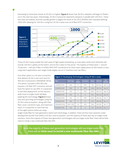
For the purpose of this whitepaper, we define the size of a data center by the number of servers or switches it hosts. A cloud data center generally has upwards of 100,000 or more servers, while a large enterprise data center will has around 10,000 or more servers. Small-to-medium data centers may have 500 servers or less.
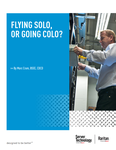
Modern data centers are some of the most complex buildings around, getting more complex by the day. Costs for building a state of the art hyperscale data center can quickly run into the range of billions of dollars before the first bitcoin is mined or the first video is stored.
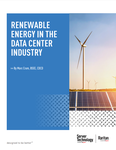
This paper explores the short and long term ramifications the renewable power source has on the architecture of the power train in the data center.
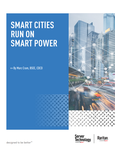
This paper explores the critical role intelligent power distribution plays in making “smart” happen.
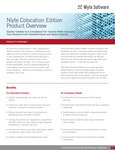
With Nlyte Colocation Edition, you can also generate detailed reports to identify stranded power and space capacity in your data centers that subsequently can be sold to existing and/or future tenants – thus increasing the revenue you capture per square foot within your facilities.