
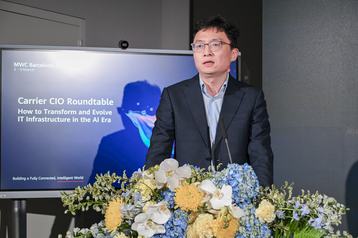
At MWC Barcelona 2026, Yuan Yuan, president of Huawei Data Storage Product Line, shared Huawei's key insights and innovations for enabling carriers to plan their data infrastructure, address challenges in AI adoption, and prepare for IT architecture transformation in the AI era.
Data preparation for AI: From dormancy to awakening
In the age of AI, data is an essential asset. Yuan noted that in the past two years, over 90 percent of enterprises actively embraced AI for business innovation, but fewer than ten percent have successfully mastered and scaled AI technology. There are three primary challenges: persistent data silos that hinder data collaboration across regions and organizations; a lack of quality data supply, especially industry-specific knowledge; and inefficiencies in the data preparation phases like data collection, cleansing, and labeling.
This results in AI applications falling short of commercial viability, raising doubts about the return on investment. Yuan predicted, "In the future, cold data will become a thing of the past. Data will shift from 'offline' to 'always online,' and retention policies will move from being compliance-driven to a principle of retaining and never deleting. Consequently, data volumes will expand from petabytes to exabytes, which will drive demand for greener, more efficient data infrastructure."

Architectural transformation: From storing data to storing knowledge and memory
As AI agents become the primary consumers of data, data infrastructure must evolve to embrace new data paradigms, including vector, graph, and key-value (KV) semantics. To eliminate AI hallucinations and enable continual AI evolution, data infrastructure must be capable of storing knowledge and memory.
Yuan discussed Huawei's AI data platform, an innovative solution that integrates knowledge, memory, and inference acceleration services into a single storage system. This consolidated approach significantly reduces system complexity and O&M costs.
The platform delivers a massive upgrade in performance. Inference efficiency (measured in tokens generated per second) is multiplied, while latency (time to first token) is reduced by 90 percent. Furthermore, the continual evolution of data, knowledge, and memory makes AI agents smarter over time.
As Yuan explained, "In the future, every carrier will need its own AI data platform to help agents understand business processes, acquire domain-specific expertise, and iterate and upgrade rapidly. Otherwise, AI will remain nothing more than an expensive toy."
AI adoption planning: From AI exploration to AI-driven service upgrades
Although many carriers have made AI a strategic priority and are beginning to adopt it, significant challenges remain in real-world deployment: inference failure, inference costs, and inference speed. Yuan presented an intelligent computing service platform, jointly developed with a Chinese carrier, that tackles these challenges. The platform uses the KV cache technology to improve storage resource utilization and supports inference applications of different large models like DeepSeek and Qwen.
It optimizes cost-effectiveness by innovatively eliminating repeated computing via querying. Through the collaboration of on-chip memory, DRAM, and AI storage, the platform enables PB-scale KV cache storage. This improves the overall throughput by more than ten times, reduces inference costs by about 50 percent, and shortens response time to less than one second. In addition, algorithm optimization addresses challenges like low KV cache hit ratios and inference failure due to long-sequence inputs in research report analysis.
Serving as the foundation for AI, the platform has been deployed at scale at the group to enable multidimensional innovation across services, including internal IT systems, B2C services, B2B services, and B2H services. Yuan said, "Planning AI training and inference platforms requires more than focusing on computing power and models. Deep collaboration between storage and compute is also essential to improve system-level efficiency and user experience."
Yuan highlighted that AI is reshaping data infrastructure. In the AI era, storage systems will evolve into intelligent engines, which will not only store critical data assets, but also serve as the knowledge sources and memory carriers for the continuous evolution of AI agents.
He called on carriers to prioritize accumulation and protection of quality data, and to plan and build a unified AI data platform that supports a wide range of large model applications while enabling service innovation for both internal operations and external offerings. Huawei will continue to advance technological innovation and architectural upgrades to help carriers digitally transform.
More from Huawei
-

Sponsored Huawei FlashEver: A step forward to storage platform implementation
How to address speed, certainty, and simplicity as the new enterprise commandments
-

Baidu and Huawei account for 70% of China's GPU cloud market
Report covers the first half of 2025
-

Sponsored Gently down the (bit)stream
Huawei’s StarryLink optical modules set the course for next-generation AI data centers
Comments