

Across the Asia-Pacific (APAC) region, artificial intelligence (AI) is rapidly moving from experimental to essential, reshaping infrastructure priorities and upleveling to national digital agendas.
Singapore, for example, has developed governance and assurance frameworks to build out its AI ecosystem. However, as the country empowers businesses for safer AI deployment, one critical ingredient must keep pace – the storage backbone that sustains AI’s data appetite.
In order to keep up with the dynamic regional trends, organizations are racing to meet the compute and performance infrastructure needs to fuel powerful applications like AI. As businesses scale their AI ambitions, one hidden and growing challenge is often overlooked: how do we store the massive volumes of data that AI needs, consumes, and creates?
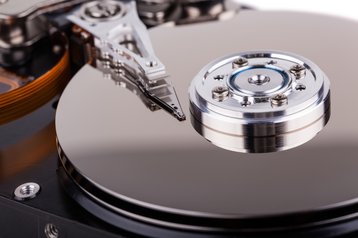
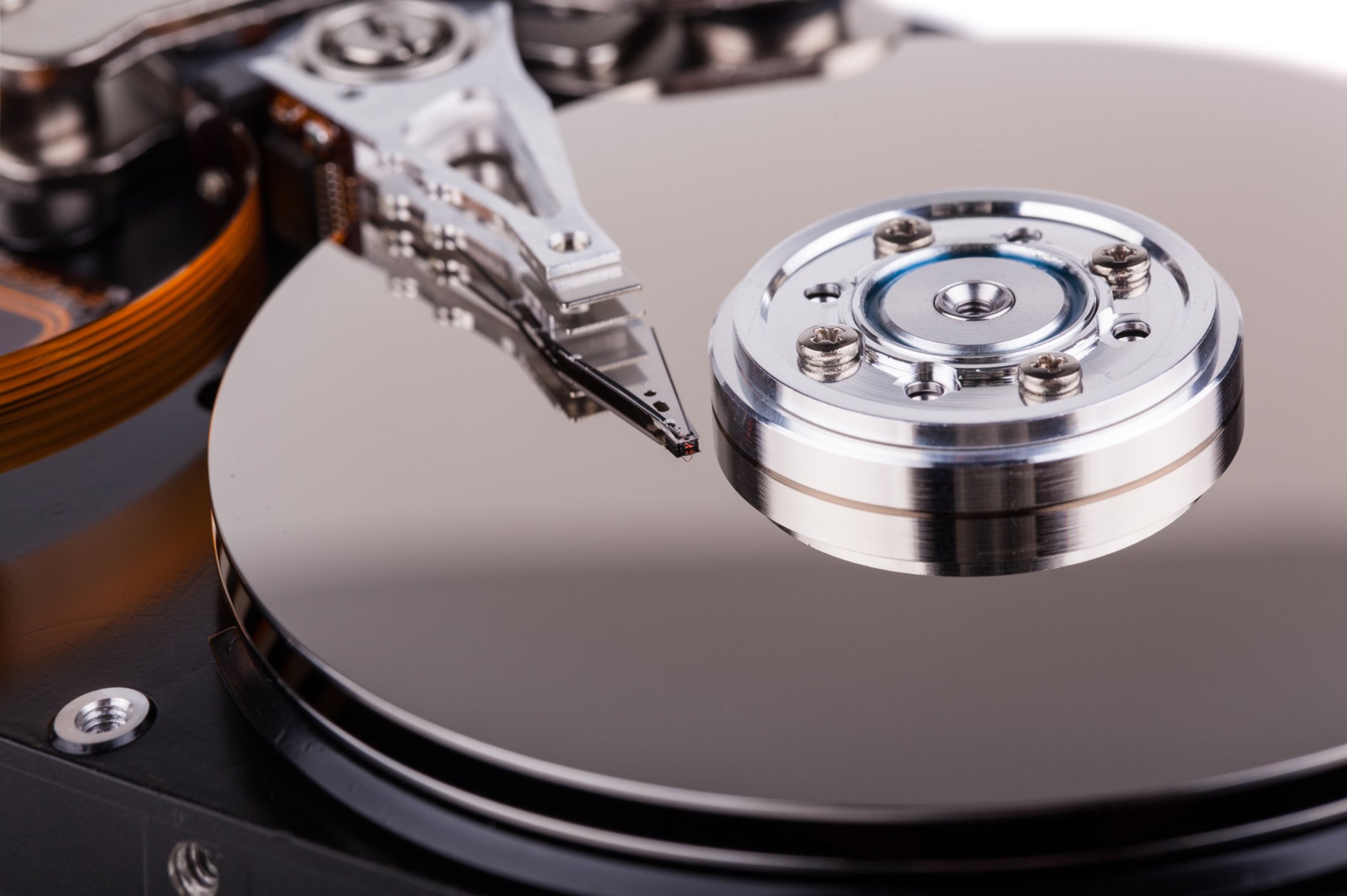
Everyone talks about GPUs and flash performance, but few are talking about where all that data comes from and ends up. From training sets and model checkpoints to inference logs and telemetry, AI pipelines generate hot, warm, and cold data that call for storage solutions tailored to different performance and capacity needs. Hard disk drives (HDDs) play a critical role in AI infrastructure, serving as the backbone of long-term, high-volume storage that works in concert with higher-performance, lower-latency solid-state drives (SSDs).
The reality of AI workloads: It’s not all real-time
With tech giants rapidly expanding their AI capabilities in Asia, there is a growing demand for data storage as AI consumes and generates huge volumes of data throughout every stage of the AI data lifecycle. According to a Statista 2025 report, the total amount of data created, captured, copied, and consumed globally is forecasted to increase rapidly, reaching 149 zettabytes in 2024, and more than doubling to 394 zettabytes by 2028.
Massive amounts of data, often reaching petabyte scale, power AI models, providing the data intelligence needed to enable quick, accurate decisions in the moment and at scale. The more data, the better the result. This includes data preparation and ingestion, model training, inference and prompting, inference engine, and new content generation, making AI dependent on storage solutions with varying features and functionalities.
Performance is critical, but so is capacity, resiliency, scalability, and other factors. Much of this data is either write-once and read-later, or write-heavy during specific phases like training or telemetry logging. This data is often retained for various reasons, from compliance, model retraining, capturing snapshots, and future auditing– all with their own requirements. Not all data needs high-performance, flash storage. In fact, flash-forward AI platforms must pair fast tiers with more cost-effective ones.
Cloud and hyperscale environments rely on HDD
High-capacity, cost-efficient HDD solutions provide the foundation for today’s extensive big data and data lakes that store the massive volumes of datasets that are used to train models. This data comes from raw data archives, video content, object storage, system logs, metadata, and backups. As a result, every AI application needs smart, scalable, and affordable capacity. And that’s where HDDs continue to shine.
Cost-per-terabyte is critical when building a dynamic storage environment for AI applications. Businesses need to optimize their budget allocation and make the best use of resources available.
Most AI data is warm or cold, making high-capacity HDDs the ideal choice for storing it cost-effectively and at scale. According to research conducted by WD, HDDs have a 6x cost-per-terabyte advantage over flash storage – especially in high-capacity at-scale environments. Ongoing innovations in HDD architectures allow them to continue to deliver more value per terabyte, driving TCO down over time as HDD capacities increase.
Clear price-performance metrics are also key to making informed storage decisions—it's all about choosing the right solution that matches your workload. HDDs continue to deliver strong performance across a wide range of AI data cycle workloads, offering a compelling balance of cost and capability. Rather than overpaying for excess capacity, organizations can optimize the total cost of ownership by aligning storage performance with actual needs.
To provide higher capacities, better performance, and more value for organisations, HDD solutions are constantly evolving. This includes recording system innovations such as energy-assisted magnetic recording (EAMR) and shingled magnetic recording (SMR), and mechanical innovations such as helium-filled HDDs enabling up to 11 disks in a 3.5” HDD form factor that continue to push density, performance, and efficiency. In future, the widespread use of heat-assisted magnetic recording (HAMR) will drive HDD capacities even higher.
Storage isn’t an either/or proposition – it’s layered
AI applications have extensive storage requirements, and HDDs continue to form the backbone in keeping up with the region’s growing demand for long-term, at-scale storage, allowing organizations to meet their high-capacity needs in the most effective and cost-efficient manner possible.
Today’s HDD solutions are not legacy technology – they are the constantly evolving workhorse of data infrastructure, built to handle the massive, growing storage demands of AI workloads now and into the future.




Comments