

It is an important question. AI-driven data centers consume tremendous amounts of energy, and the scale of new projects continues to grow rapidly. However, focusing solely on power capacity overlooks a broader challenge emerging across the industry: complexity.
AI data centers introduce new operating dynamics that affect every layer of infrastructure. Facilities are growing in size and density, project schedules are accelerating, and operators are tasked with coordinating diverse energy, electrical, and operational systems. At the same time, infrastructure needs to remain highly available, resilient, and adaptable to changing business demands.
In this dynamic environment, the ability for AI data center operators to effectively manage such complex systems will be increasingly important.
AI changes the entire infrastructure equation
Historically, data center infrastructure evolved in a relatively predictable manner. Facilities expanded incrementally, workloads followed more stable demand patterns, and operators could manage many systems independently. But now, AI is turning this predictable model upside down.
Today’s AI facilities are introducing highly dynamic workloads that can create large changes in power demand within extremely short periods of time. Massive clusters of processors can ramp utilization up or down, generating operating conditions unlike those found in most traditional industrial environments. In some operating scenarios, these load swings can occur multiple times per minute, creating a level of volatility that conventional infrastructure was never designed to accommodate.
The impact extends beyond power systems. Changes in compute activity can influence cooling requirements, electrical distribution strategies, energy storage operations, and overall facility performance. What were once separate operational domains are becoming increasingly interconnected.
As facilities grow larger and more sophisticated, the challenge becomes managing interactions across the entire infrastructure ecosystem rather than optimizing individual systems in isolation.
Operational fragmentation is a hidden risk
The scale of modern AI projects also introduces the risk of operational fragmentation. Many new facilities rely on infrastructure from multiple vendors, each contributing unique technologies, interfaces, and control philosophies. Project teams often must integrate power generation assets, battery energy storage systems, electrical equipment, protection systems, cooling infrastructure, and facility operations technologies into a unified environment.

At the same time, project timelines continue to compress. In many cases, teams are procuring equipment before detailed system designs are finalized due to supply chain constraints and aggressive deployment schedules. As a result, operators frequently inherit disparate systems and assets that were never originally designed to work together
Fragmented systems can create visibility gaps that make troubleshooting more difficult. Multiple control environments can slow decision-making and introduce uncertainty regarding ownership, accountability, and response procedures. As system complexity increases, so does the risk of inefficiencies, delays, and unexpected operational issues.
More data doesn’t automatically create more insight
Most modern data centers generate enormous amounts of operational data. Power systems, cooling equipment, electrical assets, sensors, automation platforms, and energy resources continuously provide information that can help operators understand facility performance. Large renewable and battery installations may generate hundreds of thousands or even millions of data points across a single site. Yet having access to more data does not necessarily make operations simpler. In fact, the opposite can occur.
Without a structured approach to data management, operators can find themselves overwhelmed by information while still lacking actionable insight. Teams may spend valuable time attempting to correlate events across multiple systems, navigate disconnected interfaces, or determine which anomalies require immediate attention.
What organizations need are tools capable of contextualizing information, identifying relationships across systems, and helping operators understand not only what is happening, but why it is happening and what actions should be taken next. The goal is to move beyond monitoring toward more intelligent operations.
Moving from visibility to orchestration
Visibility is an essential first step, but it is not enough. As AI infrastructure scales, operators must be able to orchestrate interactions across power, energy, cooling, electrical distribution, and operational systems in real time. This is where integrated automation architectures become critical.
Modern AI infrastructure depends on coordinated operation across a wide variety of assets, including power generation, battery energy storage, electrical systems, and facility controls. These technologies must function as part of a unified operating environment rather than as individual components managed independently.
A unified control architecture creates centralized visibility while enabling coordinated decision-making across the entire infrastructure ecosystem. By bringing diverse systems together under a common operational framework, operators gain the ability to manage complexity more effectively and respond faster as conditions change. The objective is not to eliminate human decision-making, but to give operators a common operational picture, better context and automated support for repeatable responses, always with a human in the loop.

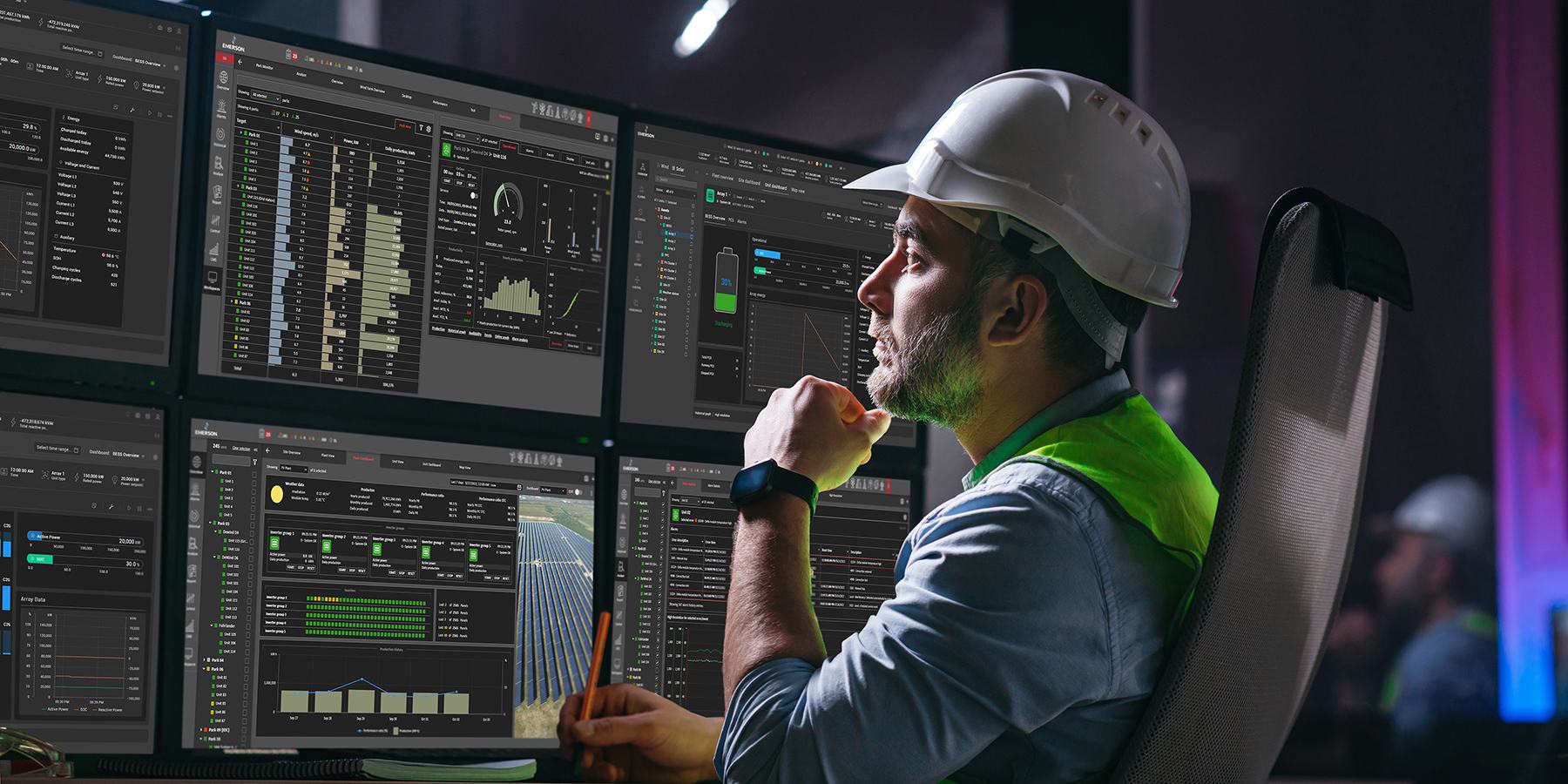

This approach supports:
- Real-time coordination of infrastructure assets
- Centralized operational visibility
- Automated responses to changing conditions
- Consistent decision-making across systems
- Improved scalability as facilities expand
Think of it as moving from a collection of assets to a coordinated system. Orchestration can turn complexity from an operational burden into a manageable process.
Building resilience through intelligent operations
As infrastructure interdependencies increase, resilience becomes increasingly dependent on operational intelligence. Integrated operations enable organizations to identify issues earlier, understand impacts more quickly, and respond with greater confidence. Coordinated systems also help operators navigate dynamic conditions without introducing additional complexity or manual intervention.
This is particularly important as data centers adopt more diverse infrastructure strategies. Grid-connected resources, onsite generation, battery energy storage, renewable energy assets, and advanced cooling systems all bring unique operational characteristics. Successfully managing these assets requires coordination across multiple timescales and operating conditions.
Organizations that establish integrated operating models are better positioned to maintain reliability while also supporting future growth. Instead of adding complexity each time a new technology is deployed, they create a foundation that can absorb change and scale more efficiently over time.
The future belongs to operators who can manage complexity
AI is rightly viewed as a power challenge, but the infrastructure implications extend much further. As facilities become larger, denser and more interconnected, power, cooling, electrical distribution, storage and facility controls must operate as a coordinated system.
Operators that design for integrated visibility and intelligent orchestration from the outset will be better positioned to manage rapid changes in workload and infrastructure. The objective is to give operations teams the context, control and confidence to maintain reliability as conditions change. In the AI data center era, infrastructure intelligence will be a critical enabler of resilient, scalable growth.
More from Emerson
-

Sponsored Making solar and storage work for AI-scale data centers
Why solar energy and battery storage are critical pieces of the data center power puzzle
-

Sponsored Why scalable energy storage requires an integrated power ecosystem
By prioritizing integration from the outset, organizations can reduce risk, improve predictability, and build systems that perform reliably at scale
-

Sponsored Data center dilemma: How hyperscalers can meet AI-driven timelines without limiting renewable energy options
By treating the control and data architecture as a core component of the build, rather than an afterthought, operators can move quickly today without sacrificing flexibility tomorrow
Comments