

Hyperscale data centers are being built at a rapid pace. Driven largely by AI and high-density computing, facilities once considered large at 20 or 30 megawatts now routinely exceed 200 megawatts of energy consumption. In many markets, these sites are trending even higher as operators race to deliver capacity for training clusters, inference workloads, and the growing number of GPU-intensive services.
At the same time, data center operators face mounting pressure to integrate renewable energy, particularly solar, into their power strategy. However, the inherent variability of renewable energy introduces operational challenges that can undermine reliability if not managed effectively.
Balancing speed, availability and sustainability is resulting in a dilemma: How can hyperscalers build fast today to meet AI-driven timelines without limiting their energy options tomorrow?
The rapid scaling challenge
As AI workloads expand, hyperscale data centers have become indispensable to modern digital infrastructure. The sheer size and power requirements of these facilities fundamentally change the way operators must think about energy. While older data centers could run reliably using largely static power generation models, today’s AI‑focused hyperscale sites must handle enormous loads, dynamic demand profiles, and a mix of energy sources.
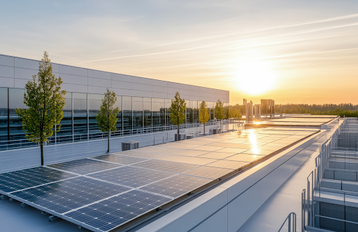
Traditional approaches to renewable integration, such as layering solar management tools on top of existing infrastructure, simply do not scale. Operators who have owned smaller facilities over the years may have successfully integrated solar as a piece of a broader energy mix, but the scale and variability of hyperscale renewables introduce far more complexity. Larger sites cannot rely on manual interventions or loosely connected software applications to adapt to fluctuations in renewable output.
This is made even more challenging by the industry’s rapid build cycles. Hyperscalers are under intense financial pressure to engineer, construct, and commission extremely stable facilities quickly, often prioritizing reliability and capacity over long-term energy flexibility. As a result, renewables frequently take a back seat during early design phases to large blocks of gas generation assets that have high operating costs, a major carbon footprint, and low efficiency.
But as new facilities multiply and individual sites grow larger, operators will likely face stronger pressure to incorporate more renewable power. As such, the decisions made during fast-build projects will have lasting consequences.
The intermittency problem
Solar energy provides significant cost advantages when conditions are favorable. In optimal situations, it can be the lowest-cost generation source. However, solar production fluctuates based on weather, time of day, and seasonal patterns. This variability means that data centers relying on solar must be able to shift between different operating modes and generation sources with precision and speed, which is difficult to achieve using fragmented toolsets or ad hoc integrations.
Without a consistent operational foundation, operators risk making inefficient decisions or lacking the visibility needed to maintain uptime in the face of variability. In high-availability environments, even brief disruptions can have significant operational consequences.
AI workloads heighten these risks. Facilities supporting training clusters or high-density compute loads have limited tolerance for power instability or delayed reactions to renewable fluctuations. Some operators delay renewable integration precisely because they fear that intermittent power sources will introduce unwanted operational risk during fast-build cycles. But this is not a sustainable long-term strategy.
The renewable-ready approach
To bridge the gap between today’s compressed construction schedules and tomorrow’s renewable-driven power strategies, hyperscalers are adopting a renewable-ready philosophy.
A renewable-ready facility is not one that installs solar panels on Day One. Instead, it is one that designs and deploys the control, data, and operations infrastructure necessary to integrate renewables seamlessly, whenever the operator chooses to add them.
This approach begins with a unified enterprise operations platform (EOP), built on proven industrial automation technologies, capable of managing a wide range of energy sources under a cohesive control architecture. By implementing deterministic, plant-grade controls, operators can maintain the reliability and responsiveness required for hyperscale operations while also preserving the flexibility needed to support an evolving energy mix.


The renewable-ready model provides several key advantages:
- Integrated operations across all generation types: Solar, traditional generation, and other energy sources are managed within a single operational environment, with centralized supervisory control over the full fleet of generating assets. This enables real-time decision-making and eliminates the fragmentation that often plagues late-stage renewable retrofits.
- Seamless transition between operating strategies: As weather shifts or solar output varies, operators can automatically transition between generation types without switching tools or modifying workflows. This adaptability is essential for maintaining uptime in renewable-rich environments.
- A lifetime of lower operating costs: Whether initially grid-connected or run with a “behind the meter” power island, onsite renewable energy can deliver lower operating costs over the lifetime of the data center facility.
- Forecast-driven operations: Integrating weather and production forecasting into the operational layer ensures that facilities operate proactively, not reactively. This is important when managing intermittent resources at hyperscale because each generating asset has unique properties and operating costs.
- Future-proofing for renewable adoption: Perhaps most importantly, a renewable-ready foundation enables operators to introduce solar or other renewable technologies later without costly reengineering or operational disruption. It preserves flexibility in an industry where energy demands and policies change rapidly.
Meeting today’s timelines without sacrificing tomorrow’s flexibility
Hyperscalers don’t have the luxury of slowing construction to perfect long-term design. But they do have the opportunity – right now – to make foundational choices that keep the door open to renewable adoption. By treating the control and data architecture as a core component of the build, rather than an afterthought, operators can move quickly today without sacrificing flexibility tomorrow.
The fast-build dilemma isn’t going away. But with a renewable-ready approach, hyperscalers can stay on schedule, maintain reliability, and still prepare for a cleaner, more flexible energy future.
Comments