
Earlier this year, Zayo Group announced it would build 5,000 new route fiber miles to support demand for AI.
As such, the communications infrastructure provider will deploy its long-haul fiber across the US to support the growing demands of AI workloads.

The number is in addition to the 5,000 route miles of fiber the company has already built.
It will include the build-out of five new routes, while Zayo also stated that it will construct overbuilds at seven key existing routes over the next five years.
It’s that AI demand which is the key focus for the company, backed by DigitalBridge and EQT, explains Bill Long, CPO, Zayo.
“There's an opportunity around AI training. So it's connectivity to large training data centers that is manifesting itself,” Long told DCD. “Obviously, data centers are going where there's available power. So it's not where data centers used to be placed, which was proximate to major metros, but it's going to wherever the power is, which happens to be proximate to our long-haul network.”
He said that the demands of AI workloads require larger data centers, and as such, require fiber, which is a big monetization opportunity for Zayo as the company builds out its long-haul routes.
Long adds that inferencing is also a key opportunity for AI, as data centers are placed around major metropolitan areas, Zayo can help connect these data centers with fiber.
“It is much cheaper to bring fiber to where the power generator is than to bring power to where the people are.”
Data centers need fiber
The company's overbuild routes are: Denver to Dallas; Denver to Omaha to Chicago; Denver to Salt Lake City; Salt Lake City to Reno; Dallas to Atlanta; Columbus to Ashburn; and Phoenix to Tucson.
At that time, the company said the routes will support direct, low-latency, and scalable paths between key data center hubs and forecasted growth areas.
Zayo also said that it chose the route locations "based on expected data center growth, power availability, existing capacity constraints, and other regional characteristics."
“A data center without fiber is a big refrigerator, so you've got to get it connected to the rest of the world,” Long said. “What's interesting is it's such a critical part of the overall solution. But in a lot of ways, it's an afterthought.”
Long explains that the deployment of fiber can often be overlooked by land and power developers, something that prompted a change in the company’s approach.
“We've changed how we engage with a lot of the land and power developers. We’re engaging at the front end of that, and anytime someone has a location that they think could be good for data centers, we have a whole playbook that looks at the connectivity options available," said Long.
"So, before they even start the development or even go to try to sell it to customers, we already have a fiber solution, already pre-built for them.”
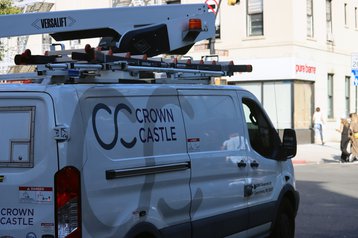
Crown Castle acquisition expands Zayo's network
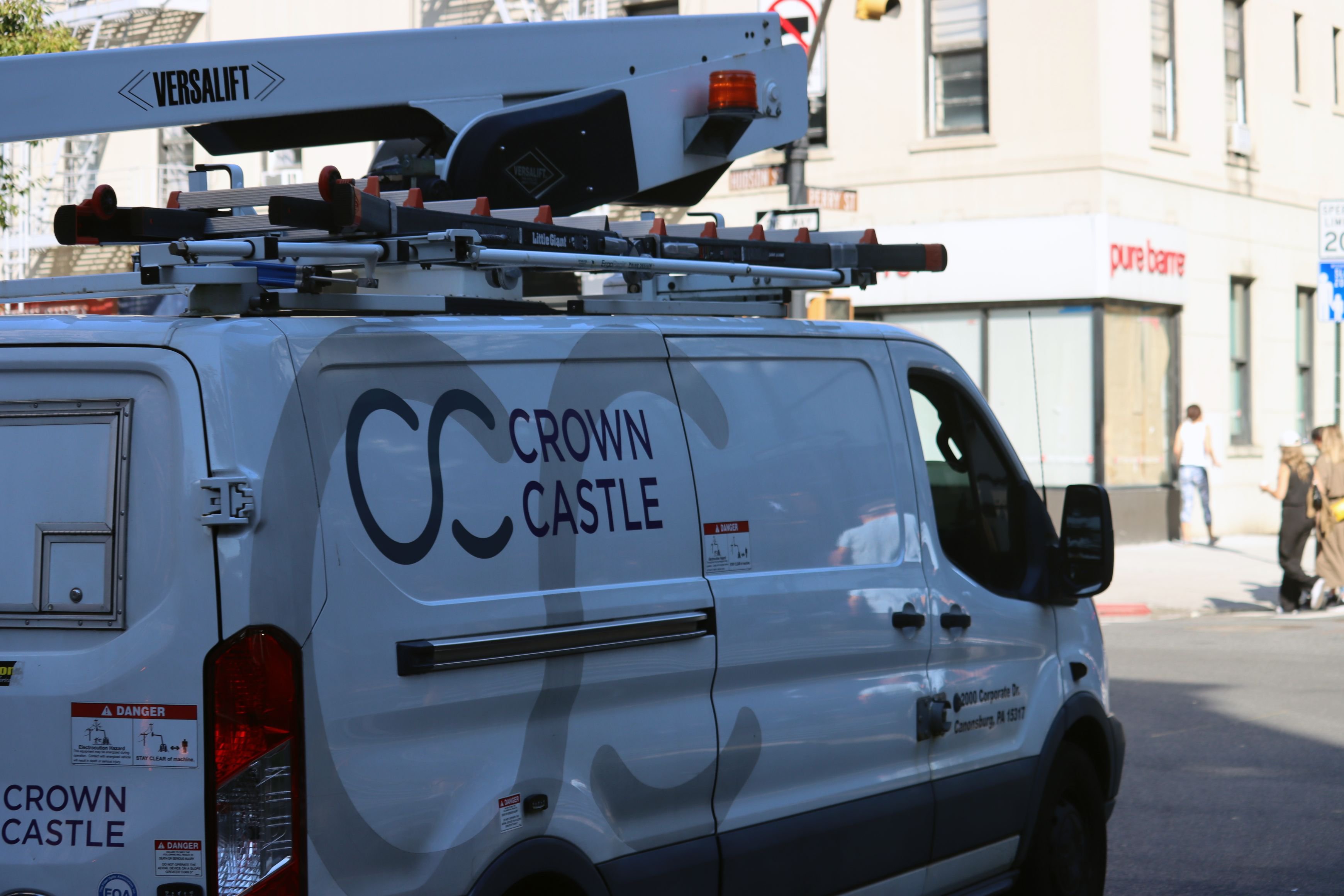
Earlier this year, Zayo also made headlines when it spent $4.25 billion to acquire Crown Castle’s fiber assets. The acquisition is the biggest in the company’s history.
For Zayo, the acquisition adds approximately 90,000 route miles of fiber to Zayo’s network and increases its overall reach to more than 70,000 on-net locations.
The acquisition adds about 4,000 on-net towers to Zayo’s network, allowing Zayo to provide connectivity to those towers. Zayo has around 1,200 towers on its network.
“This is the biggest acquisition in Zayo history,” said Long. “But, we’re always open to the right assets at the right price, so we're always looking for new opportunities. So nothing's off the table.
“It's the combination of the right deal, motivated seller, a limited set of buyers, able to get the asset at a really attractive price that aligns well with our overall strategy."
Long adds that the deal expands Zayo's footprint into other key metro areas, including New York, New Jersey, the Boston/New England area, and Miami.
Opportunities at the macro Edge
The acquisition also ties into the company's plans around the Edge.
As Long notes, the definition of Edge varies from company to company. According to him, Zayo is placing its bets on the macro Edge, such as connecting data centers in metropolitan areas.
"We hypothesize that the macro Edge will be the place where infrastructure consolidates," Long told DCD. "So we think that's where, as AI takes off, that's the design pattern for inferencing and for where interconnection and cloud interconnection is going to happen."
Unlike some companies that place Edge data centers at the base of the tower, Zayo isn't interested in playing at the Far Edge.
"We do not think that you're going to see compute deep in a far Edge, like at the base of cell towers or anything like that. It's just too expensive and hard to manage without a ton of latency benefits."
Referring back to the acquisition of Crown Castle's fiber assets, Long states that it will provide Zayo with an opportunity to "go deep into metros."
"The Crown acquisition gives us a really good capillary network to go deep into metros, and be able to collect all the traffic and bring it back to the macro Edge. And then, of course, you're connecting the macro Edge with your backbone network as well."



Comments