
Vodafone has revealed that it is using satellites to guarantee signal positioning.
The carrier said it will do this by installing satellite guided sensors within new radio antennas located on top of mobile masts.
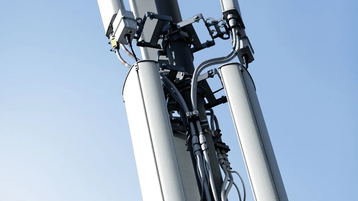
Noting a potential challenge around consistently providing customers with a stable mobile signal, Vodafone said the satellites will help to align the mobile antennas.
Mobile antennas can shift position over time, either due to adverse weather or seismic activity, and this can disrupt connectivity on the network.
Albania first, other markets will follow
Vodafone will initially roll out the technology in Albania from September, before expanding to some of its other markets.
The carrier claims it will become the first mobile operator to use the technology in a commercial network.
Antennas are currently manually installed, notes Vodafone, which adds that although engineers can position them, it's not a straightforward task.
"At heights of up to 50 meters, the engineer needs to consider the azimuth (the angle the antenna is pointing relative to geographic north), its tilt to determine the distance and area the signal reaches, as well as its elevation above sea level to avoid other objects that might obstruct its performance. The job is further complicated if a mast houses multiple radio antennas from different operators," explained the operator.
The company said the installation of the sensors within the antenna will help the antennas collect GPS-based location information from modules installed at different points on the antenna, together with other performance data.
These sensors then relay details around the antenna's alignment back to one of Vodafone's network operations centers. From there, Vodafone is able to enable its engineers to either automatically reposition the antenna or dispatch an expert for more complex installations.
“As smartphones pack in ever more functionality, network precision is key," said Alberto Ripepi, chief network officer of Vodafone.
"Antenna alignment is now one of the most critical aspects when it comes to installing and maintaining high-performing mobile networks. By integrating sensors into new radio antennas, we can more easily fine-tune our radios to give customers the optimal signal quality.”
The networks are part of Vodafone's wider 'Network as a Sensor’ program, which leverages Vodafone’s extensive geographical reach, comprising around 160,000 masts, across Europe and Africa.
These sensors are being used to forecast rainfall and other weather conditions.






Comments