
Verizon has bolstered its technology offering ahead of this year's hurricane season.
As part of the carrier's plans to prepare for the hurricane season, which officially starts on June 1, Verizon will leverage digital twin technology and expand its fleet of satellite assets.
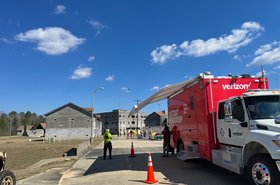
Running to the storm: How Verizon prepares for natural disasters
While most run away from storms, network operators have no such option, their networks are critical infrastructure for those in desperate need of help
Verizon provides support for first responders and frontline workers battling against natural disasters such as hurricanes, tornadoes, forest fires etc., via its Verizon Frontline, which supports mission-critical and public safety efforts.
Ahead of hurricane season, one of the carrier's most notable offerings is around its digital twin technology. A digital twin is a virtual, data-driven version of a physical object or system that is able to operate and provide updates in real-time.
Verizon is now the technology to support network restoration efforts via drone-captured 3D imagery and AI, which the carrier said it will use to "instantly identify the exact location of network damage after a storm, allowing engineers to prioritize repairs, speed up restoration, and enhance safety by reducing the need for on-site visual inspections."
The telco notes that this technology will speed up the process for repairs and restoration to networks as it can identify virtually where the issues are, and identify the engineers and equipment that need to be deployed to these locations.
Verizon adds that the use of digital twin technology reduces the need for tower climbs and field visits when creating recovery plans, as engineers can virtually visit and inspect cell sites.
“In an emergency, every second counts. Whether it’s a family checking in on a loved one or a first responder coordinating a rescue mission, we understand the responsibility that comes with the work we do,” said Joe Russo, executive vice president, global networks and technology, Verizon.
“We don’t just build a network; we build a resilient ecosystem designed to withstand the harshest conditions, so our customers can trust they are never alone when a storm hits - and after.”
Expanding satellite assets
Verizon also revealed that it has expanded its existing satellite fleet, which is now comprised of more than 2,600 assets.
The purpose of satellites for network restoration efforts is crucial, given that satellite technology can move data around the network when terrestrial fiber is unavailable.
While these satellites aren't ever going to replace fiber networks, satellites can offer connectivity in the absence of fiber that has been damaged during hurricanes or other natural disasters, where repair times may take longer.
To support its satellite efforts, Verizon said it's testing permanent satellite backhaul as a failover solution at storm-prone macro cell sites across the Southeast, adding an additional layer of resiliency to Verizon’s network.
"By combining 100 percent backup battery power and back-up generator power with permanent satellite connectivity, these sites are designed to continue processing cellular traffic even if both commercial power and fiber lines are lost," noted the company.
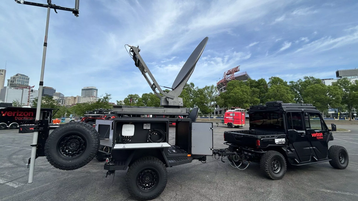
The carrier's satellite assets offering includes satellite-linked mobile deployable cell sites, mobile satellite link kits, and permanent satellite links for facilities.
This year, Verizon is adding its “Multi-Orbit Off-Road Trailer,” a new high-clearance, off-road vehicle that can use both Geosynchronous (GEO) and Low-Earth Orbit (LEO) satellites that replaces older pavement-bound assets and is purpose-built for off-road environments.
Verizon carries out year-round preparation for national disasters, including simulating real-life scenarios to prepare for such events. DCD attended one of these preparation drills back in 2024.
In total, Verizon has nearly 3,000 mobile assets ready to deploy to the hardest hit areas to serve as mobile cell sites, temporary emergency command centers, and self-contained basecamp operations, or conduct drone missions for infrastructure assessments across the country.
“Verizon is constantly working to advance and innovate in disaster preparedness, response and recovery, and that includes finding new ways for our employees to support our communities in moments of crisis,” said Donna Epps, chief responsible business officer at Verizon.
“When a disaster hits, our employees feel that impact and want to volunteer to get involved to help their neighbors and communities recover. We are proud to be the first telecommunications carrier to partner with the American Red Cross to train employee volunteers to deploy to disaster areas and assist those who have been impacted.”



Comments