
Verizon Frontline has expanded the launch of its network slice for first responders to cover all markets across the country.
The nationwide rollout means that Verizon has added more than 20 new markets since it first launched the network slice for responders back in April.
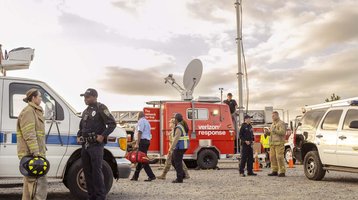
First responders will have the service available to them, wherever Verizon offers 5G Ultra Wideband service.
Verizon Frontline is Verizon's dedicated connectivity solution for first responders in the US.
The carrier notes that the slice allows for the allocation of network resources within Verizon’s network infrastructure.
The 5G UW network capacity is exclusively reserved for first responders, while the service is tailored for critical applications. Verizon notes that the network slices improve reliability and deliver flexible scalability.
Verizon has expanded the service to a number of locations, including New York, New York state; Dallas, Fort Worth, and San Antonio, Texas; Boston, Massachusetts; Cincinnati and Cleveland, Ohio; New Orleans, Louisiana; and many more locations.
These locations are in addition to the previously announced Chicago, Denver, Los Angeles, Miami, Phoenix, San Francisco, and Seattle.
Network slicing has previously been used by rival carrier T-Mobile in response to the wildfires in Los Angeles earlier this year.
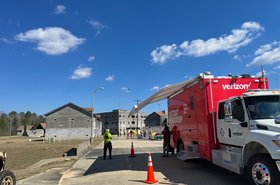
Running to the storm: How Verizon prepares for natural disasters
While most run away from storms, network operators have no such option, their networks are critical infrastructure for those in desperate need of help
The company launched T-Priority in September, a dedicated service for first responders that uses network slicing. During the fires in LA, T-Mobile integrated networking slicing for the Los Angeles Fire Department (LAFD).
The carrier activated the T-Priority slice at no additional cost. It was the first major disaster since T-Mobile launched T-Priority.
LEO sats for the Frontline
Verizon Frontline, which utilizes a vast array of technology to support network responders, has also made progress with the usage of low Earth orbit (LEO) satellites.
Verizon has a partnership with AST SpaceMobile. Earlier this year, the carrier pushed its direct-to-device satellite messaging service live to some Android smartphones.
Mark Paff, director for business continuity & event management at Verizon, told DCD that the satellites are around 500 miles above Earth, and are able to provide lower latency and increased throughput to provide additional capabilities.
“It is something that we are leveraging as part of our disaster response tools,” Paff said.
“Low Earth orbit is a capability that we've been working on for several years, and late last year, during Hurricane Helene, it’s something that we actually had a breakthrough, when we're able to deploy that in an operation situation.”
Paff added that Verizon Frontline is also pushing to explore other solutions that the technology can offer for first responders, such as the deployment of tethered drones to all of its markets.






Comments