
Malaysian mobile network operator U Mobile has launched its 5G network.
Significantly, the 5G network is the second in the country, rivaling the first built by the Digital Nasional Berhad (DNB) under the country's previous government.
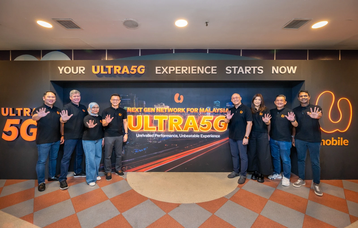
The service was launched on Monday (August 18) as ULTRA5G, with the service pushed live at Berjaya Times Square (BTS), which includes U Mobile's headquarters, a shopping mall, a hotel, and an indoor theme park.
The 5G Standalone service has also been switched on across Penang Bridge, where 5G base stations were deployed on two towers and are able to connect the whole length of the bridge, which is 14km long.
U Mobile explained that it was able to demo its ULTRA5G experience on an 800-meter-long roller coaster, where it claims to have carried out Malaysia's first 4K livestream of the ride.
On top of this, U Mobile said it has also trialed a 5G network slice.
“As the nation’s newest 5G network provider, U Mobile is focused on enabling digital transformation for consumers and businesses alike," said Woon Ooi Yuen, CTO of U Mobile.
Yuen added that the network will enable use cases such as immersive gaming, XR, robotics, smart cities, and IR 4.0 automation.
"With deployment ahead of schedule, U Mobile is also doubling down on indoor coverage to ensure the widest and deepest 5G experience in Malaysia," he added.
The telco said it aims to reach 80 percent coverage of Malaysia's population by the second half of next year. U Mobile plans to deploy its network at airports, hospitals, convention centers, and other high-impact indoor and outdoor areas nationwide.
Earlier this year, U Mobile chairman Tan Sri Vincent Tan Chee Yioun outlined plans to complete the 5G network rollout by mid-2026. He noted at the time that the company would not need any additional backing from the government or new partners.
The carrier chose Chinese vendors Huawei and ZTE as technology partners for its 5G network. Nordic rival Ericsson supported DNB's state-owned 5G rollout.
A second network was proposed by the government as it sought to end the duopoly held by Digital Nasional Bhd (DNB). The government approved it last year.
Launched in 2021, DNB has seen its network heavily scrutinized by Prime Minister Ibrahim's administration over claims of transparency issues. This led Ibrahim's administration to review DNB's plan for a state-owned 5G network, with DNB quite clear that it was to be the only 5G network in the country.
Malaysia's Ministry of Finance holds a 34 percent stake in DNB, with the rest split among three of the country's operators: Maxis, YTL, and CelcomDigi. Telekom Malaysia was previously involved, but DNB cancelled its equity deal.





Comments