
TSMC announced plans to invest an additional $100 billion to expand its chip manufacturing efforts in Arizona.
Speaking after the chipmaker posted its Q2 2026 results, CEO C.C. Wei told analysts the investment would support the construction of additional chip fabs for the production of 2nm and below process nodes and advanced packaging.
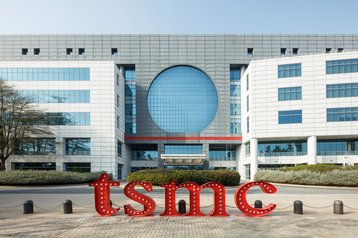
When questioned further about the investment on the company's earnings call, Wei said that “probably four more fabs will be built,” combining both front and back-end technologies. The CEO would not comment on a projected timeline for the buildout but said the company “does have a plan.”
He added: “Most of the time, it depends on the market situation and our customers' demand. If you ask me to give you a firm schedule, no, we don't have it today, but we do have a plan. We speed it up. We try to speed it up as fast as possible.
“We believe this investment will help to further foster the development of the US semiconductor ecosystem, strengthen the supply chain, and support an increasing number of high-tech, high-paying jobs in the United States.”
When questioned about how the company can continue to compete against other players in the market, in particular Intel, which received an $8.9 billion investment from the US government last year in exchange for a ten percent stake, Wei somewhat coyly responded: “We also got the government support, by the way, although we don't announce it.“
The CEO went on to note that at the same time it was undertaking its expansion in the US, TSMC would also build 13 leading-edge and advanced packaging fabs in Taiwan over the next several years, and would continue to further invest in Taiwan. He said the chipmaker was also moving ahead with its plan to add three additional 3nm fabs in Taiwan, Arizona, and Japan.
“In addition to all the new fabs, we continue to convert 5nm tools to support 3nm capacity in Taiwan,“ he said.
For Q2 2026, TSMC reported a 36 percent Year-on-Year revenue increase, totaling $40.2 billion.
For the three-month period, the chipmaker said shipments of 2nm semiconductors accounted for three percent of its total wafer revenue, with 3nm, 5nm, and 7nm accounting for 30 percent, 33 percent, and 11 percent, respectively.
By platform, HPC accounted for 66 percent of the company’s revenue, up 20 percent Quarter-on-Quarter. Based on the quarterly results, TSMC has forecast Q3 2026 revenue of between $44.6bn and $45.8bn.
“The emergence of agentic AI is leading to a resurgence in the role of CPUs in AI data centers, which drive more silicon demand in addition to AI accelerators,” Wei said on the earnings call.
“We believe this is positive for TSMC, as no matter what CPU approach is taken, whether it's an x86, Arm-based, or RISC-V architecture, they are almost all TSMC's customers. We are already collaborating closely with our CPU customers and working to support them with the most advanced technologies and necessary capacity so they can capture the agentic AI market opportunities.”





Comments