
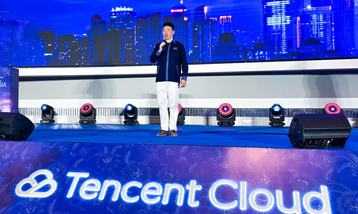
Chinese cloud provider Tencent Cloud has announced its intention to launch a cloud region in Malaysia.
The company has said the region will comprise up to three availability zones, which will be located in Johor.
The region will join Tencent's existing global network of 23 cloud regions and 66 availability zones.
According to a report from The Edge Malaysia, two of the region's availability zones will launch this week.
"Malaysia remains a key market in Tencent Cloud's growth strategy across Asia," said Bluefin Jiannan Zhao, vice president of Tencent Cloud and managing director of Tencent Cloud International for Asia Pacific. "The new Cloud Region in Malaysia will serve as a critical node within our global infrastructure, enabling enterprises to scale locally, expand regionally, and accelerate their AI-driven innovation. Through this investment, we aim to deepen our support for Malaysia's digital transformation journey and contribute to the continued growth of its AI ecosystem."
"As Malaysian enterprises accelerate their digital transformation, they increasingly want to deploy AI to address real business needs and create measurable value," added Nucky Fang, general manager of Tencent Cloud International & Tencent Cloud Malaysia. "By combining local cloud infrastructure with Tencent Cloud's AI capabilities and industry expertise, we will be able to work more closely with customers and partners to develop secure, reliable, and scalable solutions tailored to their evolving needs."
In early 2026, Tencent Cloud's CEO Dowson Tong noted that the company was looking to expand its global footprint, listing the Middle East, Asia Pacific, and Europe as locations where it was seeking to add further availability zones.
Most of Tencent's presence is in Asia, but it also has regions in North America (Silicon Valley, Virginia, Toronto), Europe (Frankfurt), and South America (São Paulo).
Competitor Alibaba Cloud launched its own cloud region in Johor, Malaysia, in June of this year. The company launched a region in Kuala Lumpur in October 2017, at the time making it the first global public cloud platform to host infrastructure in the country.






Comments