
PT Telkom Indonesia and Universitas Gadjah Mada (UGM), an Indonesian university, have partnered to develop an early warning system for earthquakes based on Distributed Acoustic Sensing (DAS) technology.
In an announcement last week, UGM noted that the disaster management system utilizes Telkom’s undersea optical cable infrastructure.
The university said it can use the subsea infrastructure to detect seismic activity in real time.
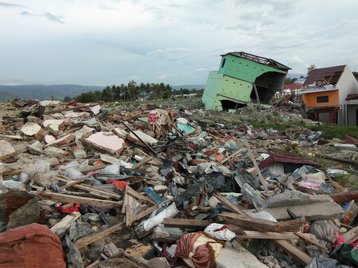
Indonesia is highly prone to earthquakes due to its location on the Pacific Ring of Fire, a hotbed for seismic activity.
“This technology offers a fast and precise solution capable of reaching high-risk areas that have long lacked adequate monitoring,” said Professor Kuwat Triyana, a member of the research team.
According to Triyana, the DAS-based earthquake detector works by sensing primary waves (P-waves), which appear earlier than the more destructive secondary waves (S-waves).
The system is instead able to "issue warnings seconds to minutes before the main shock occurs, providing crucial time for early evacuation," while data is processed in real-time and integrated with geospatial systems.
Is your data center earthquake-proof?
Chip fabs and data centers are often located in countries prone to extreme seismic activity, presenting challenges for operators
“This system represents a concrete and sustainable application of digital technology for disaster risk reduction,” he added.
The DAS system could even have other uses, noted Ririek Adriansyah, CEO, PT Telkom Indonesia. Adriansyah suggests that the DAS system could be used to help protect national infrastructure.
“This collaboration is highly significant. In addition to enhancing the disaster early warning system, this technology holds strategic potential for securing Telkom’s undersea optical cable assets,” he said.
UGM added that DAS-based earthquake detection system is currently undergoing trials along the southern coast of Java and is expected to be expanded to other high-risk regions.



Comments