
Canadian satellite firm Telesat has announced an expanded relationship with longtime collaborator Farcast, tasking the firm with building its enterprise-class flat panel antenna user terminals and making it ready for volume production.
Telesat is backing up the agreement with a $5 million equity investment into Farcast and gaining a seat on the latter’s board of directors.
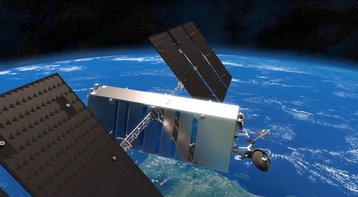
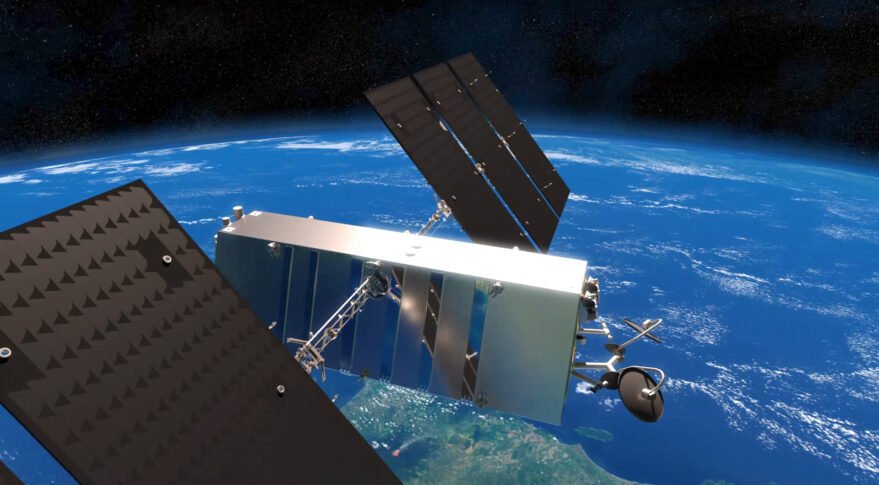
Telesat intends to debut its Lightspeed pathfinder demonstration in 2026, with two initial satellites. The constellation’s initial global broadband service will operate 96 satellites in low-Earth orbit, which will launch in 2027.
“Our collaboration with Telesat has been a cornerstone of our journey to date,” said Siamak Ebadi, founder and CEO of Farcast. “By working hand in hand, we are developing FPA technology that will meet the stringent performance and reliability requirements to ensure mission-critical connectivity for Telesat’s customers. We believe partnerships like this are vital to creating an open, collaborative satellite ecosystem - one that drives innovation and expands access.”
San Francisco-based startup Farcast develops active electronically scanned antenna technology that can simultaneously transmit and receive data from the same aperture in a flat panel antenna. Its proprietary solution uses electronic beam scanning to compensate for the movement of satellites and users, while a single-aperture and full-duplex flat panel reduces size, weight, power, and cost.
The Ottawa-based Canadian satellite giant Telesat has been working with Farcast since 2022 on a pre-production development program to support the technological maturity of Farcast’s systems at pace with the timeline of Telesat’s Lightspeed program. During this time, various iterations of the hardware have been prototyped and successfully tested. The delivery of terminals fully integrated with the Telesat Lightspeed modem is expected in 2027.
In 2023, Telesat contracted SpaceX on 14 separate launches intended to begin in mid-2026 to deploy 198 satellites, 18 per launch, which had then been ordered from MDA Space, providing 10 terabits per second capacity for business and government users. Telesat CEO Dan Goldberg explained that a complete fleet of 156 satellites would be in orbit by December 2027.
Telesat recently announced quarterly revenues of CA$101 million (US$71.66), a fall of 27 percent on the previous year, indicating declining geostationary and direct-to-home revenues.

Comments