
Planning permission for a large data center in Teesside, UK, has been granted despite objections from oil and gas giant BP, which says the plan will hinder its attempts to build a hydrogen plant in the area.
A plan for a data center totaling 500,000 sqm (5.38 million sq ft) was submitted in June by Teesworks Ltd, the public-private partnership that is developing the Teesworks site, a former steelworks located outside Middlesbrough. Outline planning permission has been granted by Redcar and Cleveland Council, meaning a second, more detailed application will be required.
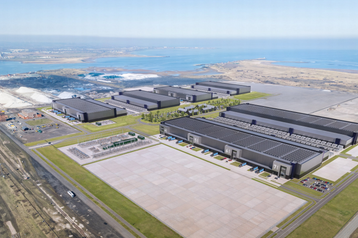
Information about the data center’s planned capacity or a potential end user have not been shared. The plans show that the campus could comprise six two-story data halls.
Given its size, it is likely to form part of a bid to tempt a hyperscaler into investing in the north east. The FT has previously reported that the government is in discussions with an unnamed investor keen to back the project.
The site is described as the largest brownfield development in Europe, and has also attracted interest from BP, which wants to use part of the land to build a blue hydrogen plant, H2 Teesside. Blue hydrogen uses natural gas as part of its production process, but is considered a low-carbon form of energy.
Teesworks Limited, along with another group, the South Tees Development Corporation, have objected to the hydrogen plant plan, saying a proposed ‘inner zone’ for hazardous installations, something that would be required as part of the BP development, would impose planning restrictions, making it impossible to build a data center nearby.
A submission made by Lichfields, the consultants acting on behalf of Teesworks Ltd in the data center project, as part of the planning process, claimed there is “increasing uncertainty in the applicant’s [BP] commitment to and funding for the proposed [hydrogen plant] development.”
In a letter sent to the council objecting to the data center plan via planning consultancy DWD, BP said: “H2 Teesside could deliver very substantial public benefits of national significance, including a significant contribution to achieving legally binding ‘net zero’ targets. A data center would not deliver comparable levels of public benefit.”
However, with the data center now approved, it remains to be seen how H2 Teesside will move forward. BP has applied for a development consent order for the project, which could allow it to compulsorily purchase part of the Teesworks land, but this needs to be approved by Energy Secretary Ed Miliband. Teesworks Ltd and STDC have both opposed this, and a decision could be made by the end of August.
The UK government is reportedly keen to make Teesworks one of its AI Growth Zones, areas around the country where data center developments will be encouraged through things like business rate relief and expedited planning processes. These are being set up because the UK needs to deploy "at least" 6GW of AI-capable data center capacity across the country by 2030 to remain competitive. That 6GW represents a threefold increase in the data center capacity available in the UK today, the government said in a recent report.
Some 200 expressions of interest were reportedly submitted to potentially host the growth zones; some at projects already in the works, others at entirely new sites. Bids have come from all corners of the UK.




Comments